A two-storey capacitor is an storage device in a two-storey formed to store the charge on the interface between a positive and negative carbon electrode and electrolyte. When charge is performed, physical adsorption and separation of positive ion will occur at the positive level, which is very rapid and has good cryogenic properties, as the charge is not accompanied by chemical reactions. In addition, it has in theory long-lived characteristics due to the problem of repeated recharge of the second。
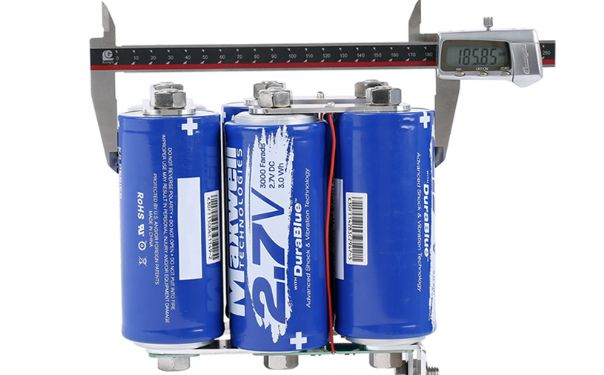
Structure of the double layer capacitors
The basic structure of the two-storey capacitors is the face-to-face placement of the positive and negative poles, the partition between the positive and negative engines, and the electrolytic leaching of the electrolytics with the same structure as the lithium batteries。
Characteristics of the double layer capacitors
(1) high power density
It can be up to 102-104 w/kg, well above the power density of the battery。
(2) long cycle life
After a few seconds of high-speed deep discharge cycles ranging from 500,000 to 1 million times, the properties of the double-layer capacitors have changed very little, reducing capacity and internal barriers by only 10-20 per cent。
(3) work temperature limit
Because the adsorption and desorption rates of ion in double capacitors in cryogenic conditions are not changed significantly, their capacity changes are much smaller than in the holding cells. The working temperature range of commercialized double-storey capacitors can be as high as -40°c ~ +80°c。
The working principles of the double layer capacitors
Two-storey capacitor is a completely new capacitor based on the interface two-storey theory proposed by german physicist heimhods. It is well known that the metal electrode surface inserted in the electrolyte solution will have excess charge on both sides of the liquid surface with the opposite symbol, resulting in a difference in the level between the phases. If, then, two electrolytes are inserted in the electrolyte simultaneously and a voltage of less than the electrolyte solution decomposition voltage is applied between them, then the positive and negative ion in the electrolytic fluid move rapidly towards the polar level by forming a close charge layer, i. E. A double layer, on the surface of each of the two electrodes, which creates a double layer and a polarized charge similar to that of the traditional capacitors in which they function in the electric field, thus creating an electrical capacity that is similar to that of the flat-board capacitors, but has a much larger capacity than that of the ordinary capacitors because of a much smaller distance between the close charge layer than the general capacitors。
Double-layer capacitors are more resistant than aluminium electrolytic capacitors, so they can be charged directly without load resistance and, in case of voltage charge, the double-layer capacitors will open the circuit without damage to the device, a feature different from the upper voltage of the aluminium electrolyte capacitors. At the same time, the double-storey capacitors can be recharged indefinitely compared to the chargeable batteries and can be recharged more than 10 ^6 times, so that the double-storey capacitor not only has an electric but also a battery feature, a new special metre unit between the battery and the capacitor。
The rationale is that, when charged to the electrode, the charge of the electrode surface in the ideal polarized state will attract the heterogeneity of the electrolyte solution around it, which will be attached to the surface of the electrode to form a double-charge layer, forming a double layer of the condensation. Due to the very small distance of the two charge layer (generally below 0. 5 nm), combined with the introduction of special electrode structures, the surface area of the electrode is increased by a factor of 10,000, resulting in a high electrical capacity。
This paper can only lead to a preliminary understanding of the two-storey capacitors, which, it is hoped, will be of some assistance and will need to be kept up-to-date in order to improve professional skills and to welcome some of the intellectual points of the articles。