Rednet news day on august 10th (journalist) "according to our national standards, building resistance to earthquakes is targeted at `three levels ' , i. E. Small, medium and reversible." this afternoon, china's chief technical officer zhou said so in a written interview with the red network。
China's seismic network officially determined that on 8 august, at 2119 hours, a magnitude of 7. 0 km was struck in kyushu county, sichuan abazhou, with a depth of 20 km; and on 9 august, at 0727 hours, a magnitude of 6. 6 km was struck in jie river county, bortara county, xinjiang, with a depth of 11 km. This in turn drew attention to the earthquake。
China's first listed enterprise (stock code: 00726. Hk) devoted to the modernization of the construction industry is china's young people's federation, one of the three core industries under the umbrella of china's national investment corporation. In the service of the national strategy, china's zhong chong zheng friends conduct industrial layout and product research and development around national strategies such as “building the supply side of the construction sector” “changing 2025” “precision pro-poor” “beautiful rural construction” and “away”。
It's not the same for different countries

What is the global capacity of assembly buildings to withstand earthquakes compared to other building models? It is the belief of ryu that housing resistance to earthquakes meets the requirements of earthquake resistance in countries that have adopted assembly structures on a global scale. The design speeds of earthquakes, the height of houses, structural systems, etc. Vary from country to country, and the concept of earthquake resistance in assembled buildings varies。
For example, the design of major european countries has a relatively small seismic acceleration, housing is dominated by low layers, and the structure of anti-earthquake structures used in assembly structures is mainly a double-skinned, hectic wall; japan is a high-growth country for large earthquakes, with the concept of anti-earthquake, mainly in passivation, with high-level assembly structures based on a framework/box structure with passivation, and houses with excellent seismic resistance。
He said that his country was also a country prone to earthquakes, that the current assembly building was a red fire and that the state attached particular importance to the seismic properties of assembly buildings, and that the introduction of standards such as the technical protocol for assembly concrete structures jgj1-2014 and the technical standard for assembly concrete construction gb/t 51231-2016 made it clear that the concept of the assembly building in the country was based on the concept of “supplementation” and had a seismic properties similar to those of currently supplied buildings。
At the global level, however, the promotion and application of assembly-style buildings cannot be described entirely as an important way and means of reducing earthquakes, earthquakes, economic losses and human security. In his view, both assembly and traditional buildings were very concerned with structural security, but they were more of a change in the way they were built, which was not driven solely by the demand for earthquake resistance and mitigation, but more by cost, schedule, quality, social and environmental factors。
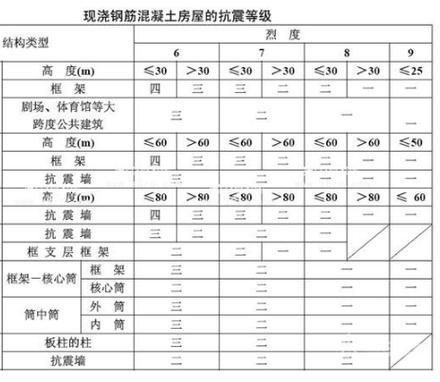
As long as the building is strictly in accordance with national norms, it can fully meet the requirements of earthquake-proofing
According to ryu, the market for domestic assembly buildings is dominated by three main categories of products: high-level shear walls, multi- and high-level public buildings, and low-level housing packages in new villages. The first two types of structural subjects were designed, constructed and accepted strictly in accordance with national standards, and the third category was a fully dry system of wall-forming systems developed by the chinese people's republic of china on its own initiative. The eight-degree earthquake-proof defence requirements were met through the vibration table test at the national high-speed railway construction laboratory at the university of south china。
He added that foreign markets would conduct technological research and development and demonstration in response to the needs of different countries to withstand earthquakes, using local standards or those of developed countries in europe and america as far as possible。
According to the data, china has set up a green building technology park, land assembly construction projects in more than a dozen cities throughout the country, including changsha, shanghai, hangzhou, nanjing, shenzhen and foshan, and will continue to develop other cities with market potential to achieve full coverage of the central and western regions of the east and the sichuan region。
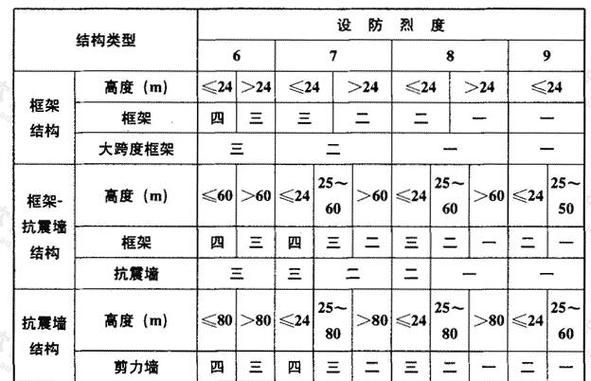
“with regard to overseas markets, we have now reached an agreement on cooperation with 12 countries, mainly along the strategic path of the country.” he said。
According to him, hunan has a natural advantage in the protection against earthquakes, with most of the province located in a 6-degree earthquake-resistant zone, with only a few areas such as changde and yuyang being 7-degree earthquake-resistant. The history of hunan has also been characterized by a small number of earthquakes, the largest of which was recorded in august 1631, when an earthquake of 6. 8 magnitude took place in changde county. However, the hunan province experienced an average of six or seven earthquakes per year, with an average of approximately one earthquake per year at the level of three and above, without causing significant damage。
“according to the design, construction and acceptance of the assembly building in strict conformity with national norms, the requirements for earthquake-proofing are fully met.” he concluded。