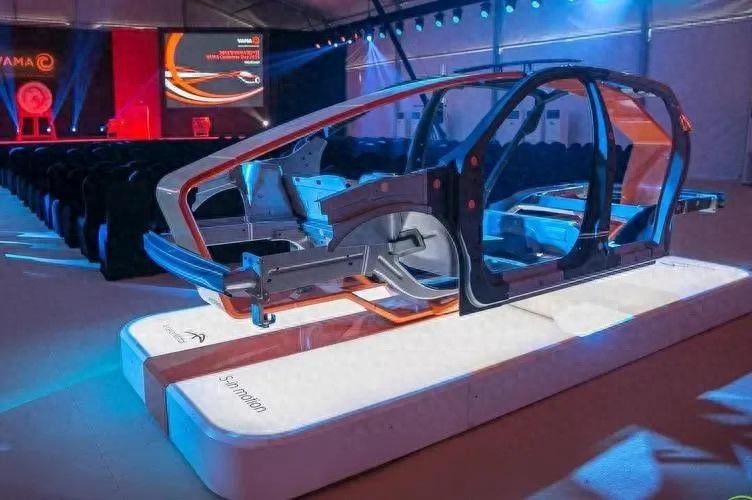
Now diet is a fashion. Why? Some for beauty, more for health. In fact, not just people, but other things can do much better if they lose weight. Like cars。
Of course, in the case of cars, the weight loss is mainly referred to as weight loss, or light quantification. With that word in mind, many people think of carbon fibres and cars. Indeed, many well-known super-drives have now introduced upgrades to use carbon fibre materials. As a result, not only is it cooler and more beautiful, but it is also faster and more fuel-efficient because carbon fibres are 20 to 40 per cent less than normal aluminium, and the weight of the car is significantly reduced。

Research data show that cars consume about 70 per cent of their fuel, and fuel efficiency can be increased by 6 to 8 per cent if their weight is reduced by 10 per cent; by 1 per cent, fuel consumption can be reduced by 0. 7 per cent; and by 0. 3 to 0. 6 litres for every 100 kg of car mass. It is self-evident that the widespread use of light quantitative technology allows vehicles to combine efficient power and excellent fuel economy. With the saving of oil, environmental pollution has been reduced。
The benefits are considerable, but some say that carbon fibre is too high, like a high diet or a diet pill, and cannot afford it. In fact, it is not necessary to use high-cost carbon fibres to actually quantify cars and to write on materials. According to the world union for motor steel, future steel vehicles, high-strength steel replacement carbon steel can be reduced by 10 to 60 per cent of the main car lightweight materials; aluminium alloy replacement steel and casting iron can be reduced by 40 to 60 per cent; glass fibre booster replacement steel can be reduced by 25 to 35 per cent; magnesium alloy replacement steel and casting iron can be reduced by 60 to 75 per cent and aluminium by 25 to 35 per cent。

Given that carbon fibre is currently the most significant material for light quantification of automobiles, it is certainly a very good idea for some automobile companies to start researching and developing technologies to reduce the cost of such materials. Bmw has achieved some success in this regard. They have chosen to test large-scale bulk production of carbon fibre material at the front-line i brand and are prepared to reduce its cost to the level of general materials every year. If this strategy succeeds, it will undoubtedly lay the foundations for a foreseeable material revolution。
Of course, low-key and cheap things are more popular in material substitution. For example, high-strength plastics are entering the inner space of the vehicle on a wide scale. There are companies that have replaced the front-end module in the engine module with high-strength plastic material. As the front-end module carries numerous components, connects and loads, and bears a significant impact on impact, most cars were previously made of cast iron or steel. The replacement of high-intensity plastics with a front-end modular framework of approximately 40 per cent or less of the metal component not only allows for the perfect completion of functional requirements, but also shows a good performance in noise vibration control and reduction in fuel consumption, which is now being adopted by a growing number of enterprises。

Just as humans lose weight cannot simply stare at diet pills or fat-smoking operations, car loses weight and cannot be limited to the light quantification of this aspect of material. You know, the “how to use material” may be more important in light quantification than “what materials are used”. How materials are used is actually a matter of car optimization design. Indeed, in a more complete sense, the light quantification of automobiles is the weighting of products resulting from the integration of structurally light quantitative design techniques with a variety of light quantitative materials and light quantitative manufacturing applications, subject to the requirements of vehicle use, safety and cost control. It is clear that car light quantification cannot be at the expense of vehicle safety and nvh (noise, vibration, smoothing), but must be carried out under the overall constraints of predetermined weight reduction targets for the whole vehicle, cost control targets for the whole vehicle, safety objectives and nvh control levels。
Therefore, achieving lightness will require a great deal of effort in such areas as the optimization of vehicle design, the development and evaluation of spare parts and new material development, the development of moulds, processes and equipment, which will likely lead to poor vehicle performance, quality and cost escalation. For the use of materials, the internationally accepted principle is that the right material is used in the right place and the right technology is used in the right place. China quality