In middle school physics, many students often find “electronics” particularly difficult, even if they think it is “absolutely difficult” in physics. So, is electron really so complicated? Is it really the hardest chapter in middle school physics? This paper will help students to clear their minds and cope with the difficulties of electron in terms of content, learning difficulties, common error zones and coping strategies。
The “hard spot” in middle school physics - status and characteristics of electron
The position of electron in middle school physics
As an important component of middle-school physics, electrical science covers basic concepts such as currents, voltage, resistance, circuits and appliances. It not only relates to the use of appliances in everyday life, but also lays the foundation for electromagnetics and electronics in high school physics. Thus, electrical science is extensive, abstract and difficult。
Content characteristics of electron
The abstraction is strong: many concepts, such as “power fields” and “power” are more abstract and difficult to understand intuitively。
There are many experiments: some principles need to be understood in conjunction with experimental observations。
There are many mathematical applications: the interpretation and application of formulas such as om's law, electricity, power, etc。
Logical: circuit analysis requires rigorous logic。
Ii. Why do many students find it hard to do electricity
The concept is abstract and difficult to understand
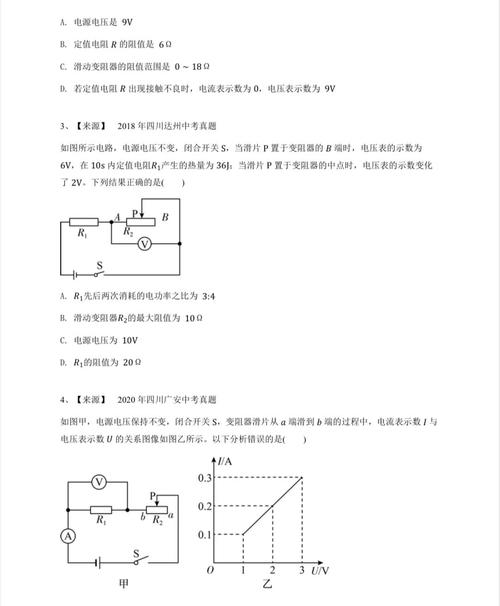
Many of the basic concepts in electrical science (e. G. Charge, field, power) do not have intuitive physical entities and it is difficult for students to understand them with their daily experience. For example, the concept of electric field wires and the high and low power levels require abstract thinking。
Circuit analysis is cumbersome
The analysis of complex circuits requires a mastery of the conjunctive and conjunctive characteristics of how to calculate using equivalent resistance, voltage distribution, etc. “turn, voltage, retardation” in circuits is numerous and confusing。
Flexible application of mathematical formulas
Omc laws, power formulas, etc. Require proficiency and flexibility in practical subjects. Some students ' understanding of the formula remains at the memory level and lacks flexibility in its application。
Difficulties in combining experimental operations with understanding
The experimental component of electron involves the construction of circuits, the measurement of voltage, currents, etc., which are neither skilled nor well understood, affecting the overall learning effect。
Iii. Common e-learning errors
Just remember the formula, don't understand the principle
Many students die from formulas such as om’s law, neglecting the physical significance behind the formula and leading to a lack of flexibility in solving the problem。
One-sided pursuit of maritime tactics

By doing a large number of topics, neglecting the understanding and summation of concepts, the risk of falling into the wrong zone of “tactical warfare” makes it difficult to form systematic knowledge。
Dependence on formulas, ignore experiments
The lack of emphasis on experimental observations leads to an inadequate understanding of the actual working principles of the circuits and affects the depth of understanding。
Focusing only on the calculations, ignoring the process
Only answers are sought in the process of solving the problem, neglecting the ideas and steps of the solution and affecting the ability to understand and apply it。
Iv. How to break electronics? Practical learning strategies
Understanding basic concepts and building visual awareness
Examples of combining life: the working principles of electrical appliances, electrostatic phenomena, etc., enhance visual perceptions。
Graphical thinking: drawing of graphics such as electric field lines, powering, etc. To help understand abstract concepts。
Focus on experimental operations and enhance understanding
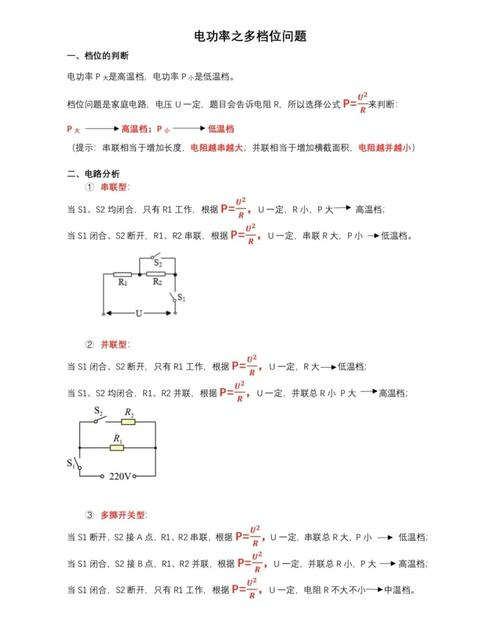
Start building circuits and observing currents and voltage changes。
Experimental equipment is used to verify the characteristics of omm's law, chain and circuit。
To master the physical meaning of the formula
Understanding om's law: currents are proportional to voltage, inversely to resistance。
Understand power: electric power represents the conversion rate of electricity in a unit time。
Combining reality, understanding the physical relationship behind the formula。
Establish a systematic knowledge framework
Classification: the electrical content is summarized by concept, formulae and application。