The 2026 university environmental education competition test contains answers (v)
I. Single selection issues (2 points each, 10 items in total, 20 points)
1.
Which of the following pollutants is volatile organic matter (vocs)?()
A. Sulphur dioxide b. Formaldehyde c. Nox d. Particulate matter
Answer: b. Formaldehyde is volatile organic matter that is volatile into the air, causing harm to human respiratory and nervous systems; sulphur dioxide, nitrogen oxides are gaseous pollutants and particulates are solid pollutants
2.
The core objective of wetland conservation in our country? ()
A. Development of wetland tourism resources b. Conservation of the ecosystem integrity of wetlands c. Survivoring of wetlands for agro-d. Exploitation of mineral resources in wetlands
Answer: b. Wetland conservation in our country is central to the protection of the ecosystem integrity of wetlands, the conservation of their ecological functions, the conservation of their biodiversity and the prohibition of their over-exploitation
3.
Which of the following acts constitutes overfishing?()
A. Set fishing limits b. Ban on fishing during closed season c. Use of fine-net fishing for d
Answer: c. The use of fine-net fishing can lead to large numbers of juvenile fish, which leads to the depletion of fishery resources and is an act of overfishing; the establishment of catch limits, time closures, and fishing into fish is a reasonable method of fishing and contributes to the sustainable use of fishery resources
I'm sorry.
Under our atmospheric pollution prevention and control act, priority is given to controlling which pollutants is the focus of joint air pollution control? ( )
A. Sulphur dioxide b. Nitrous oxide c. Pm2. 5d. Carbon monoxide
Answer: c. Controlling atmospheric pollution in priority regions of the country is based on pm2. 5, reducing pm2. 5 concentrations and improving air quality through integrated measures
5.
Which of the following sources of energy can be used for radioactive contamination? ( )
A. Solar b. Nuclear c. Wind d. Hydropower
Answer: b. Nuclear waste is generated during the use of nuclear energy, it is radioactive and, if not disposed of, it can cause radioactive contamination; the rest of the energy use is free of radioactive contamination
6.
Which of the following types of garbage belongs to other garbage?()
A. Waste b. Leftover c. Waste toothbrush d. Waste newspapers
Answer: c. Used toothbrush is of no recovery value, not hazardous waste or surplus waste, but other waste; used batteries are hazardous waste, leftovers are leftover waste and used newspapers are recyclable
7.
What are the largest wetlands in the world
A. Pentanal wetlands b. Amazon wetlands c. West creek wetlands d. Zaron wetlands
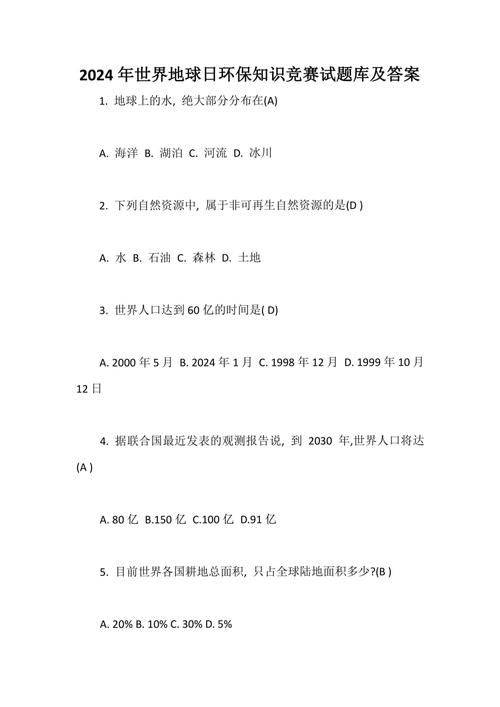
Answer: a. The pantanal wetland, located in south america, is the largest wetland in the world, rich in biodiversity and important for regulating regional climates and water sources
8.
Which of the following measures is not part of the joint anti-pollution control measures?()
A. Regional harmonized emission standards b. Cross-regional pollution warning c. Politically based pollution d. Cross-regional enforcement
Answer: c. Atmospheric pollution is regional in character, jacz is working together, and political pollution cannot effectively control regional air pollution, with the remaining options being important for jac
9.
Which of the following plants is remediating the soil contaminated with heavy metals? ( )
A. Sunflower b. Rice c. Wheat d. Corn
Answer: a. The sunflower has a strong heavy metal concentration that absorbs heavy metals in the soil for the purpose of rehabilitating the soil with heavy metals, which are super-rich plants
10.
What are the core products of our carbon trading market
A. Sulphur dioxide b. Nitrous oxide c. Co2 emission d. Particulate matter d. Sewage
Answer: c. The carbon-trading market in our country has carbon-dioxide rights as its core trade product, leading enterprises to reduce carbon emissions through market-based mechanisms that help achieve the “double carbon” goal
Ii. Multiple choices (3 points each, 5 issues in total, 15 points in total, multiple, few and no misselected)
1.
The main sources of volatile organic matter (vocs) include?()
A. Industrial exhaust b. Car exhaust c. Indoor fitout material d. Catering smoke
Answer: abcd. Industrial production, car exhaust emissions, interior fit-out materials (e. G. Paints, plates) and cooking oil and smoke all release volatile organic matter, which is the main source of vocs and affects air quality and human health
2.
The ecological functions of wetlands include
A. Water conservation b. Water purification c. Managing climate d. Conservation of biodiversity
Answer: abcd. Wetlands have a variety of ecological functions, such as water conservation, water purification, climate regulation, flood prevention and protection against drought, and biodiversity conservation, known as the “renals of the earth”
3.
The main measures for the conservation of fisheries resources include
A. Establishment of catch limits in the closed season b. C. Prohibition of the use of illegal fishing gear d. Establishment of fisheries nature reserves
Answer: abcd. These are effective measures for the conservation of fisheries resources, the establishment of closed seasons that allow for the recovery of fishery resources, the establishment of catch limits to avoid overfishing, the prohibition of illegal fishing gear to reduce juvenile fishing and the establishment of protected areas to protect fisheries resources habitats
I'm sorry.
What are the remediation techniques for soil contamination
A. Physical restoration b. Chemical restoration c. Bioremediation d. Joint restoration technology
Answer: abcd. Soil pollution remediation techniques are divided into three broad categories: physical, chemical and biological, with a combination of multiple techniques often used in practical applications to select suitable remediation methods depending on the type and extent of soil contamination
5.
What are the priority sectors covered by our carbon trading market
A. Electricity b. Steel c. Cement d. Chemical industry
Answer: abcd. Our carbon-trading market covers, first and foremost, energy-intensive and carbon-emitting priority sectors such as electricity, iron and steel, cement and chemicals, and gradually expands coverage and promotes low-carbon transformation in key sectors
Iii. Judicial questions (1 point, 10 points each, 10 points in total, and “singing” of the right, wrong “x”)
1.
Volatile organisms (vocs) affect only atmospheric quality and are not harmful to human health. ( )
Answer: x. The vocs not only cause atmospheric pollution and form photochemical smoke, but also stimulate the human respiratory, nervous system, some of which are carcinogenic and seriously endanger human health
2.
Reclamation of wetlands leads to their shrinking area and degradation of ecological functions. ( )
Answer: √. The use of wetlands for agriculture, construction, etc. Directly reduces their area, destroys their ecosystem structure, and leads to the degradation of ecological functions such as water conservation and water purification
3.
One of the most effective measures to protect fishery resources is a closed season regime. ( )
Answer: zoom. A catch-up system that allows fish to reproduce successfully during the breeding season and increases the quantity of fishery resources is an important measure to protect the sustainable use of fisheries resources
I'm sorry.
Soil bioremediation techniques have low cost and no secondary contamination. ( )
Answer: √. Soil bioremediation techniques use metabolisms of organisms such as micro-organisms and plants to degrade pollutants in the soil, with the advantage of low-cost, environmentally friendly and non-results
5.
The carbon trading market leads firms to proactively reduce carbon emissions through market-based instruments. ( )
Answer: zoom. The carbon trading market costs the carbon emissions of enterprises, which can profit from the sale of excess carbon rights through energy-saving emission reductions, or need to buy carbon rights to compensate for excess emissions, thus directing firms to proactively reduce carbon emissions
6.
Vocs released from interior fit-out material could be completely eliminated after ventilation. ( )
Answer: x. The release of vocs from indoor furnishing materials is of a long-term nature, with some vocs being released for several years, which cannot be completely eliminated by ventilation alone, and needs to be controlled with integrated measures such as environmental materials, purification equipment, etc
7.
Our wetlands are the highest in the world and do not need to be protected. ( )
Answer: x. Our country's wetland area is large, but it is affected by human activities, and the problems of its shrinking and ecological degradation are prominent. The conservation and rehabilitation of wetlands and the preservation of their ecological functions need to be strengthened
8.
Illegal fishing only affects fisheries resources and has no impact on marine ecosystems. ( )
Answer: x. Illegal fishing can undermine the balance of fishery resources and affect the food chain, thereby destabilizing marine ecosystems and causing a range of ecological problems
9.
Chemical remediation techniques combat soil pollution and are prone to secondary contamination. ( )
Answer: √. Chemical remediation techniques often use chemical agents for degradation or stationary soil contaminants and, if the agent is not used properly, may introduce new pollutants and cause secondary contamination
10.
All industries are covered by our carbon trading market. ( )
Answer: x. Our carbon trading market is at an expanding stage, currently covering mainly energy-intensive priority industries, not all industries, and will gradually expand coverage in the future
Iv. Brief answers (15 points each, 3 points total, 45 points)
1.
Briefly describe the hazards of vocs contamination and measures to combat them
Answer:
Hazards: 1. To affect the quality of the atmosphere, vocs are important precursors for the formation of photochemical smoke, ozone pollution and pm2. 5, which can exacerbate atmospheric pollution and reduce air quality; 2. To endanger human health, vocs are toxic, irritant and partly carcinogenic, and long-term exposure can stimulate the respiratory, nervous system, cause headaches, nausea, asthma, etc., and even cause cancer, which is more significant for pregnant women, infants and young children; 3. To affect the ecological environment, vocs can pollute the soil and water bodies through atmospheric deposition, affect plant growth and soil microbiological activity and disrupt ecosystem balance
Control of sources, promotion of the use of raw materials and products with low vocs content, such as environmentally friendly paints, benzene-free plates, clean energy, and reduction of vocs generation; 2. Process control, optimization of processes in industrial production, use of closed production, recycling techniques, collection of vocs for processing industrial exhausts, ensuring compliance with standards; 3. End-of-pipe governance, treatment of collected vocs using adsorption, condensation, catalytic combustion, biodegradation, and reduction of emission concentrations; 4. Strengthening of mobile source control, promotion of new energy vehicles, strengthening of vehicle tail gas detection and management, and reduction of vocs emissions in vehicle tail gas; 5. Indoor pollution control, selection of environmentally friendly renovation materials, full ventilation after refurbishment, use of air purification units to absorb vocs to reduce indoor concentrations; 6. Enhanced regulatory enforcement, improvement of vocs pollution control laws and regulations, establishment of monitoring networks to combat excess emissions
2.
Briefly describe the main measures for wetland conservation and restoration
Answer: wetland conservation and restoration require integrated measures that combine conservation, restoration and rational use, including: 1. Establishment of a sound wetland conservation system, improvement of wetland conservation laws and regulations, establishment of red lines for wetland conservation, establishment of wetland nature reserves, wetland parks, wetland specially protected areas, definition of range and responsibilities, prohibition of over-exploitation, sequestering, pollution of wetlands; 2. Implementation of wetland ecological restoration projects, targeting degraded wetlands, taking measures such as replanting, replanting, wetland restoration, hydro-connectivity rehabilitation, restoration of wetland areas and ecological functions such as planting wetland plants, drainage of wetland water systems, restoration of wetland soil soil; 3. Control of wetland pollution, strict control of industrial wastewater, living sewage, agricultural surface pollution into wetlands, establishment of a wetland ecological monitoring network, real-time monitoring of wetland waste, management of wetland water pollution, preservation of wetland water quality; 4. Rational use of wetland resources, appropriate development of wetland ecotourism, education of wetland conservation, raising awareness of the ecological environment for the conservation of wetlands, raising awareness of the general awareness of wetland conservation and
3.
Briefly describe the operating mechanisms of the carbon trading market and its role in achieving the “two carbon” target
Answer:
Operating mechanisms: the carbon trading market is a mechanism for controlling carbon emissions through market-based means. The core operating processes include: 1. Setting total carbon emission control targets, with the government establishing carbon emissions ceilings for the industries and enterprises that are included in the market, in accordance with the “two carbon” target, and the rational allocation of carbon emissions quotas; 2. Carbon emissions quota allocations, with the government issuing carbon emissions quotas to enterprises through free allocation, reimbursable distribution, etc., and with quotas representing the total carbon dioxide emissions of enterprises; 3. Carbon emissions accounting and clearing, with enterprises regularly accounting for their actual carbon emissions, making full payments within a specified time frame, and selling surplus quotas to the market if the actual emissions exceed the quotas; purchasing quotas from the market or offsetting part of the emissions through carbon transfer projects; 4. Market trading and regulation, establishing carbon trading platforms, quota trading by enterprises, strengthening the regulation of the trading process, carbon accounting, quota payments, ensuring fair and orderly operation of the market, and combating distortions, etc
(b) incentives to enterprises to reduce emissions, the scarcity of carbon quotas has led them to proactively optimize production processes, promote energy-saving technologies, develop clean energy sources and reduce carbon emissions to reduce the costs of quota purchases or trade gains
Topics for discussion (total score of 10 points)
To discuss the importance of atmospheric pollution interconnection control for regional ecological improvement
Answer:
Atmospheric pollution is mobile and regional in nature, and governance in a single region and sector is difficult to address at its root
First, atmospheric pollution interconnection control can effectively break down the dilemma of “regional pollution, individual governance”. Atmospheric pollutants can be transported across regions through circulation, such as haze pollution in the north, which may affect the south, and urban pollution may spread to surrounding rural areas. Where regions are politically dependent on pollution, even local stringent measures may lead to poor governance as a result of pollution imports from surrounding regions. By establishing regional synergistic governance mechanisms, breaking administrative boundaries, sharing of pollution information, synergizing of governance measures and regulating law enforcement, controlling pollutant emissions from a regional perspective, effectively intercepting trans-regional pollution transmissions and improving the overall and effective regional atmospheric pollution management
Second, jmc can optimize regional resource allocation and improve governance efficiency. There are differences in industrial structures, sources of pollution, governance capacities in different regions, and jmc can integrate environmental resources, technological power, governance finance in the region and take concerted measures to address regional common pollution issues, such as the development of regionally harmonized emission standards, industrial access policies, energy consumption structure optimization programmes, avoiding duplication of governance and waste of resources in the regions. At the same time, regional synergies can facilitate the cross-regional transfer and transformation of polluting enterprises, guide industries towards low-carbon and environmentally sound development and harmonize regional economic development with ecological conservation
Thirdly, jmcs enhance pollution source control and fundamentally improve regional air quality. The cities of the region have jointly cleared the sources of pollution and taken concerted measures to address common sources of pollution, such as industrial exhaust gas, vehicle tail gas, coal-fired pollution and dust-enhanced pollution, such as joint industrial enterprise remediation, special vehicle tail gas inspection, the phase-out of coal-fired boilers, dust-enhanced control actions, which have resulted in a concerted effort to effectively reduce total regional pollutant emissions, reduce the frequency of heavy-polluting weather events such as haze, photochemical smoke and improve the quality of the regional atmosphere
Finally, judic will facilitate the coordinated protection of the regional ecosystem and the construction of ecological safety barriers. Ifap is concerned not only with atmospheric pollution management, but also with the synergy of efforts to protect water resources, manage soil pollution and restore ecosystems in the region, thus contributing to the overall improvement of the quality of the region's ecosystems. At the same time, it strengthens the environmental consensus among governments, businesses and the general public throughout the region, fosters a positive climate of community participation in the conservation of the region's ecology and provides strong guarantees for the construction of a regional ecological safety barrier and for sustainable development in harmony between people and nature
In sum, air pollution interconnection control is a necessary option for addressing regional atmospheric pollution and improving the regional ecological environment, which, through regional synergy, resource integration and source management, can effectively enhance the effectiveness of atmospheric pollution management, promote the continued improvement of the regional ecological environment and lay a solid ecological foundation for high-quality economic and social development