The african swine plague (asf) is one of the most important economic diseases affecting pigs, caused by the asfv virus. There are currently no safe commercialized vaccines and special effects treatments available in the country, mainly through biosafety measures and early identification based on precision diagnosis。
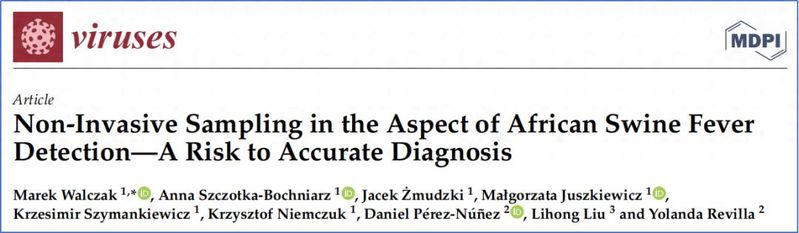
A team from the swedish national veterinary institute, marek walczak, conducted a systematic assessment of the three sampling methods (blood, oral swabs, anal swabs) of different toxic strains (asfv strains) and after learning the exact diagnosis, the contents were collated in the hope of assisting a wide range of farming friends in the non-pest control process。
The study found that:
1. Low toxicity strains are tested through the pcr, which can result in leakage detection, and combined with antibody detection can increase detection rates
2. There are differences in the load of different toxic strains in different sample types, with relatively higher loads of blood samples。
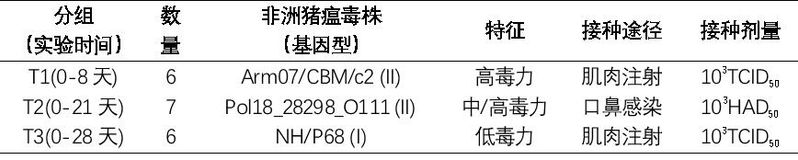
I. Status of experimental animal groups
Three groups of experimental animals were designed for the study, of which t1 was vaccinated against the high poison strain arm07/cbm/c2, the medium/high poison strain pol18 28298 o111, and the low poison strain nh/p68 were vaccinated against the medium/high poison strain of the african swine plague ii。
Table 1
Ii. Low toxicity strains infected with pigs only have higher antibody droplets, while the ct values are high in different sample types
In animals infected with strong toxic strains (t1 and t2), there are significant differences in viral loads between blood, rectal and oral swabs, with average ct values in blood significantly lower than rectal and oral swabs. All matrices infected with the weak strain (t3) have a ct value of between 36-38, but antibody drops are greater than t1 and t2, and the antibody response of the t3 low toxicity group is about 10 times that of the t1 (high toxicity) and t2 (medium/high toxicity)。
Table 2
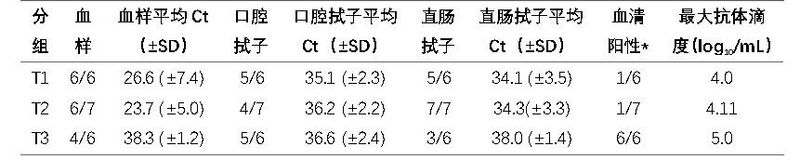
Note: “*” indicates that the sampling time was the last blood withdrawal before euthanasia (t3) or animal death。
Iii. Long-term survival of low toxicity strains
The figure below shows the survival rate of the various groups of animals during the test, with a maximum duration of 8 days for the t1 highly toxic group, 21 days for the t2 medium/high-independent group and up to the end of the test period for the t3 low-toxic group。
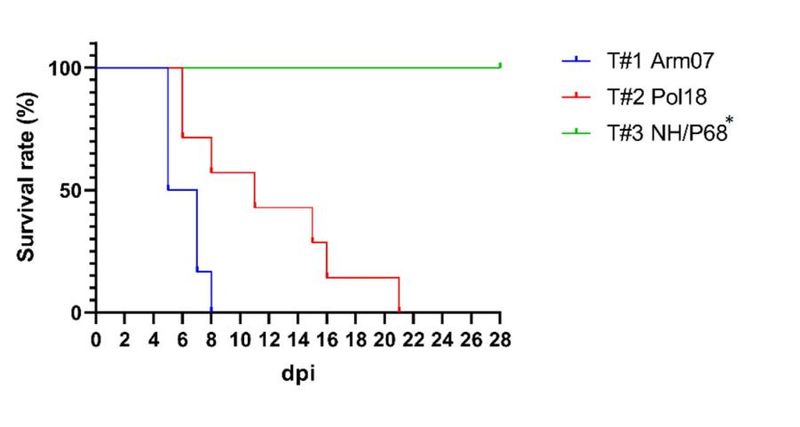
Figure 1 survival of experimental animals by group (“*” indicates euthanasia in 28 days)
Iv. Infected pigs with low toxic strains have only occasional fevers, most of which do not detect viral haematosis
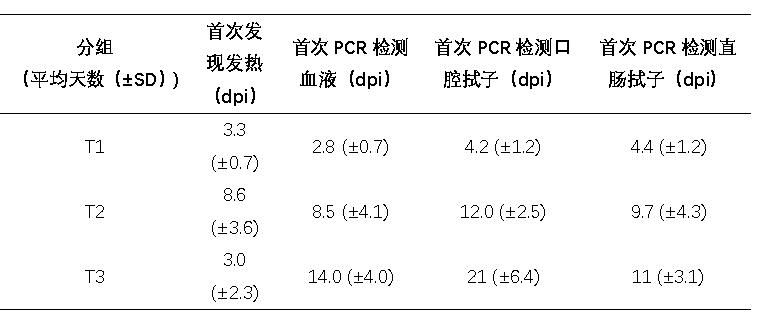
There are different patterns of viral detoxification caused by different strains or routes of infection. The symptoms of the infection of the strong poison strain are significantly stronger than those of the weak strain, and with the exception of the infection of the weak t3 strain, the average incubation period in almost all other groups of blood samples is shorter than the oral and rectal swabs, and non-intrusive samples may not detect positives in a timely manner and present a certain risk。
In t1 and t2, fever can be detected shortly after detection of viral haemoemia. In the t3 case, low-spirited strains are infected, pigs have occasional fevers and most are not detected with viral haemorrhage。
Table 3 first test pcr positive for fever and different matrices
In powerful strains, from the first day of viral haemorrhagic disease to the death of animals, the dna of the african swine plague virus can be detected, while in animals infected with the weak strain, most of the virus's dna is not detected in blood。
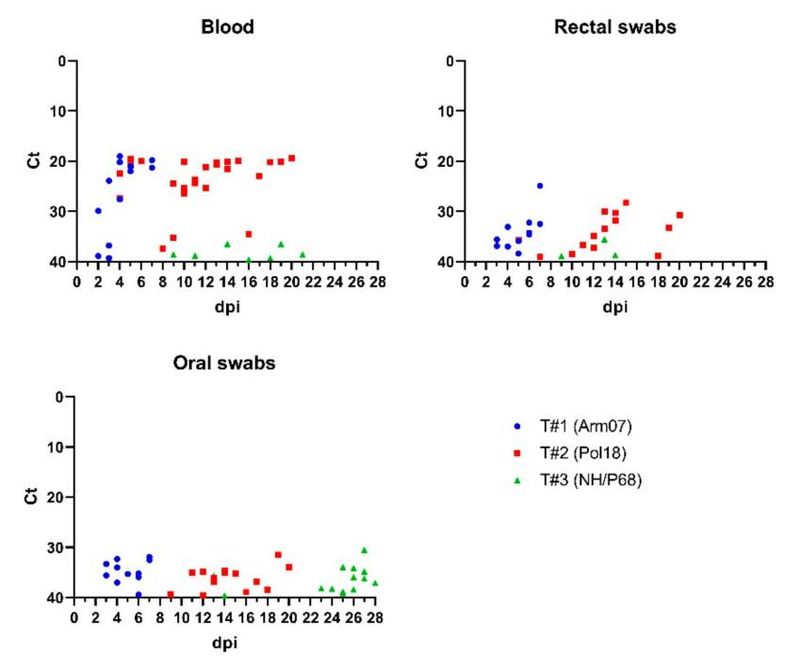
Figure 2: detoxification patterns of viral dna in different matrices in animal experiments
V. Blood samples show higher detection rates in different toxic strains
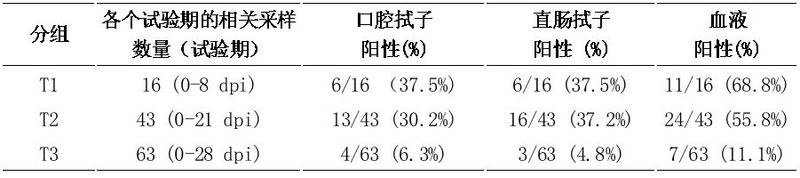
The percentage of pcr-positive blood samples (ranging from 11. 1 to 68. 8 per cent) reached at the same sampling time point throughout the experiment was higher than the pcr-positive samples for oral and rectal swabs (6. 3 - 37. 5 per cent and 4. 8 - 37. 5 per cent, respectively), with the lowest overall rate of pcr-positive results among the t3 vulture groups. The results of the above-mentioned experiments indicate that the positive rate of strong toxic strains is higher than that of weak strains, and the detection rate of blood samples is higher than that of other sample types。
Table 4 percentage of pcr positive samples collected in experiments throughout the test period that's right
I'm learning
References:
Walczak m, szczotka-bochniarz a, Żmudzki j, juszkiewicz m, szymankiewicz k, niemczuk k, pérez-núñez d, liu l, revilla y. Non-invasive samping in the aspect of african swine.