"cancer in stainless steel kettles"
More recently, there has been a saying on the internet that “the electro-heat kettle may disassemble heavy metal manganese, which is harmful to humans and may cause cancer”。
Gossip analysis
This statement has no scientific basis。
The high levels of manganese in stainless steel materials do not mean that the manganese will be released into the water. For metal materials used in the manufacture of electro-heat kettles, it is necessary to meet the national standards for food safety national standards of materials and products for exposure to metals. According to the 2023 implementation version, the manganese content of metal materials cannot be removed beyond 2 mg/kg under experimental conditions. So as long as it meets this condition in the course of the experiment, it can be used to make electric hot pots。
There is an online saying that “the stainless steel kettle causes cancer”: “the world health organization (who) calls for you to refrain from using electric hot water kettles”. You might be surprised to see these statements every day with a hot kettle. But is it true
No doubt about it
In fact, such a statement is not very recent。
As early as 2016, when the jiangsu department of quality inspection issued two reports and a sample check on the quality of the pot's products, it was mentioned that “55. 6 per cent of the hot kettles use permanganate steel” “the amount of manganese is increasing as the surface of the permanganate becomes less resistant to erosion, and if the limit is exceeded on the human body, it would be detrimental to health”
These two sentences are not problematic in themselves, but soon after the release of the report, the “cancer risk of manganese in stainless steel kettles” began to spread on the internet, even though there were reports that “the world health organization (who) had called on you not to use thermal kettle”. However, the world health organization has never published relevant information, which is rumours。
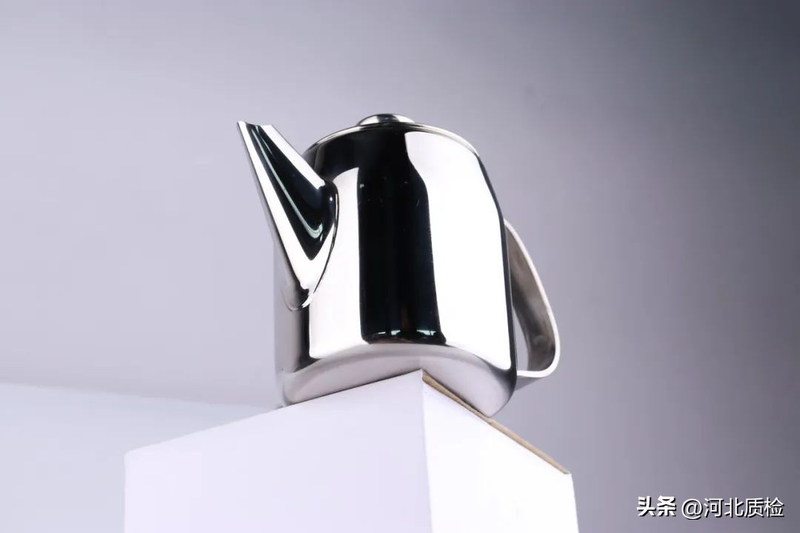
Images of copyright in the library, reproduction of use that may trigger copyright disputes
What's a manganese steel
Can manganese really cause cancer
High levels of manganese elements in steel are, by definition, higher (generally above 10%). By contrast, the 304 stainless steels, 316 l stainless steels, which are particularly common in our lives, contain less than 2% manganese。
Is the manganese in that steel really toxic? Do they cause cancer
Manganese is an essential trace element in humans and is involved in the formation and metabolism of many biological molecules. There are no studies of carcinogenicity from ingestion or inhalation of manganese。
However, studies do show that if manganese is exposed to long-term exposure, there is a risk of manganese poisoning, affecting liver function and the nervous system。
For example, long-term manganese-containing, welded workers may cause manganese poisoning by inhalation of excess manganese, causing slower reactions, anger and signs of physical tremors similar to parkinson's disease. In addition, manganese poisoning may occur if drinking water with excess manganese content is used for long periods。
Then the question arises: if water is boiled with a hot kettle made of permanganate steel, does manganese in steel cause manganese poisoning
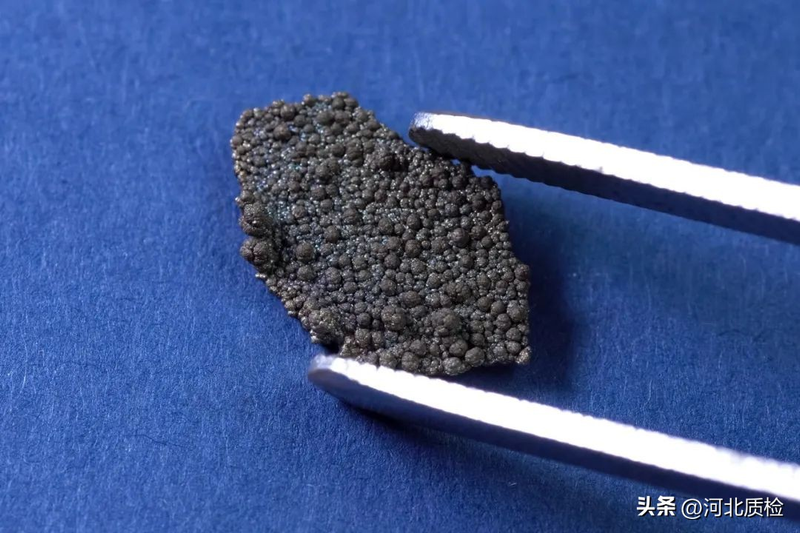
Pure manganese metal. Images of copyright in the library, reproduction of use that may trigger copyright disputes
High-manganese steel
An electric kettle
It is important to note here that the high levels of manganese in stainless steel materials do not mean that the manganese will be released into the water。
For metal materials used in the manufacture of electric hot water kettles, the national standards for food safety national standards of food exposure metal materials and products (gb4806. 9-2023) are required. In this criterion, there is no explicit reference to direct access to food for permanganate steel。
However, in the version implemented in 2023, there were requirements for manganese transport, which could not be greater than 2 mg/kg under experimental conditions. So, as long as the hypermanganese steel meets this condition in the course of the experiment, it can also be used to make thermal kettles。
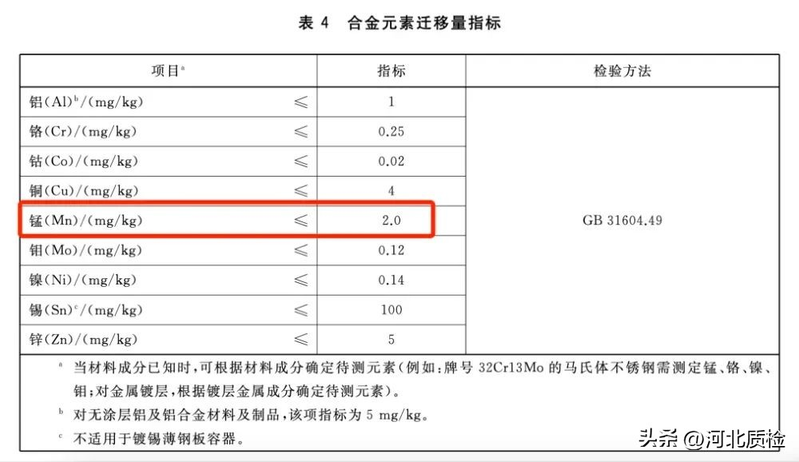
National standards for food safety national standards of food exposure metal materials and products requirements for manganese migrations. Source: reference 2
So whether steel can be used for food and drinking water, the core is not manganese-free, but whether manganese is going to go to food。
It's important to choose a specter-based kettle
The national standards for food safety, metal materials and products for food exposure, which are mandatory standards, must be implemented by all producers of electro-heat kettles, but there is a real possibility that some small plants may have greedy interests in using substandard materials。
So, when selecting the hot pot, try to select the regular source of purchase from the manufacturer, and when the product is available, it is advisable to confirm that the implementation standard for the hotpot is gb 4806. 9-2023, with the corresponding product certification. If there is no information on product packaging, be careful。
Also, these types of stainless steel are indeed more frequently used as food containers than permanganate steel, and are relatively more safe, and can be preferred to electric hotpots for these materials when purchased。
Hot water itself is more carcinogenic than manganese
In fact, more than manganese in stainless steel canteens, the temperature of water when drinking water。
Some people might like to drink very hot water, but an article published in 2016 in the lancet oncology mentioned that very hot drinks (over 65°c) can cause damage to the cuisine walls and increase the risk of edible cancer。
In the same year, the international agency for research on cancer (iarc) also classified beverages above 65°c as carcinogens of 2a (highly likely to cause cancer in humans). Drinking hot water above 65°c is also likely to cause cancer。
So if you like to drink very hot water, you need to pay attention。
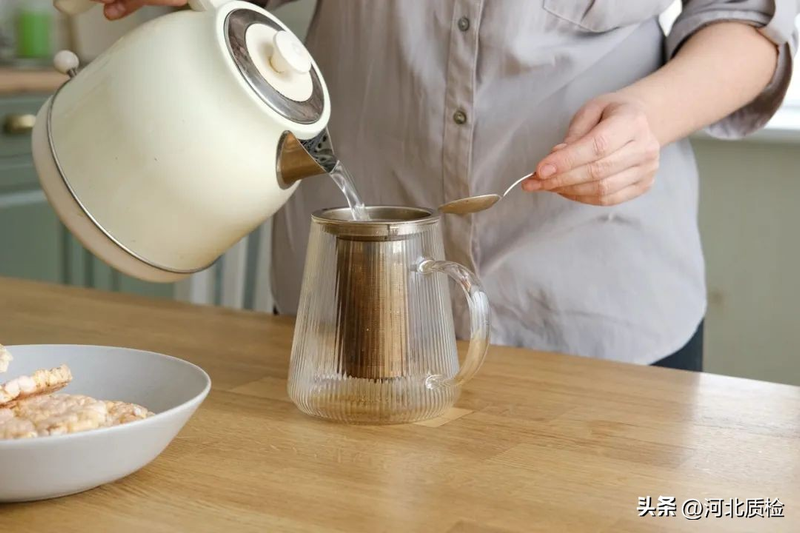
Images of copyright in the library, reproduction of use that may trigger copyright disputes
Is it because of the cancers of “twirling water” and “overnight water”
There is also a more widespread rumour about hot water kettles: thousands of rolling water (water that boils repeatedly) and overnight water cannot be drank because of the abundance of nitrites that can cause cancer。
Nitrite is indeed a carcinogen of the international agency for research on cancer (iarc) category 2a, but it is not meant to cause cancer if nitrite is present. Our country has a clear requirement (not exceeding 1 mg/l) for nitrite content in drinking water, not exceeding this limit and without fear。
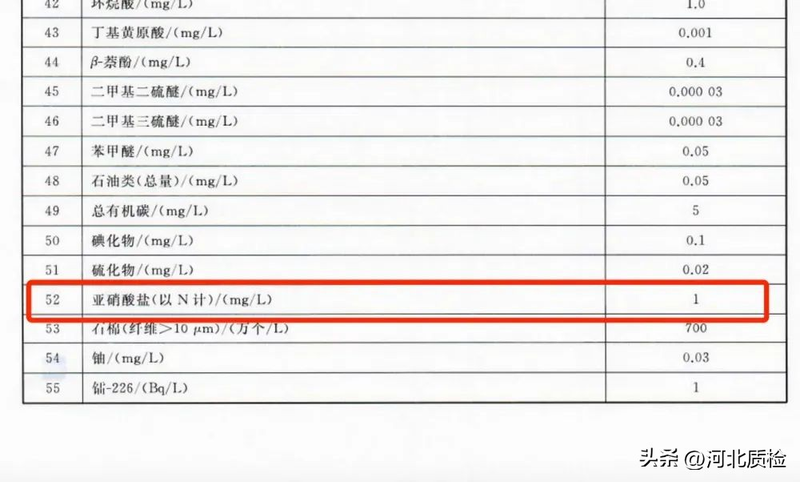
Drinking water requirements for nitrate in central asia, taken from reference 4
Will the levels of nitrite in thousands of rolling water and overnight water be exceeded
An article published in modern foods in 2021 was experimented with running water and pure water. Within 10 hours, the water is boiled every 20 minutes, 30 times in total. An upward trend in nitrite levels was found, but much smaller than the 1 mg/l criterion。
Some of the water was then reheated 24 hours later (simulated overnight water) and boiled again every 20 minutes and 30 times, and then it was the devil's experiment of "twirling water + night water + roll water."。
It was found that the nitrite content in the water had indeed become higher, but also did not reach 1 mg/l. In view of the fact that it is not possible to make such repeated boils in ordinary families, we do not have to worry about rolling water and overnight water in our daily lives。
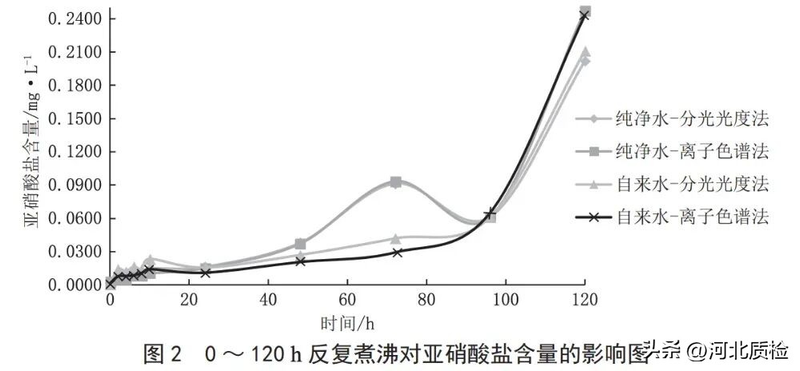
Photo taken from reference 5
So we don't have to worry about the manganese problem with domestic electric hotpots, as long as they are purchased from formal sources. There is no cancer in the thousands of rolling water and overnight water. The only thing to be noticed is that when drinking water, try not to drink too hot, they are the real carcinogens。
I'm going to use the "little" mirror
Rumours such as “cancer from stainless steel kettle” are typical pseudo-science rumours。
Such rumours often take advantage of one-sided understanding of scientific knowledge or deliberately distort scientific principles to produce conclusions that appear to be justified but that are actually scientifically unfounded. Some rumours may cite some of the scientific findings, but deliberately ignore the limitations of the background, conditions and conclusions of the studies. For example, the reference to test results under certain extreme conditions (e. G., acid leaching) ignores differences between everyday use environments and experimental conditions。