In this five section, the death of a young man named weizsé brought the famous hundred degrees to the forefront of public opinion。
Another “competitive ranking” of a 100-degree medical search, a false information piled up with money and lies, once again killed an innocent person. As a result of a 100-degree search of advertising on the “sliding membrane tumour”, weipsy tried an oncological bioimmunotherapy known as collaboration with stanford university in beijing general hospital. After spending more than 200,000 on medical treatment, it became clear that the treatment had been discontinued in the united states. During this period, the tumor has spread to the lungs, and wei xian will not be cured。
In the deceptive despair, weipsy wrote about the experience in a web-based response to questions. And the question is: what do you think is the greatest evil of humanity
Capital
In today’s message, which has been emptied by friends, the battle for 100 degrees, and the ensuing black screen of china’s private medical system’s capital and interests, dominate the mainstream。
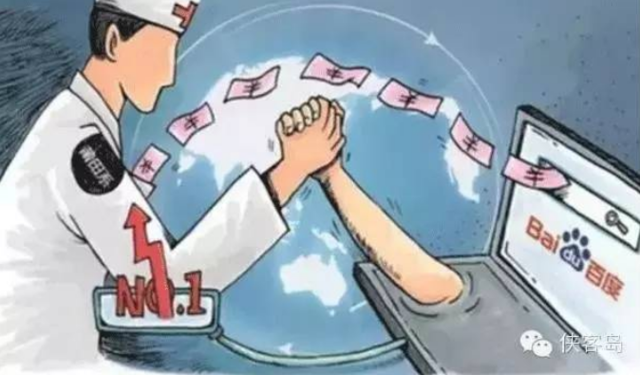
As a search engine company with an absolute market share in china, 100 degrees is the entry point for most of china's internet users. But it is also this seemingly open and wide access to knowledge that is stuck to the throat by capital. The proliferation of information, leading to more “gold” information crowding into the eyes of users, has led to a “competitive ranking” advertising pattern. The principle of monetary measurement of everything is the most blatant practice in this advertising pattern。
In the eyes of money there is no good or evil, no truth or falsehood。
According to public reports, the total number of advertisements in 2013 was $26 billion, while the private sector's rmb 12 billion was advertised at 100 degrees, and 60 per cent of their advertising inputs were given to the search engine. The cost of extension of the search engine in one hospital is 70 per cent or 80 per cent of the turnover, or even 120 million yuan a year, of which 100 million is invested in the search engine。
Together with the same double-crossing of capital, 100 degrees and capital have quietly built a vast web of spiders who, in lies and deception, have completed the most ruthless hunting of ordinary people. And, because of the desperate, many people risk their lives in this little search window。
100 degrees, poison

Chaos
But, in turn, as a technology company, 100 degrees of toxicity is not inherent. The “competition ranking” meets the basic criteria of a market economy and is equally well applied in many market economies. It is only in china that this “money-only” approach, without legal boundaries and a moral bottom line, has allowed this beast of capital to devour people。
Behind the 100-degree “competitive ranking” there is a wealth of private capital for health care, which includes a large part of the land system that occupies the hill. A historical inventory of every attack in the field of health care has been linked to the government's medical reform。
For more than three decades, government reforms in the area of public services have been in an awkward state of disarray and death, and the market, like a living mud, has been unable to capture its spleen。
In the 30 years since the founding of the country, china has initially established a public health-care system of “health care for all” and, although it does not have enough material resources, there is a barefoot doctor in almost every rural area and a health clinic in large and small urban units. However, in the wake of the change, the public health system was destroyed。
The cooperative health care system in rural areas has deteriorated rapidly, from 92. 8 per cent in 1976 to 52. 8 per cent in 1982. After the official dissolution of the people's commune in 1983, the cooperative health care system in rural areas suffered an avalanche, which fell sharply to 11 per cent and, by 1989, to 4. 8 per cent. With the exception of some rural areas where the collective economy is well developed, the cooperative health care system has been maintained and farmers in most parts of the country have returned to the situation of self-financing medical care。
At the same time, urban health care in china is mired in “marketization”. The main idea at the time was to “manage health with economic means”, the hospital began to pilot “enterprise management, self-employment and self-sufficiency”, the government introduced a “platform subsidy, economic accounting” for hospitals, and the government began a major roll-out of the urban health sector. This can be seen from a set of data that, prior to 1978, over 50 per cent of the revenue of public hospitals came from the government budget, and that after the 1980s, hospitals were granted greater autonomy, but government subsidies were also decreasing. The share of government subsidies in hospital income fell from 30 per cent in 1980 to 27 per cent in 1985, 19 per cent in 1987 and 6 per cent in the late 1990s。
The impact of market-based reforms on the rigid public health-care system is enormous。
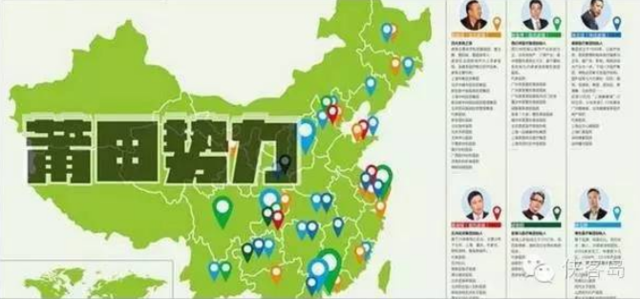
At the same time, the first group of tung-das began to swim in the streets of china with medical kits, filling the gap between the rapidly shrinking barefoot doctors in the countryside. It's called the traveller. Some of them are medically skilled, and more are concubines。
The original accumulation of capital began with small ads with wire poles。
By the 1990s, as in many state enterprises, public hospitals that were not adapted to market reforms had begun to face a financial crisis, particularly those that were heavily dependent on national blood transfusions and those that were fire and police. As a result, attempts have been made to replicate the responsibility for rural land contracting into hospital operations and to start a unit contracting. This provides a unique opportunity for the qingda swimmers who walk the streets. Many began to shake their faces and enter the regular hospital doors by paying bribes. It was said that it often took between $600 and $1,000 to succeed in taking the dean. The temptation of this huge sum to compare the bitter wages within the system is undoubtedly difficult to resist。
Also difficult to resist are medical licences, issued by the local health sector at a market price of $200。
Thus, the pressure on the entire unit of the system was shifted to a contracted unit, and a dangerous marketing attempt was initiated in china's public services. It is not clear to many that, under the official name of an army hospital, a military police hospital, a fire hospital, etc., some of the departments have been privatized, and it is precisely the official social credibility that has been eroded by the kidnapping of a hammer。
In 2000, the health authorities finally realized the seriousness of the problem by issuing two articles: the prohibition of private contracting in non-profit hospitals and the admission of social capital to the medical sector. The market-based reform of public hospitals has taken place。
It is clear, however, that the provisions of article 1 do not address the financial resources of non-profit hospitals, and private contractors continue to exist. The government's financial investment in health-care public services has been declining year by year. In the early years of the reform and opening up, government budget expenditures accounted for 36 per cent of total health costs, falling to 25 per cent in 1990 and 14. 9 per cent in 2000. This period of health reform has continued to be market-oriented, reducing governmental and social responsibilities and increasing the burden on hospitals and individuals, so that the market can allocate health resources more effectively。
The second provision, on the other hand, provides a green light for the private medical capital represented by the yuda department to enter the medical profession. In this regard, many public hospitals have been converted into private by purchase of capital, while private hospitals of all kinds have flourished. During this period, the yuda department completed the purchase of a large number of hospitals throughout the country and, with their flags and reputations, completed the first step of capital laundering. Shida medical care began the industrial path。
And the process of industrialization is a familiar pattern: high prices, either by digging people out of public hospitals or by empty packaging a doctor, before the internet was developed, were slamming down television stations, men, gynaecologists, liver, sexually transmitted diseases, so that the entire country could get prostate disease, after the internet had become widely available, and in collaboration with search companies such as 100 degrees, it had become a computer screen like a virus. In recent years, plastic surgery has begun. These high publicity costs naturally require consumers to pay for them。
An example was given of shanghai's big heart hospital, where the owner was one of the three main factions. It was reported that in 2007, when the president was chosen, an annual salary of $1 million had been paid by the fund, plus an increase. However, the kpi test targets were 500 surgeries in the first year, 1,000 in the second year and 2000 in the third year. At the time, however, there were no more than 2,000 heart surgeries in 2012 five years later, at the boss nakayama hospital in the shanghai region。
While the nature of capital is profit-oriented, the lack of government regulation undoubtedly further fuels the greed of capital。
It was
Over the years, as the government has returned in the fields of health, education and so forth, it has continued to pay off its debts to public services in previous years, before competition in a disorderly health sector was somewhat curtailed. However, the dilemma faced before marketization is still not well addressed, which is the unfairness of medical resources. The desire to throw the burden over the market and allow it to regulate medical resources has proved to be a failure and has brought about precisely greater injustice. Nor will it be a living path to a full return to the government's efforts. The diversification and stratification of health services, the bottom-up of the government, and competition in the market remain a path worth exploring. It is only in this process that government regulation of markets, review of qualifications and penalties for non-compliance are in place。
As a result of the events in weizsé, apart from the condemnation of bad companies and the exploitation of capital, we should also urge the government to stop appeasement of the rape, the punishment, the overhaul, and a clear space for networks and markets。
In a further step, china has been trying to tame the beasts of power and capital throughout its three decades of reform. There is much to be discussed in public opinion about the unconstrained nature of power, and we are all clear that power should be locked into cages and that power should no longer be arbitrary. But there is also the problem of taming capital. It is only in the value orientation of full-interestism that we often forget this poison. Capital has provided a sustained impetus to china’s reform, while it is also developing a bloody primitive accumulation in china, constantly eroding our morals, rights and even the foundations of governance. As a socialist state, marxism's reflection on capital is, logically, the most thorough and vigilant, but unfortunately, its dependence on capital will remove our guard against this beast。
A few days ago, xi returned to the village of anhui to relive the spirit of reform. Indeed, we also need to recall the original purpose of the reform. Since it was called socialism, the purpose of the reform was to promote the common good of all, not to feed power and capital, and to starve the people。