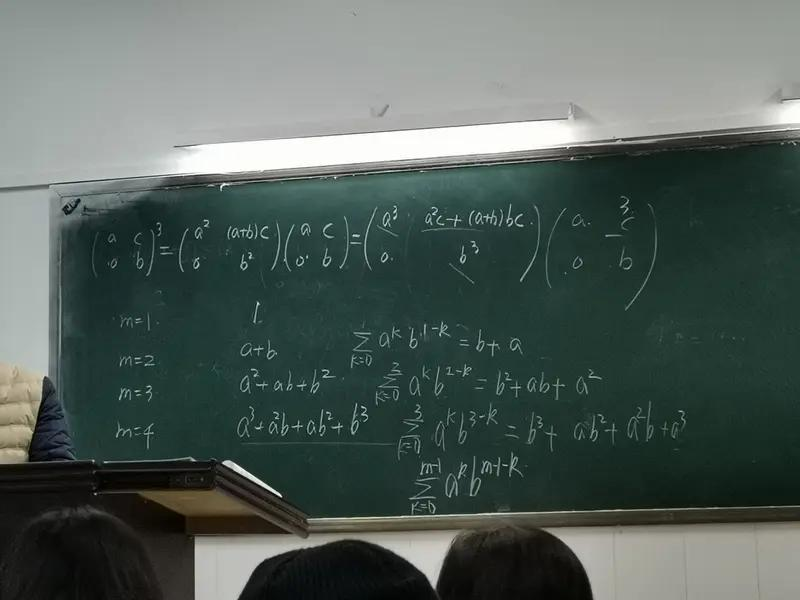
Simple math in primary school helps us avoid complicated calculations and get results quickly. The following are examples of commonly used simple techniques and easy pits。
The rules of exchange and integration are the basis of simple calculations. For example, question 1 28 x 25 ÷7, with the symbol mover changing the order of operations, first 28 ÷ 7 = 4 and then 4 × 25 = 100, which is simpler than the direct 28 × 25; question 3 ÷ 6 ÷ 7 × 6, which is offset by ÷ 6 and × 6, leaving 63 ÷ 7 = 9, saves many steps. The law of union in the law of division is also very useful. Question 2 is 74,000 ÷125 ÷8 because of 125 x 8 = 1,000, so it becomes 74,000 ÷ (125 x 8) = 74, which is the result at once。
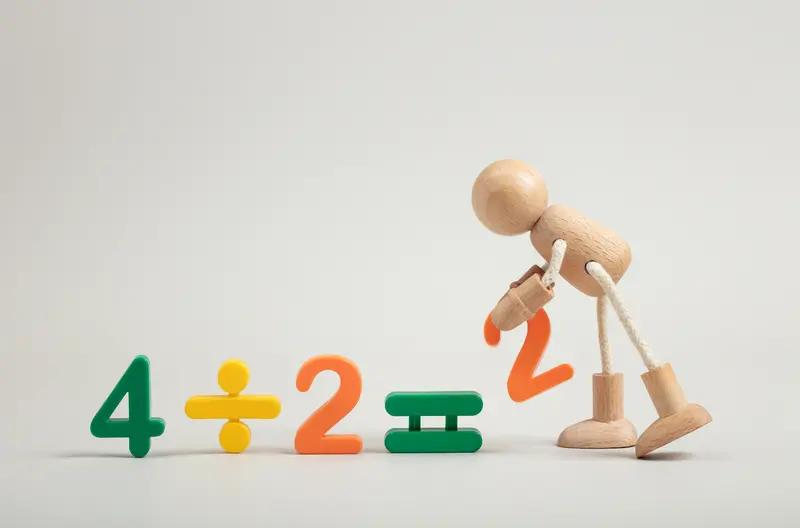
The correct use of the law of distribution solves many of the hybrid algorithms, but care is taken to apply the conditions. Question 5 (440+66-77) ÷11, dividing each number in brackets by 11,440÷11=40,66÷11=6,77÷11=7, resulting in 40+6-7=39; question 6 275÷25-225÷25, using (275-225)÷25=50÷25=2, is the application of the distributive law in the division law. However, question 7 24 ÷3 + 24 ÷2 + 24 ÷1 cannot be applied to the law of division, as the difference in the number of dividing numbers can only be counted as 8 + 12 + 24 = 44 in steps, and if the method of allocation is forced to be written as 24 ÷ (3 + 2 + 1), the result would be a mistake of four, which is a common error zone。
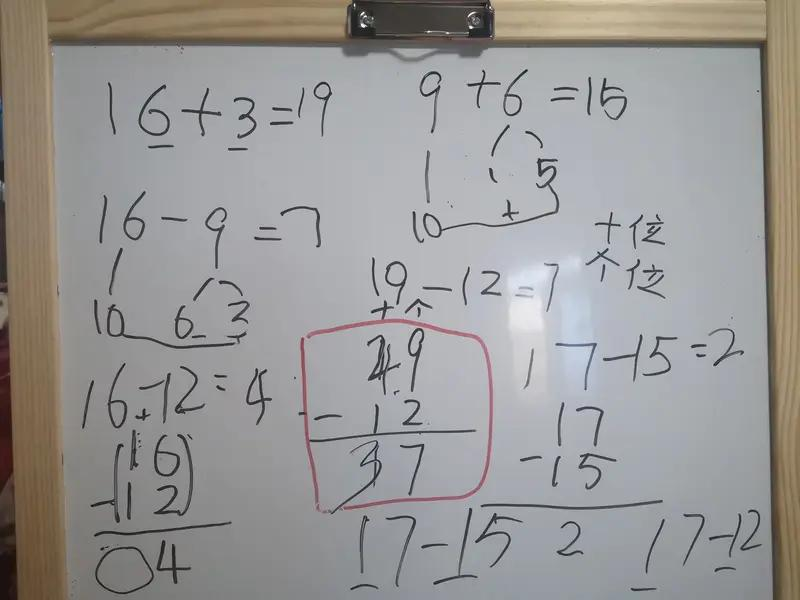
The consolidation method and the decomposition factor method are key to the consolidation. The whole method is to convert the number into a whole number of 10, 100, e. G. 199 + 45 = 200 + 45-1 = 244, 567 - 198 = 567 - 200 + 2 = 369, plus minus minus minus. The decomposition factor method is the combination of 25 x 36 = 25 x 4 x 9 = 100 x 9 = 900, 125 x 56 = 125 x 8 x 7 = 1,000 x 7 = 7,000, as 25 and 4, 125 and 8 are “composed partners” and are calculated more quickly after 100 or 1000。
There are some special laws that make calculations faster. For example, the end number is 5 square, 35 x 35 = 1225 (the algorithm is 3 x 4 = 12, followed by 25), 75 x 75 = 5625 (7 x 8 = 56, plus 25); the same multidigit multiplied by 11 x 11 = 121, 111 x 111 = 12321, 1111 x 1111 = 1234321, the pattern is from 1 to n; the same number of 10 places is equal, the number of places complementary, such as 23 x 27 = 621 (2 x 3 = 6, 3 x 7 = 21), 54 x 56 = 3024 (5 x 6 = 30, 4 × 6 = 24), which saves a lot of time。
It's easy to calculate. For example, the order of the calculation is wrong, the 3+2x4 multiplication is first calculated and then the addition cannot be directly 3+2=5 and multiplied by 4; the symbols are to be changed when the brackets are removed, such as 5 ÷6 ×7 = 5 ÷6x7, which is wrong if they are not changed; large numbers are to be forgotten, such as 499 + 3 = 502, not 500; unit conversion is to be uniform, such as measuring square sizes with rice or centimetres for length and width; it is also important to estimate capacity and to see whether the result is reasonable, such as 125 ×72 = 9,000, which is clearly wrong if 7,000 is not。
There are also some challenges that can work out, such as 11 + 22 + 33 +... + 99, using the equation formula 11 + 99 x 9 ÷2 = 495; 1 + 2 + 3 +... + 9 + 10 = 45 x 4 = 180, which requires teacher guidance formulas, but can be quickly resolved when mastered。