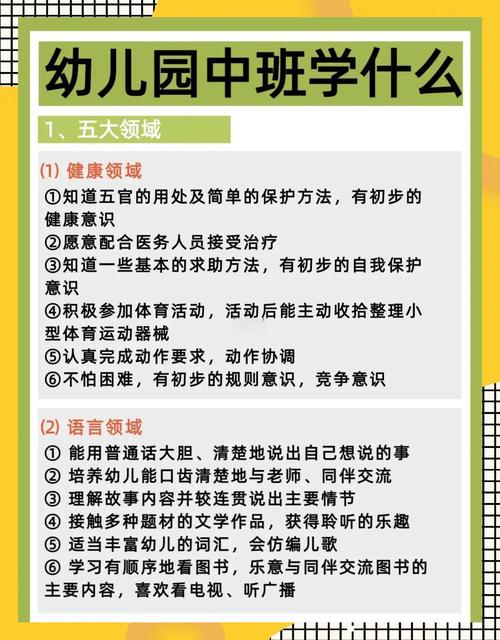
Secondary school attendance is one of the essential conditions for young children to communicate with others. Without such capacity, the lives of young children will be regretted. Language skills include both written and oral expressions. In the development of written expression skills, children can often read small stories, essays or poetry before they go to sleep. With regard to the development of oral skills, the following measures can be taken: 1. Parents should listen carefully to the child's words and give him or her the encouragement to speak more and more. Respond patiently to the child's questions, even if they are repeated. If they are unable to answer, they also undertake to search for information to inform the child later. 3. Asking children voluntarily can be done by changing roles. 4. In game interactions, children are encouraged to introduce roles or circumstances and to correct inappropriately or wrongly the child's language. Secondly, care is taken to develop the child's observation and imagination, while reading the drawings, to allow the child to look closely at the images and then cover them up, ask questions about them and develop the child's memory and observation. When a story is told, children are given to fabricate the ending of the story as a way of building imagination and linguistic expression. Thirdly, the courage and tenacity of a child's brave and resilient character are closely linked to the development of independence. When the child falls, do not rush up, let him stand up and encourage. Injecting needles and other things that require courage, children can do it independently and not cry easily. 4. Attention to the moral qualities of the child is concerned with the fate of the individual, the family and the nation. As the child's first teacher, parents ' life stances and values can potentially affect the child. In the area of moral education, children must be trained to care for others, respect for elders, work, hygiene and resources. V. Respect for children, but not for free, respected children are more confident and creative. Respect for children is the space that gives them the freedom to choose, provided that they do not affect others and that they comply with the parents ' demands. "no rules, no circles," and proper restraint is necessary. (1) “parents cannot give orders above the child's head”. The parents' request must be a “agreement” reached after consultation with the child, otherwise the child's renegadeness will be nurtured by your “iron wrist”. To be able to listen to you, it's possible to take a “yes, no” approach. This approach, in particular, stipulates that children must do what you ask. For example, if you want a baby to take a bath, you can't ask, "have you taken a bath?" instead, the question was, "do you take a bath at 8:00 or 8:30?" so, it seems to be asking his opinion, it's already stipulated that she has to take a bath, and it's not your order, it's the children's decision. (2) the results of the child's operations are checked on time. There must be a check-up when there is a demand to develop the confidence and trust of the child. To uphold the principle of “random education”. Educational resources are available for early childhood education whenever, wherever and by whatever. For example, when eating, children can be told about the importance of sitting positions; it can be said that the nutritional value of the various foods, making the children aware of the hazards of selection, knowledge of foods and methods, etc. It is also possible to learn about the different quality and quantity of the various dishes. To adhere to the principle of “timely summary”. We all know the logic of "eat, grow" and the life of a child is no exception. Children will do better next time only if they are summed up in time. For example, on one occasion she fell on a bicycle riding. Asked why she fell. Kids say no. Then she fell, and i held her in time, and she was guided by me, and she understood that she had been wrong in her cycling position, and that she had turned too fast. Now she can ride a bike. The baby is always curious about what's around, so it's not focused and it's easy to distract. In addition to this, middle-school children are prone to volatility and deviant behaviour. The encouragement of children is crucial for children in middle-school, as they are still more dependent on the teacher and are therefore prone to fearing difficulties and being afraid to try. It is therefore particularly important at this time to encourage. No matter how difficult it may be, it may be useful for children to try first, to do whatever it takes, and to praise it in a timely manner, so that they can fully build their confidence. This not only fosters a good habit of children working hard, but also fosters good self-confidence. Children at this stage of imitation power tend to have amazing imitations, and parents cannot be underestimated. Because it shows that children have a greater sense of curiosity and a desire for knowledge, they look at the characteristics of the objects they imitate and are also an expression of their ability. The majority of parents who are subjective think that they do not know anything about the child, so they do everything for the child, which is not conducive to the child's growth, and are parents who want to let the child go and exercise their right to choose, while at the same time preventing the child from becoming indecisive. It is therefore important that children in kindergarten be educated carefully, first and foremost by understanding the character of the child and, second of all, by taking advantage of the child in order to help them to become better qualified people. Guess you like it: