


The planting of fruit trees not only yields fresh and delicious fruits, but also adds life and greenness to the garden or field. However, mastering scientific planting techniques and methods is essential if fruit trees are to flourish and produce productive years. From seedling selection, planting to daily conservation, each link has its key elements, and neglecting any step can lead to slow growth, few results and even death of fruit trees. This paper will break down the whole process of planting fruit trees and elaborate on the core techniques of each stage, so that new players can work easily。
I. Selection of pair varieties and trees, laying the foundations for cultivation
Varieties selection is the first step in planting fruit trees and the key to determining later harvests. A combination of local climate, soil conditions and planting purposes (e. G., food, sighting, potting, etc.) needs to be considered. In the cold winters of the north, cold-resistant varieties such as apples, pears, peaches, cherries, etc., should be chosen, while high temperatures and rain in the south are suitable for tropical subtropical fruit trees such as citrus, twigs, dragon eyes and mangoes. If planted in the yard, the species of trees and fresh fruits, such as pomegranates and tomatoes, are chosen; in the case of plant plants, the dwarfed varieties, such as condensed apples and pellets of gold, are selected to avoid over-planting。
The quality of the tree directly affects the rate of activity and growth, bearing in mind the “three look”: first of all, the high-quality tree should have a well-developed stubble root, complete, black and decomposition, and the main root is thick and branched; second of all, the dry branch should be thick and straight, the surface skin should be smooth, and there are no traces of disease or pests; the sprout is full (especially the sprouts of the top) and the skin of the finger is dry with a small finger, and the internal green is green, indicating the stubble activity; and third of all, the permanent green tree (e. G. Citrus) leaves should be thick and bright, with no yellow leaves or spots, and the leaves felling tree (e. G. Apples) should have no leaves during the hibernation period, but the dry branch should not be wrinkled or molded. Avoiding the purchase of “weak seedlings” - roots of dry, thin, wormholed or molded trees, which have low survival rates and are susceptible to later disease。

Pre-plant soil treatment to create “comfort homes” for root systems
The growth of the roots of the fruit tree system requires a defusing and fertile soil environment that is essential for soil improvement before planting. In order to first detect soil acid alkalinity, most fruit trees are suitable for growth in the ph 6. 0-7. 0 neutral to micro-acid soils. If soil is alkaline (e. G. Northern), sulfur powder or corroded pine needles can be distributed; if acid is diluting (e. G. Southern red border), lime or grass ash can be added to the sum。
Specific methods of soil improvement vary according to soil conditions: if the soil is sticky (mud, slabs) it needs to be mixed with 30% sand or pearl rock to increase air permeability; if the soil is infertile (sandy soil, wasteland) it should be mixed with a sufficient amount of decayed organic fertilizer, such as goat dung, cow dung, composting, etc., which is approximately 5,000 kg per acre, which is ploughed deep behind the soil surface by 30-40 centimetres to fully mix organic fat and soil. A week prior to planting, the pit needs to be dug well in advance, depending on the size of the seedling root system, usually 80-100 centimetres in diameter and depth, with a 20-centimetre layer of corroded or shredded wood on the bottom of the pit, both to preserve water and gradually to provide nutrients。
Scientific institutions to “sure purpose”
The timing of planting needs to be determined by the type of fruit tree and local climate. Leaven fruit trees (apples, pears, peaches, etc.) are suitable for planting after fall leaves and before spring buds, mostly in the north after the spring soil is unfrozen (3-4 months) to avoid winter frost-freezing, and in the case of permanent green fruit trees (crusts, twigs, etc.) for planting in the spring (3-5 months) or in the autumn (9-10 months), when temperature is appropriate and the roots recover quickly。
There are three key techniques in the planting process: first, “low-planted high-level cultivation”, which places the tree in the centre of the pit, stretches the root system, compacts the roots closely with the soil as it fills up to one-second of the soil, and ultimately puts the root system in close contact with the soil. Thirdly, the soil is at a “grain neck and surface level” height, which is appropriate for “post-plant protection” purposes (the neck is the boundary between the trunk and the root line), is too deep to cause boredom and is prone to drought; and second, “well-planted water is ready to go through”, is “well-drink” and can be slowly watered until the water is leaked from the bottom of the pit, a dry soil or a weed tree is wet to protect from the soil; and third, it is “post-plant protection”, sets a tree plate around the trunk of the tree, which allows for the application of water fatness, if the tree is higher (over 1. 5 m), needs to be fixed to avoid wind-winding, and winter-planted leaves trees, can be covered by drying, and。
Iv. Long-term conservation: fertilization, watering, trimmed
(i) precision fertilization and supply of nutrients on demand
The long-term demand for nutrients varies from tree to tree and requires “fertilization on demand”. Teenage (one to three years after planting) is dominated by nitrogen fertilizer, which promotes the growth of branches, increases the ability to withstand colds by applying corroded pie fat or urea once a year after spring and once in summer, and an additional application of potassium phosphate (e. G. Calcium phosphate, potassium sulphate) in autumn. The fruit tree needs to be fatter in the outcome period and should be guided by the principles of "nitrogen before flowering, phosphorus after flowering, potassium after inflation, post-harvest fertilizer": the application of nitrogen fertilizer (e. G., manure) before the spring flower starts; the promotion of flower sitting fruit; the application of phosphate fertilisers (e. G., potassium phosphate) to juvenile fruit to reduce fall fruit; the expansion of fruit periods (e. G., apples 7-8 months, citrus 9-10 months) to increase potassium and calcium fertilizer to improve the quality of fruit; and the subsequent application of a “monar fertilizer” (mainly organic fertilizer, combined with compound fertilizer) to help restore the tree position and provide nutrients for the next year's results。
Fertilizer is applied in the form of “ring ditches” or “denials” where 20-30 centimetres of cyclopedia or several fertilized caves are dug in the outer edge of the tree canopy (avoiding from the roots of the trunks) and the fertilizer is mixed with the soil and then filled with water. Avoiding surface dispersion to prevent nutrient loss and root rise。
(ii) reasonable watering to avoid imbalances in droughts and floods
The fruit tree watering is subject to the “dry-and-wet” principle, i. E. When drying up at 2-3 cm below the soil surface, then watering up. In the spring seasons and flowering seasons, water is required in quantities to ensure sufficient moisture to prevent drought from falling fruit; in the summer seasons, water should be poured in the mornings or evenings to avoid high temperatures to stimulate root systems, with attention being paid to drainage and the timely clean-up of tree plumes after the rain to prevent decaying roots (especially peaches, cherries, etc.); in the fall seasons, proper management of water can improve fruit sweetness; and “freeze water” should be poured before winter sleep to enhance winter resilience。
Water is given preference by dripping or perforation, and if so, the flow must be avoided by impacting directly on the trunk of the tree in order to prevent soil slabs. It is more prudent to water the pelvic fruit tree, which cannot accumulate water in the basin, and which enhances the drainage of the pottery at the bottom of the basin。
(iii) scientific shearing to shape productive trees
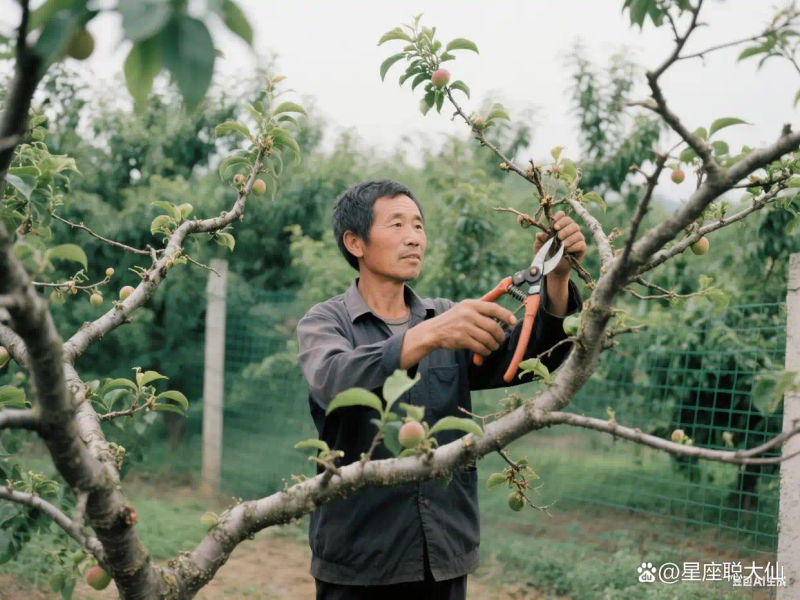
The purpose of the cut was to adjust tree shapes, ventilated light and concentrated nutrient supply branches. The larvae is dominated by "dry shape" and leaves 80-100 centimetres short. Detaching, training 3-4 branches, and retweaking branches on the main branches, forming happy shapes or dispersing fracturing tree crowns to avoid foliage. The result is trimmed winter and summer trimmed: in winter (after falling leaves and before buds), the insect branches, cross branches, overlapping branches, long branches, and the preservation of strong parent branches (e. G. Apples, medium-sized branches of peaches); in the summer (in the long term) chording, decoupling, controlling the length of excessively long branches, wiping out the new stalks, ensuring ventilation within the tree canopy and reducing infestation。
The tools are sharp when trimmed, the cut is smooth and the wound exceeding 1 cm in diameter requires a healing agent (or grass ash) to prevent bacteria from entering. The focus is different: nucleus (pells, plums) glitter should be kept open; omeletes (apples, pears) can retain more side branches and increase the number of outcomes。
V. Pest and pest control: prevention is the main focus, integrated management
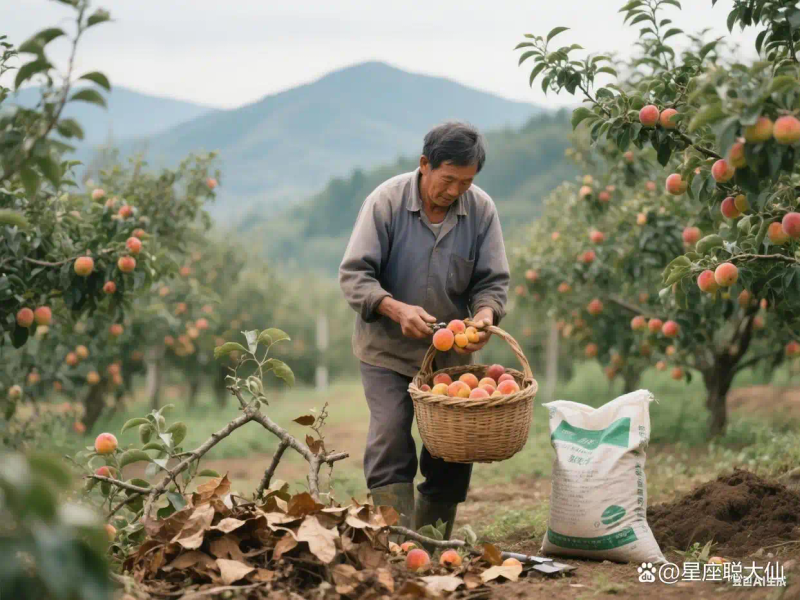
Vegetable disease and pest control must be based on “prevent, combine”, reduce pesticide use and ensure the safety of fruit. Agricultural control is the basis for the winter clean-up of orchards, the central burning or deep burial of leaves, dead branches, diseased fruit, and the eradication of winter insect eggs and fungi; rational trims that maintain ventilation and increase the resistance of trees; and rational rotations (for pelvis or small areas) to avoid associated endemic diseases。
Physical control may be used: aphid baiting on cedars, powdered lice; pests such as peach-eating, pear-eating, etc.; and large pests such as the artificial capture of oxen and gold turtles. Biocontrol is suitable for green cultivation: protection of natural enemies of pests such as ladybugs and grasshoppers; application of biopesticides, such as the souyungi (bt) against fin worms and the prevention of bacterial diseases by springrecin。
Chemical control requires precision: timely use of medicines in case of detection of pests and pests, avoidance of large-scale outbreaks, preference for low-toxic and low-residency pesticides, such as aphids for aphids, avil for red spiders, polybacterium for fungal diseases (e. G., platinum, anthrax) and methyl tobuzin. 20-30 days before the harvest of fruit is banned to ensure food safety。
Vi. Responsibility and poverty management
The maturity of the fruit determines the taste and durability and needs to be collected in due course. Fruits such as apples and pears are harvested when the colour of the fruit is changed to a variety of coloured velvets and the fruit handle is loose; nucleus such as peaches and plums are harvested when the face of the fruit is radiant and flexible; and citrus fruit is collected after full colouring. Scissors are used to cut it from the handle of the fruit, to avoid pulling the broken branches and other fruits, to take them lightly and to prevent them from touching。
Post-harvest management affects production in the coming year: the garden is cleaned in a timely manner and the branches are cut and overstretched; post-harvest fertilizer (organic + compound fertilizer) is applied to supplement nutrients; before winter, the trunks are painted white, root soil is bred (30 cm height) and young trees can be packaged in the north to protect them from cold and ensure their safety。
The planting of fruit trees is a process that requires patience and care, from the selection of seedlings to the harvest, where the wisdom of the grower is gathered at every step. By adapting management methods to the growth habits of fruit trees, these techniques will allow them to thrive and to enjoy the joys and fruits of cultivation。



