With the rapid progress of 5g technology and artificial intelligence, the publishing industry is entering a completely new phase of upgrading, and the innovative concept known as “smart publishing” is leading the development of the industry on its own, enabling it to better adapt to the challenges and opportunities presented by the age of wisdom。
The meaning of smart publishing
Driven by the wave of digitalization, the publishing industry has ushered in an entirely new integration and upgrading, with the birth of a remarkable new term, “smart publishing”. It represents not only the application of new technologies, but also a new direction for future developments in the publishing industry。
According to yang zhihui, intellectual publishing encompasses a wide range of scientific and technological tools, including artificial intelligence, algorithms and virtual technology. Through the establishment of databases, published products can be digitally displayed, in-depth data analysis and trend projections. At the same time, intellectual publishing has led to a multi-dimensional intelligence management of the publication chain, thereby highlighting its sociocultural value。
National scholars, of course, have different understandings of intellectual publishing. From the perspective of academic publishing, for example, xie xie chee believes that intellectual publishing is not only a new phase in the integration of academic publishing, but also an important initiative for publishing enterprises to integrate resources through new technologies and build knowledge-sharing platforms. This view provides authoritative knowledge information to governments, academics and users。
Although definitions vary, it is not difficult to see that the core of intellectual publishing lies in the depth of integration and application of new technologies and publishing. Among them, artificial intelligence technology plays a significant role in publishing as an innovation of the intellectual age. By optimizing the processing, delivery, management and evaluation of published products, publishers can provide users with a better reading experience, with significant economic and social benefits. The development of integration has enabled the publishing industry to break down the traditional methods, leading to the intellectualization of editing processes, the precision of content delivery, the comprehensiveization of process management and the comfort of user experiences。
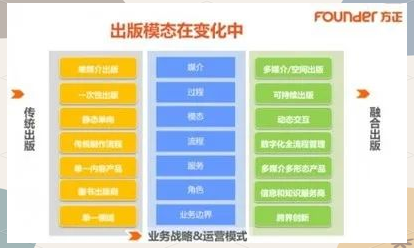
The combination of intellectual publishing and new technologies lies at the heart of what is implicit in the word “smart”. As an advanced form of digital publishing evolution, intellectual publishing is more focused on the development of autonomous innovation capabilities than intellectual publishing. In the case of artificial intelligence technology, for example, the technology is gradually simulating the learning and thinking of the human brain, receiving and imitating the original passive information, gradually evolving into autonomous in-depth learning, understanding the underlying logic of knowledge and achieving real mastery and flexibility. It is this ability to simulate human learning that allows artificial intelligence to be better integrated into the human labour system, thereby increasing the overall efficiency of publication. The true meaning of intellectual publication lies not only in the upgrading of “smart” at the technical level, but also in the continuous innovation and practice of publishing industries, content creators and others guided by the concept of “smart”. They need to be flexible in responding to user needs and changes in cultural development, and constantly exploring and improving. The publishing industry's capacity for autonomous innovation has been significantly enhanced through technological ingenuity, product ingenuity, talent ingenuity and the overall upgrading of management ingenuity, which is the ultimate goal of intellectual publishing。
Development experience - from electronic publishing to intellectual publishing change
The advent of the twenty-first century has brought unprecedented challenges to the traditional publishing industry with the rapid development of digital technology. Under the double pressure of technological innovation and market competition, the publishing industry has had to find a path of transformation and upgrading, gradually moving from paper to digital publishing. This process is not an instantaneous one, but is driven by the combination of high-tech technologies, such as big data, cloud computing, block chains, electronics and artificial intelligence, through e-publishing, web publishing, data publishing and smart publishing, leading to an advanced stage of intellectual publishing。

Phase i, electronic publication (first stage of digital publication)
Electronic publishing, the starting point for digital publishing, covers the entire process from editing, production to distribution. At this stage, maps, texts, acoustics, images, etc., are digitized and stored in magnetic, optical, electrical and other media for processing and transmission using computers or other equipment. Electronic publishing is not only of a variety of types, but also includes two main forms, online and offline, and involves more complex labour and higher technological and technological content than traditional publications。
Phase ii, web publishing (first stage of digital publishing)
Web publishing, also known as internet publishing, is a product of technological developments on the internet. It must meet two core elements: first, content needs to be spread over multiple sets via the internet; and second, publication needs to be commercial in nature and for profit. It is worth noting that the essential difference between web publishing and electronic publishing lies in its networked nature。
Phase 3, data publication (intermediate stage of digital publication)
Data publishing is the publication of raw data generated in the course of their research, including through the internet, which is subject to uniform norms among researchers and institutions, or the systematic collection, collation and reprocessing of existing data. This stage is characterized by its subversion of traditional modes of publication and creation。
Phase iv, smart publishing (intermediate stage of digital publishing)
New opportunities for the development of the press and publishing industry have emerged from the 2009 national plan for the revitalization of the cultural industry, which makes it clear that the publishing industry needs to contribute to the restructuring and upgrading of the industry and accelerate the transition to digital publishing. In the years that followed, policy documents such as the guidance on promoting the integration of traditional and emerging publications, the new generation of artificial intelligence development plan and the circular on deepening the digital transformation upgrading of the press and publications service were issued, further emphasizing the centrality of smart publishing in the transformation of the traditional publishing industry。
For the publishers, its traditional business is focused mainly on paper-based media publications, including subject-programming, manuscript revision, layout design, proofreading, printing and distribution. However, the rise of smart publishing has changed this traditional industrial process. Through smart technologies such as automatic text analysis, artificially intelligent semantic interpretation and automatic layout, smart publishing not only improves its efficiency, but also creates a new business of rich media publishing that meets the diverse needs of its readers. The publishing operations of the mental media age are no longer limited to traditional content publishing, but extend to a wide range of levels, including platforms, services and communications。
Phase v, wisdom publishing (advanced stage of digital publishing)
Smart publishing is an advanced form of further development in the publishing industry. It provides users with more personalized and intelligent reading services, combined with traditional publishing advantages, through high-technology technologies such as big data, cloud computing and artificial intelligence. Smart publishing is faster and more efficient in providing knowledge services, automating and intelligentizing knowledge retrieval than smart publishing. Currently, the global publishing industry is undergoing profound changes with the rise of intelligent technologies. In this era of wisdom plus, china's publishing industry needs to be both proactive and responsive to the needs of the times, as well as to adhere to the nature and original nature of the publication。
Achieving intellectual publishing
In june 2022, the central communications department of the communist party issued an executive opinion on the promotion of the publication of in-depth integrated development, highlighting the importance of technological support and clearly proposing to explore the application of cutting-edge technologies, particularly large data, cloud computing, artificial intelligence and block chains, in order to promote the further integration of publishing. These technologies provide concrete directions for intellectual publishing。
Large data technologies provide a platform for information sharing between enterprises and users, while providing strong data analysis support for decision-making. For example, china has built a large data platform for publishing and distribution, providing specialized services for publishing, distribution and retailing through integrated analysis and research of real-time book sales data. The publisher will be able to capture client demand information in a timely manner through the large data platform, thereby making it possible to select publication content and plan related activities more wisely. Users are able to search more easily for information on published products of interest and see where the products are being sold and at what prices. The mechanical industry publisher has found, through the large data platform, that the same products of the translated forest publisher have significant advantages in small and medium-sized microbookshops. In general, big data analysis not only facilitates communication between publishers and users, but also helps them to better position and map each other's needs and characteristics。
Identification techniques and algorithms have brought unprecedented experience of reading. Identification techniques can extract and compare similar content in the reading process, thereby strengthening memory, facilitating knowledge learning and enhancing reading impressions. This is undoubtedly a great facility for students, as they can easily find relevant subjects and knowledge links through software for targeted exercises and in-depth learning。
At the same time, algorithm-recommended techniques allow for individualized delivery based on user preferences and needs, with precision assessment. In an era of surges in information, algorithms speculate about the user's preference for published works and about the emotional changes in reading, by capturing the user's reading time, facial expression and blink frequency. In this way, publishers can gain a deeper understanding of users and provide them with more thoughtful services。
In addition, intellectual publishing has contributed to the development of customized services at the publishing end. The publisher is able to classify and disseminate the print and electronic content in a flexible manner for different audiences. For example, the various public numbers on the web-based public platform are examples of how content can be delivered according to the characteristics of users。
In addition, the publication of wisdom is trying to break the traditional graphic reading experience and provide users with a panoramic and immersive reading experience by enhancing reality and virtual reality technology. This innovation has made reading truly “at home” and has greatly improved its pleasure and effectiveness. At the same time, the involvement of multimedia and audio technologies has further optimized the reading experience, and the inclusion of listening functions has enhanced the user's sense of introspection and made reading more lively and interesting。
The age of wisdom — a new chapter in publishing chapter
The publication of wisdom, the product of this new era, is driven by a combination of political, technological and value-based demands. Guided by the digital strategy, the development plan for the publishing industry for the period 14-5 clearly sets out the direction of intellectual publishing. At the heart of the digitalization of cultural industries and industries, digital publishing has evolved over five stages into a new form of intellectual publishing. Guided by cutting-edge information technologies such as the internet, big data and cloud computing, intellectual publishing not only preserves the essence of traditional publishing, but also integrates more intelligent elements and displays different intellectual and technological charms. It breaks down the monolithic landscape of traditional paper-based publications and brings new options for diversity and individualization to users. As the socialist market economy continues to improve, consumer demand for individualized and customized services grows, and the use of smart technologies meets this market demand and contributes to the high quality of publishing。
Guided by the opinions on promoting the implementation of the national strategy for the digitalization of cultures, the market is exploring ways in which intellectual publishing can be achieved, focusing mainly on optimizing the reorganization of resource elements, deepening the empowerment of science, technology and innovation and transforming innovation. With the diversification of intellectual knowledge and the lowering of the creative threshold, the dissemination of a single view has become difficult to meet the needs of the reader, so intellectual publishing needs to focus on optimizing the creation of existing resources, i. E. “stocking”. At the same time, deepening the empowerment of science and technology is a necessary requirement for the development of intellectual technology, and it is only through continuous advances in technology that the substantive differences between the stages of digital publishing can be highlighted. Moreover, as technological innovation evolves, the transformation of results becomes increasingly important, not only for the profit-making purposes of cultural industries, but also for the development of intellectual publishing. Under the “wiss plus” development model, the publication of wisdom is steadily moving forward in line with innovative-driven development strategies, with their enormous development potential and ambitious development blueprints。