“property management is not simply security of cleaning, with 10 core steps in place to efficiently integrate park operations, taking into account ownership experience and management norms”. The curriculum is suitable for new hands-on practitioners, small area property managers, who do not need to rely on a specific management system, and are able to complete their studies and quickly master the core processes and practical skills of property management。
Property management hands-on preparation: prepare these to avoid follow-up foot. Chaos
Industry research has shown that over 70 per cent of new trades practitioners are under-prepared, leading to initial mismanagement and a high rate of complaints from owners. Property management is based on the following common tools, information and basic knowledge, which are adapted to the basic management needs of residential and commercial parks。
1. Basic information: a detailed account of the campus (buildings, number of households/businesses, size of houses, distribution of public areas), a register of basic information of the owner/businesser (including contact information, use of the house), a list of equipment for the park's facilities (elevator, monitoring, street lights, fitness equipment, etc.), indicating the time of installation and maintenance cycle。
2. Generic tools: office forms (excel/online forms for billing, complaint statistics, inspection records), inspection tools (handlights, rollers, log sheets for inspection of public areas and facilities equipment), communication tools (group chat tools, notification editing tools for synchronization of owner information)。
3. Basic awareness: clarify the core duties of property management (public area maintenance, inspection of facilities and equipment, owner services, maintenance of order, payment of fees), knowledge of local property-related management norms (no specific provisions need to be remembered, clear core thresholds: no irregular charges, timely processing of reasonable claims by owners), distinction between basic services and value-added services (basic services must be done, value-added services are not mandatory)。
Personnel readiness (as required): based on the size of the campus, with inspectors, law-enforcement and cleaning personnel, clear core responsibilities for each post, without relying on specific division of labour criteria, ensuring that “the matter is managed and the matter is responded to”。
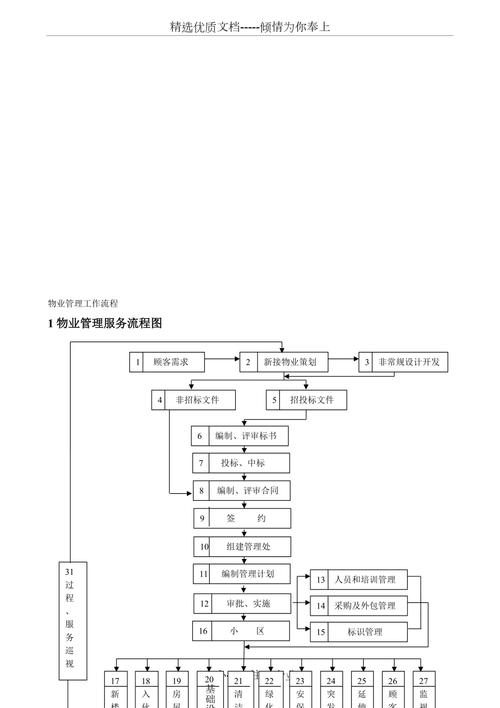
Property management process-by-process exercise: 10 steps for integrated management from zero to one
This step follows the logic of “preparation for day-to-day operation of a business owner services optimization”, and each step contains clear action instructions, operational details and key points, which can be carried out directly by beginners, on the basis of which step-users can optimize details, and adaptable industries manage the whole scene。
Step 1: improvement of campus billing and firm management base (core steps)
Action directive: comprehensively measure basic information of all types in the campus and establish standardized desk accounts; operational details: prepare desk accounts at the level of “owner/businesser of the building”, indicate whether the house is empty, the facility is properly equipped, the owner is occupied, the desk account is updated in real time and checked quarterly to ensure that the information is accurate; key points: the account is confidential to the owner/businesser and is used only for property management, without disclosing any personal information and avoiding privacy disputes。
Step 2: discrepancies of campus facilities with clear maintenance priorities
Operational instructions: conduct a comprehensive inventory of all public facilities in the park and draw up maintenance plans; operational details: check elevators, surveillance, fire-fighting facilities, street lights, fitness equipment, drainage pipes, etc., record the operation of the equipment, mark “urgent maintenance” of ageing, damaged equipment as “urgent maintenance” and specify the time frame for maintaining those responsible and completing it; key points: special equipment such as elevators, fire-fighting facilities, need to be contacted by qualified professional bodies for maintenance tests, retention of inspection reports and avoidance of security hazards。
Step 3: regulate public regional management and safeguard the environment and order
Operational directives: integrated cleaning and order maintenance, clear work standards and frequency; operational details: cleaning by the cleaning staff in the order of “green belts of public health on the roads of the public building and park” with at least one basic cleaning per day and one deep cleaning per week; 24-hour compliance by law enforcement personnel with strict prohibitions on the parking of foreign vehicles, random entry and exit of foreign persons, guidance for owners to regulate the parking of vehicles and to prevent irregularities and spontaneity; key points: cleaning of public areas, maintenance of order, maintenance of records, easy follow-up, posting of management requirements at the visible location of the park and guidance of owners to cooperate。
Step 4: establish a channel of communication between owners and build trust relationships
Action instructions: establish diversified owner communication channels to synchronize park information in a timely manner; operational details: create owner/business community by building or regional grouping to facilitate accurate communication; issue at least one park notice per month, synchronize park maintenance plans, activity arrangements, security alerts, etc.; establish feedback portals for complaints (in-group feedback, telephone feedback, underline registration) and identify recipients of feedback; key points: moderate attitude in communication, non-supplementation, incompetence, advice to owners, feedback issues, day response, clear time frames for processing of complex issues, avoiding dissatisfied owners。
Step 5: regulate cost management with transparency
Operational instructions: to combine the collection of property fees, public utility costs, etc.; operational details: clear rates (executed in accordance with local property codes and owners ' conventions), seven days ' notice of the charges issued by the owners ' group to be visible in the park, indicating the cycle, amount and mode of payment; timely reconciliation of contributions, mild reminder to non-contributors and no irregular collection; preparation of billing tables and regular disclosure of receipts and payments (focusing on public utility); key points: strict prohibition of unauthorized increase in fees, additions to billing items, retention of billing documents and easy access by owners。
Step 6: conduct routine inspections to screen for hazards in a timely manner
Operational directives: daily inspection plans are drawn up and personnel are assigned to conduct regular inspections; operational details: inspections are divided into public area patrols, facility equipment inspections, security inspections, at least one basic inspection per day, with priority areas (elevator, fire escape, distribution room) being inspected once every two hours; inspections are carried out with detailed records of inspections, problems are immediately dealt with, problems cannot be dealt with on the spot, warning signs are put in place, relevant officials are reported and progress is tracked; key points are: inspection records need to be complete and include inspection time, inspection personnel, inspection results, problem management, avoidance of leakage, and reduction of safety risks。
Step 7: address owner complaints and claims and improve service quality
Operational directives: receive, register, process and process complaints and reasonable claims from owners, resulting in closed loop management; operational details: register immediately after feedback from owners (marking of complainants, content of complaints, time for feedback), quickly verify the situation, resolve simple issues within 3-7 days, resolve complex issues (e. G. Facility overhaul, neighbourhood dispute mediation), track progress and provide feedback to owners in a timely manner; after processing, return to the owner within 24 hours to confirm satisfaction; key elements: do not shy away from reasonable claims from owners, do not delay, do not make good, reconcile interests of both sides and avoid an escalation of the conflict; most practitioners provide feedback, a step at the core of property management and close loops can significantly reduce the rate of complaints from owners。
Step 8: responding to emergencies and reducing losses
Operational directives: development of contingency plans for emergency situations and timely disposal of all types of sudden-onset problems; operational details: common sudden-onset situations, including elevator failure, water outages, fire hazards, bad weather, equipment failure, etc., develop simple, ready-to-deposit contingency plans for each situation, with clear disposal processes, responsible persons, contact details; organization of periodic exercises (1 per quarter) to ensure that the personnel concerned are skilled in disposal methods; immediate initiation of contingency plans, first notification to the owners, organizational disposal and loss reduction; key points: once the emergency disposal is completed, the contingency plan is reset in a timely manner, while the results of the disposal are communicated to the owner and the mood of the owner is satisfied。
Step 9: secure park management to protect against security risks
Operational directives: integration of park security management to protect against all types of security hazards; operational details: enhancement of fire safety management, regular inspection of fire safety facilities, cleaning of fire corridors, strict suppression of congestion, occupancy of fire corridors and posting of fire safety alerts; enhancement of physical property security management, increased patrols by order-keeping personnel and protection against theft, high-altitude throwing, etc.; enhancement of electricity and water safety management, alerting owners to regulate electricity and water use and to screen for electrical hazards in public areas; key points: regular safety awareness campaigns (1 per month), issuance of safety alerts through owner groups, park bulletin boards, raising of the safety awareness of owners and avoiding safety incidents。
Step 10: regular recurrence optimizes to improve management efficiency
Action directives: regular reset of property management to draw lessons and to optimize; operational details: conduct of 1 mini-discretion per month and 1 full round-up per quarter, focusing on desk update, inspection status, complaint processing, cost management, etc., to measure owner satisfaction, problem handling rate, risk screening rate; gaps in analytical work (e. G., delays in processing complaints, inspection leaks), development of optimization measures, clear improvement of time frames and responsibility; key points: it is not over-formated and focuses on “optimizing, off-site” management, adjusting management practices with feedback from owners and gradually improving the efficiency and quality of property management services。
Property management practical pit avoidance guide: 7 high-frequency pit sites for starters
Combining the common experience of the property management industry, the seven most accessible pits with specific solutions, avoiding management risks, reducing complaints from owners and improving management efficiency, with most practitioners providing feedback that avoiding these pits can lead to fewer turns。
Pipeline 1: inaccurate and non-updated account information has led to subsequent mismanagement and even leaking of owner information. Solutions: establish a system to update desk accounts, which are updated at the first time when owners move in, move out and transfer their houses; reconcile the account information on a quarterly basis to ensure accuracy; and keep the account in a separate repository, with authority granted to managers only to check and avoid disclosure。
Pipeline 2: facility equipment inspections are not in place, failure to detect ageing, damage to equipment, safety incidents or owner complaints. Solutions: detailed inspection plan forms are drawn up, specifying the area, frequency and content of the inspection; the inspectors sign and confirm that they do not regularly check the inspection records; special equipment such as elevators, fire protections, etc., are subject to rigorous and regular contact with specialized agencies for inspection, retention of inspection reports and no unauthorized irregularities。
Site 3: irresponsible, non-transparent communication, dissatisfied and even contradictory by uninformed owners. Solutions: fixed information distribution frequency, at least one annual park profile, first-time notice of sudden-onset events; questions of advice, feedback from owners, day-to-day response, without delay or infrequentity; fees, improvements to the campus, etc., related to the owner's personal interest, advance publicity and extensive consultation with owners。
Site 4: irregular charges, non-transparent charges, unauthorized increases in fees, additional charges, complaints by owners and even violations of property regulations. Solutions: fees are strictly enforced in accordance with local property norms and owners ' conventions, with no unauthorized additions and increases in the amount of fees; fees, contribution patterns, income and expenditure (with emphasis on public consumption) are regularly publicized to facilitate easy access by owners; fee vouchers are kept complete and provided on request in a timely manner。
Site 5: complaints are handled in closed loops and receive no complaints and do not return, resulting in repeated complaints from owners and a decline in reputations. Solutions: establish a closed loop mechanism for receiving-registration-verifying-processing-revising complaints, with records kept at every point; clear timelines for handling complex issues and timely feedback on progress to owners; return to the owner within 24 hours of processing to confirm satisfaction and further optimize treatment options where there are still objections to the owner。
Pipe 6: no contingency plans for emergencies, inappropriate disposal, increased losses and caused panic among owners. Solutions: develop a simple, ready-to-place contingency plan for common contingencies, identifying the process of disposal and those responsible; organize a small exercise every quarter to ensure that the personnel concerned are skilled in disposal methods; give priority to the security of the owner's personal property in the event of an emergency, start an emergency response plan at the first time and work simultaneously with the owners to placate。
Site 7: neglect of owner's privacy protection, disclosure of owner's personal information and legal disputes. Solutions: clarify privacy protection requirements for owners, all managers enter into privacy confidentiality agreements; separate owner information desk accounts are kept, authorized, not to be copied and disseminated at will; owners ' personal information is not used for purposes other than property management and sale and disclosure of owner's information is prohibited。
Certification of property management practical results: 4 standards, confirmation of management to bit
The completion of the full process of property management in accordance with the above-mentioned steps will allow the adoption of the following four common acceptance and inspection standards to confirm management effectiveness and avoid blind advancement, while providing the basis for optimization of the subsequent double disk and matching the needs for validation of results for basic management of the various types of campus。
1. Basic management compliance: complete, accurate and real-time updates of the campus account; clean and orderly public areas, with no visible garbage, miscellaneous items and vehicle parking regulations; proper operation of facilities, no leaks, no damage, no disposals, and quality detection of special equipment。
2. Owner service compliance: owners ' communication channels are open and information is published in a timely manner; owners ' complaints and claims are closed, with a processing rate of over 95 per cent and owners'satisfaction of more than 85 per cent; there are no group complaints resulting from poor communication and inadequate services。
3. Compliance management compliance: compliance, transparency, non-violation and irregularity of fees; strict compliance with local property-related management norms and no irregularities; effective protection of owners ' privacy and lack of privacy disclosure。
4. Safety management compliance: there were no major security incidents in the compound, a 100 per cent screening rate for security hazards was reached and the hazards were detected to be disposed of in a timely manner; fire safety facilities were complete and fire corridors were open; there was a marked increase in the safety awareness of owners and no serious violations。
A mastery of the core logic of property management, based on “desk accounts, inspections as safeguards, services as a core, compliance as a bottom line”, follows the 10 steps described above, moving steadily, avoiding high-frequency pits and periodically replicating them to optimize their efficiency and quality of services, allowing for a gradual upgrading of management efficiency and services and rapid growth from new staff to professional property managers. Average industry data show that property that operates strictly in a standardized process can reduce the complaint rate by more than 60 per cent and improve management efficiency by more than 40 per cent。
The centrepiece of property management is not “manage”, but “services + integration”, which provides basic services, solves problems in a timely manner and secures the park, allowing it to operate in a sound manner, taking into account the experience and management norms of owners。