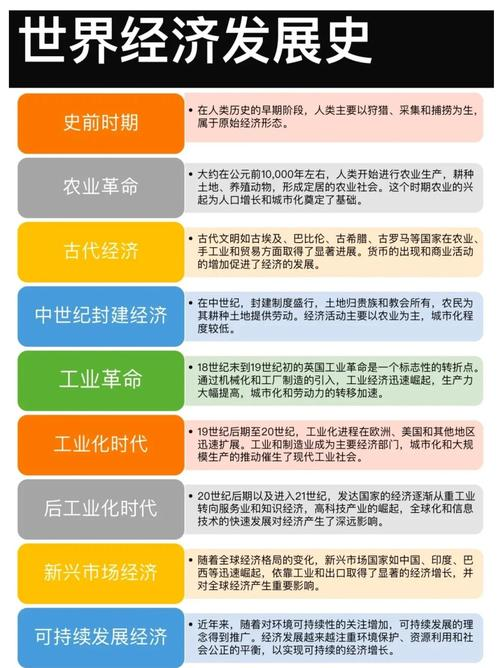
Throughout the history of social and economic development, behind the evolution of economic patterns and the escalation of economic transformation is the shift in the focus of human awareness and the dynamics of economic development. From time immemorial, human socio-economic development has undergone an agricultural economy based on land development and an industrial economy based on technology development, shifting to a knowledge-based economy based on human qualities. The shift to a knowledge-based economy will reshape the relationship between economic development and the full development of the human person and make the two more compatible。
The knowledge economy is one that values the “human” economy
The knowledge economy is a concept corresponding to the agricultural economy and the industrial economy and is a knowledge-based economy. The knowledge-based economy, published in 1996 by the organization for economic cooperation and development (oecd), defines the knowledge economy: it is based on modern science and technology and on the production, storage, use and consumption of knowledge and information. It depends directly on the innovation, dissemination and application of knowledge. The knowledge contained therein is broad and refers not only to scientific and technological knowledge in the general sense, but also to the management of knowledge, and also to the related experiences, capacities and other knowledge that have a bearing on economic development。
In recent years, the development of the knowledge economy in some countries has shown that it is a correction of the utilitarian values of the rapid development of the industrial economy, the rationality of tools and the cult of technology, the pursuit of material wealth, and a new economy that seeks to address the contradictions between human beings themselves, human beings and nature, human beings and society from new heights and perspectives. The main subjects of the knowledge economy are human beings, and the tools of production are computers, numerically controlled machines and new scientific methods on internet platforms. The aim of production is to achieve the organic harmonization of knowledge production with the external environment (natural, social, etc.) through the enhancement of knowledge productivity, i. E., the integrated quality of human beings, and the organic integration of sound personality (human civilization) and innovation (material, spiritual civilization). In the knowledge economy, the core element of production is the combined quality of knowledge producers ' knowledge, skills, ethics and innovation. For the knowledge economy, innovation is the driving force, educational culture and research development are the pioneers, and knowledge and quality human resources are the most important resources。
At present, the knowledge economy is flourishing in the developed countries, and there are great prospects for development in my country. An in-depth study of the knowledge economy and its characteristics, the search for patterns of intellectual economic development and the practical establishment of practical development goals in our country are the inevitable requirements of a new phase of economic and social development and an extremely important theoretical research mission。
Development goals and value orientation of the knowledge economy
The fundamental difference between the knowledge economy and the agricultural and industrial economy is that it solves problems in human economic practice from the perspective of human development and on the basis of a pattern of knowledge production. To that end, it transcends the traditional single-factor, one-dimensional, one-way model of development, combining the full development of the human being with the production of materials and spiritual production。
Evaluation of human practice in the context of the knowledge economy. Under the knowledge-based economy, the evaluation of people's practical activities includes aspects of practice recognition, value of practice, standards of practice and evaluation of practice. Practical recognition is measured by the degree to which the practice is general and objective, i. E., by its regularity, with the aim of obtaining an objective and uniform understanding of the principal. Practice values measure the effective value created by the subject in practice, i. E., compatibility of purpose. The standard of practice measures the rule followed by the subject in the creation of value, i. E. Scientific. Practice evaluation is the application of certain value criteria for the overall measurement and evaluation of the behaviour of practitioners and their effectiveness. The lack of knowledge of practice is blind practice; the lack of value in practice is meaningless practice; the lack of practice standards is irrational and non-scientific practice; and the lack of practice evaluation is practice that makes it difficult to achieve the desired purpose and objective fairness. The practice of human beings in the context of the knowledge-based economy is based on regularity, unity of purpose, science and integration。
The development of the knowledge economy is based on the upgrading of human qualities. Fundamentally, the development of the knowledge economy is the upgrading of human qualities. Knowledge is essential for human qualities to be enhanced, but knowledge is not; it is only through internalization of knowledge into quality in development that it meets the requirements for developing a knowledge-based economy. In the knowledge-based economy, individual cognitive activity is not an isolated “personal” cognitive activity, but rather a whole, dynamic and orderly cognitive process. In this process, elements of cognitive activity constitute an indispensable cognitive condition. Thus, the knowledge economy is based on the upgrading of human qualities. This is reflected in three areas: the first is a commitment to improving the overall quality of people. Treating the human person as a prerequisite and the very foundation of all development and seeing human qualities as a dynamic and integrated system. Any lack of quality elements in the upgrading process can affect and undermine the overall quality. The second is to establish advanced quality standards. The knowledge economy requires knowledge producers to have a high degree of theoretical literacy, good professional skills, high professional ethics and outstanding innovation. This comprehensive quality standard not only embodies the value of human beings themselves and promotes economic development, but is also the scientific basis for the development of practical standards that meet the characteristics of the knowledge-based economy and reflect people-centred requirements. Third is that quality evaluation is holistic. Since the knowledge economy is based on the combination of knowledge producers ' learning, skills, ethics and innovation as a fundamental engine and value vehicle, its evaluation is necessarily based on the combination of knowledge producers ' qualities。
The knowledge economy has as its development objective the organic integration of sound personality development and material and spiritual production. From the point of view of the practical activities of the knowledge-based economy, a person's integrity is defined as the personality that the subject of the activity has developed in terms of the means of recognition, the creation of values, the norms of conduct and the spirit of justice towards the noble human objectives — truth, goodness, beauty and integrity. The knowledge economy is a development goal for achieving the organic integration of sound personality development and material and spiritual production, since only these three are organically integrated and harmoniously developed in order to maximize human motivation and creativity and provide an inexhaustible impetus for the development of the knowledge economy. This calls for the development of the knowledge-producing human personality in the development of the knowledge economy in terms of methods of recognition, value creation, norms of behaviour and justice. At the same time, with the development and improvement of the human personality in the production of labour, there will be greater harmony between material and spiritual production, material and spiritual civilization in the practical activities of the intellectual economy. In fact, civilization refers, on the one hand, to the rational development of humankind and, on the other hand, to the consequent development of the human impact on nature. In this way, the development objectives of the knowledge economy — the organic integration of sound personality and material and spiritual production — are increasingly being achieved. The development of a knowledge-based economy is of great relevance and strategic importance for the enhancement of national identity, the development of a sound personality and the promotion of harmonious human development with nature, people and society。
Thus, we can come to a deeper understanding of the knowledge economy: the knowledge economy is a new form of economy based on a knowledge-based system of practice, based on the upgrading of the human person's comprehensive qualities, and based on innovation as a means of bringing about the unity of human development, material creation and spiritual innovation。
Comprehensive human-based development for knowledge-based economic development
For the subject of the knowledge-based economy, which is both a man and a author, the ultimate goal of sound personality must be constantly improved. It is only with a knowledge of how things are, that the true personality can be developed; it is only with noble values that the human purpose of doing good can be fulfilled; it is with the adherence to advanced quality standards that the nobleness of beauty can be achieved; and it is with the establishment of evaluation systems conducive to the promotion of comprehensive quality that institutional guarantees of integrity can be developed. Practice is a soil for the growth of the human personality, and the combination of qualities is a river of the human personality. Our practical activities for the development of the knowledge economy must be based on comprehensive human development。
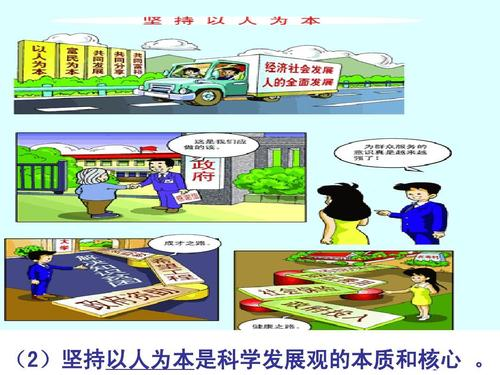
The establishment of a development strategy based on the enhancement of human qualities. We should stand at the height of our times and establish a development strategy based on human qualities as fundamental, based on changing patterns of economic patterns, trends in economic globalization and the needs of our economic and social development. To that end, three changes must be made: a shift from an object-centred to a human-centred approach to development; a shift from a resource-development to a human-quality approach to development; and a shift from a one-sided pursuit of material production to the promotion of overall human development in harmony with material and spiritual production。
Develop industrial policies to promote knowledge-based economic development. In response to the urgent need to transform the country's economy's high-input, high-consumption, low-yield, low-efficiency and crude growth patterns, we must seize the opportunities of the development of the knowledge economy, formulate industrial policies to promote the accelerated development of the knowledge economy, strengthen support for the knowledge-based economy, invest in the development of a number of high-quality enterprises leading to the development of the knowledge-based economy, and strive to move beyond a path of chinese-specific knowledge-based economic development that is compatible with economic development and environmental protection, that is consistent with the objectives of knowledge innovation and production and that is conducive to comprehensive human development。
Develop a development evaluation system centred on the enhancement of human quality in an integrated manner. Reform evaluation criteria for development performance to change blind pursuit of immediate interests and neglect of long-term development, with emphasis on aggregate indicators, underestimation of quality benefits, preference for material standards, neglect of human development evaluation methods, establishment of evaluation systems that are centred on the overall quality of human beings, integration of evaluation criteria such as theoretical literacy, professional skills, professional ethics, job performance, etc. Into the evaluation system as a whole, and institutional prerequisites for the promotion of comprehensive human development。
(by the director of the centre for information and training of the chinese association for the advancement of women)