I. Basic facts:
Company a enters into international trade contracts with foreign buyers for the sale of glass products, using fob trade terms. On 22 and 23 february 2012, the buyer's freight forwarder, company t, contacted company a for shipment and, after t had recommended company b as carrier, company a determined that it was the company b that shipped the goods in question. On 6 march 2012, company a issued an e-mail order to company b stating that company a was required to ship nine 40-foot containers of honeyall glass appliances under the english name of company a and the consignee was company g, notifying company t of the shipment from nanjing port to port bireefs, and requesting company b to arrange for the payment of shipping fees for the most recent period and the issuance of three original bills of lading. Disputes relating to the contract of carriage by sea
By e-mail on 7 march, company b informed its destination cargo agent, company t, of its long-standing cooperation that company a had booked with company b, the actual carrier entrusted by company b and the cost of shipping the goods involved. T replied that the consignee, g, had accepted the price of the shipping fee. Company a delivered the cargo to company b at the nanjing port after sealing it at the plant. Disputes relating to the contract of carriage by sea
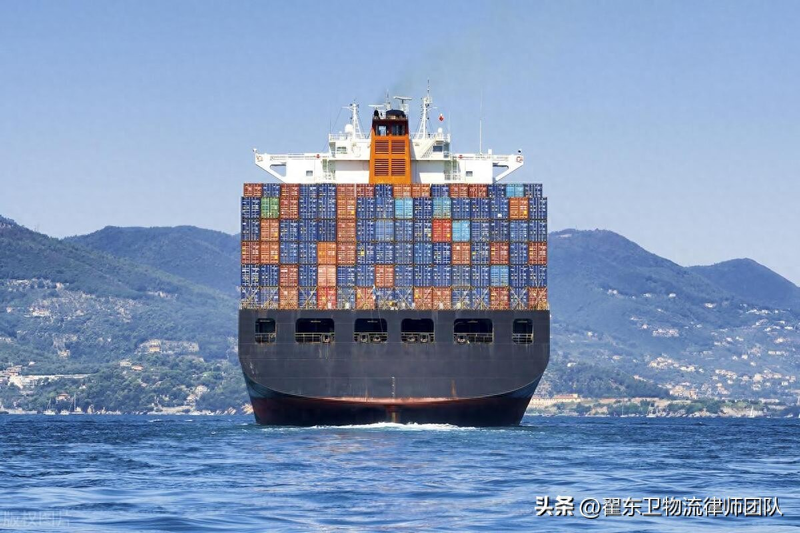
Company b issued and delivered to company a a bill of lading with the english name of company b, which states that shipper a, consignee g, advises company t, and the freight is paid. Company a paid company b on 5 april for the drying of the goods at the port of loading. The goods in question were declared by company a itself. Company b entrusted china sea container transport (hong kong) ltd. With actual shipment. Disputes relating to the contract of carriage by sea
After the arrival of the goods in question on 2 may 2012, as the consignee had not been able to take delivery of the goods, company b sent three written letters to company a urging company a to settle the goods in question as soon as possible, all of which were received by company a, and replied to the letter dated 12 july, “we confirm the above” with respect to company b, which stated that “in respect of your services entrusted to our department, the goods are currently unloaded and remain at the greek terminal at a cost of usd 32,000. The fact and cost of the projected eur 9,000 (which is ultimately based on the actual settlement of the cost of the destination port) were read and confirmed. Disputes relating to the contract of carriage by sea
Company a wrote to company b on 13 september 2012 to find a new buyer for the goods involved, and company b contacted company t to inform them of the port costs of contacting the new buyer and facilitating communication. T replied that the new buyer did not accept the goods in question and that the goods remained at the port of destination. Disputes relating to the contract of carriage by sea
The nine containerized cargo involved were auctioned by greek customs in circular no. 592/2012 for lack of identification. A total of euro47,045 was recorded for nine containerized cargoes. The auction was not sufficient to cover the costs of tariffs, storage fees, etc. At the port of destination。
Ii. Court views:
Company a, as a seller of the fob trade contract, is required to ship the goods, issue in its own name a manifest to company b listing the information on the goods, the main aspects of the transport and the requirements for the issuance of the bill of lading, the payment of freight, etc., and actually deliver the goods involved to company b, paying for the freight forwarding costs associated with the port of embarkation. On the basis of the manifest, company b issued a bill of lading for the unafflicted carrier stating that shipper company a, “freight is paid”. Company b delivered the whole set of original bills of lading to company a, as evidenced by the contract of carriage and as a document by which company b received the goods in question and undertook to deliver them. Company b commissioned the actual carrier to transport the goods involved to the port of destination. A contractual relationship for the carriage of goods by sea was established between the parties in connection with the carriage of the goods, and company b had fulfilled its corresponding non-ship carrier obligations. Disputes relating to the contract of carriage by sea

The contract of carriage in question and the manner in which the freight is paid as set out in the bill of lading in question are “freight-for-payment”, which means that the consignee has agreed to pay the freight for the goods in question. The carrier and the shipper agree that the consignee pays the freight if the parties agree that the third party performs the obligation to the creditor. It is only when the consignee accepts the bill of lading containing “freight to pay” and by which it collects the goods from the carrier that the consignee accepts the obligation to pay the freight. When goods are not collected at the port of destination, they should be considered as non-performance by a third party and the shipper should still be obliged to pay freight. In this case, as a result of the failure of the trade contract between company a and the buyer, the goods were demurraged and ultimately no delivery was made, company b was unable to collect the freight charges involved. When the goods in question are auctioned by the customs authorities of the port of destination in order to satisfy such costs as customs, company a, as the shipper of the contract for the carriage of goods by sea in question, shall pay the carrier the freight. Disputes relating to the contract of carriage by sea
Counsel recommends that:
The freight involved arose from a contract for the carriage of goods by sea between the parties, and company b was not a claim to advance the freight of the actual carrier, but a direct claim by itself as the carrier of the contract of carriage in question to the shipper. The amount of the freight was determined by the trade terms of the purchase and sale contract, but company a did not submit that the agreed amount was unreasonable, approved the amount and company a had a payment obligation. Disputes relating to the contract of carriage by sea
Under the fob trade terminology, the consignee, who is abroad, enters into a contract with the carrier for the carriage of goods by sea and is liable to be paid by the consignee for the freight. However, when the consignee does not pay the freight, it may be determined, depending on the circumstances of the case, whether the consignor may be required to bear it. According to our maritime law, a shipper is a person who either entrusts himself or herself or another person to enter into a contract for the carriage of goods by sea with the carrier; or a person who entrusts himself or herself or another person to deliver the goods to the carrier in connection with the contract for the carriage of goods by sea. Disputes relating to the contract of carriage by sea
The team of lawyers:
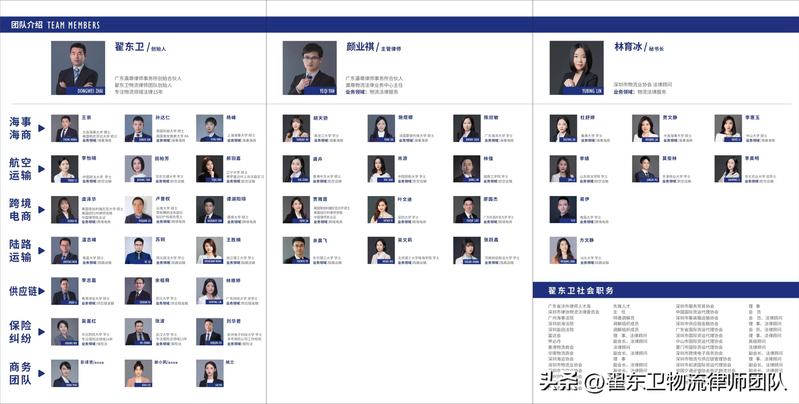
The team of logistics lawyers, launched by the founding partner of guangdong zhuang, has been composed of over 40 professional logistics lawyers and related support staff for 15 years since 2007 focusing on maritime merchants, land transport, air freight forwarders and supply chain cases。
There are 10 students in the team, who can work in chinese, english and french, can write and write contracts in chinese, english and french and can participate fully in commercial negotiations in english and french。
The team of logistics lawyers in zengdong, a one-stop legal service provider for logistics enterprises, is currently the legal adviser for 23 logistics associations and the permanent legal adviser for over 430 logistics enterprises. The team works in countries and regions such as the united states, the united kingdom, india, south-east asia, hong kong, and has considerable legal power and industry experience. Attorney of maritime commerce
Maritime and maritime attorneys' services, shenzhen maritime attorneys' lawyers, guangzhou maritime merchants' lawyers, logistics lawyers, logistics lawyers, guangzhou logistics dispute attorneys, air transport dispute attorneys, air transport contract disputes, air transport dispute attorneys, international logistics lawyers, maritime contract of carriage disputes, freight dispute