


In the early summer of may 24th, the state of china's new cyberland, there was less rain. In kansu province, the pharmacist in the village of ishi canyon, west of the city and county of gansu province, had to water the earth's medicine manually and his wife, luyapin, had to hit it. “these medicines are expensive and must be carefully protected in order to produce a good harvest.” the plume says on the side of the weed that is being pulled out of the ground。
The mid-summer is an important drug in china's chinese medicine bank, with only china and japan in asia. The main owners are gansu, sichuan, hubei and shanxi。
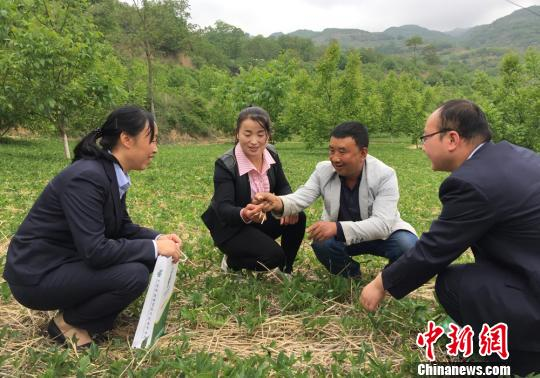
Zhu hong negotiates loans with his wife and members of the postal savings bank. Liu yue peach
Half-summer is described as “three-high” crops with high investment, high risk and high returns. While profit is high, it is due to higher requirements for temperature, humidity, light, etc. “one acre of half-summer inputs cost around $20,000, which can be seriously lost to pharmacists in the face of natural disasters such as droughts, high temperatures, or hail, frost, etc
“in order to reduce the risk of semi-summer cultivation, we are experimenting with the development of greenhouse sheds, using modern automated management to control the temperature, humidity, etc. Of the drug, while increasing space utilization.” according to zhuang, while the test seed has now been successfully tested, there are still difficulties in scaling up。
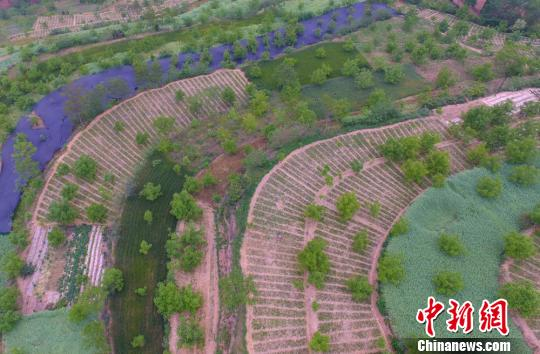
In order to increase land use rates, walnut trees and semi-summer seedlings have been used by cucumbers. Zhong xin
“we lack modern managerial skills, because it is more difficult to bring in talent from the countryside, and because of the high cost of greenhouses and the lack of financial resources, this is one of the constraints to development.” (hon hong)。
Western and cantons, known as the “multi-year pharmacological village”, have a humid, well-lighted, frostfree period of between 149 and 214 days, a typical continental monsoon climate suitable for semi-summer growth, which has been rated as “the semi-summer homeland of china”。
In 2007, a family of corn and wheat growers, whose economic income was so poor, discovered that the same village had been planted for half a summer, with a maximum of $70 per pound worth of dry goods. After having experienced profits and losses, zhuang learned that in 2009 he grew 15 acres of half-summer income of 150,000 yuan。
“successful, confident.” hsiao hong began to move to land and develop the semi-summer farming industry. In 2013, his half-summer cultivation reached 50 acres. "i lost more than $200,000 because of a hail, and i almost cried when i was in the ground."
In mid-summer market prospects, zhuong has not given up. In 2014, together with his wife and four partners, he established a professional cooperative of semi-summer growers, moving 50 acres, plus his own 50 acres, to develop the semi-summer industry. In addition, it is operating the cultivation, acquisition, processing and sale of chinese medicine such as yellow tarts and wood。
“there was no money to buy seeds, i went everywhere to raise money, and then we found a postal savings bank, which loaned $600,000 `three households,' and we could not borrow so much in other banks”. He said, "that was a timely rain that solved our big problem."
In recent years, cooperatives have opened up “internet+” marketing channels and have innovatively explored “cooperative+webshops+farmers (poor households)” development models to help improve poverty alleviation. In 2016, the cooperative expanded and continued to borrow $1. 35 million from “three households” and to grow 200 acres of other medicines in addition to 100 acres in the summer, with an annual share of more than $500,000 to members。
Today, cooperatives have registered brands of medicines in “stock peaks” and applied for certification of the origin of their products. The membership has been expanded to more than 200 households, over 80 tons of chinese medicines are traded, more than 4 million yuan are traded, one of the electrician service centres has been built, 320 acres have been developed, and 327 people from 65 poor families in the construction card have been boosted, one of the county-wide “demonstration bases” for the eradication of poverty. (concluded)



