What's not sick? The author of the ancient medical book the intra-empirium of the huang dynasty believes that the term “uninfected disease” refers to the embryonic phase of “preventable disease”, i. E., the period in which the disease has not yet shown symptoms. According to zhang kai ming, the proponent of the modern “non-diagnostic theory”, a professor at the chinese academy of medical sciences in china, no disease is not a result, but a process of change in the functioning of the human body. “how to judge the state of functioning before the disease does not occur, so as to monitor, evaluate, regulate and manage.” translating chinese medical experience into a common understanding for all and eradicating disease before it occurs. This was also the original purpose and significance of zhang when he prepared the principles of non-censorship assessment。
“it is a process of becoming simple and changing the expression of chinese medicine.” zhang kai ming noted that chinese medicine had been considered to have no theoretical structure and that the schools were self-contained, that their language was so obscure that it was difficult to communicate with biomedical and engineering technicians. These constrain the continuity, development and application of chinese medicine. The problem is the definition of the basic concept of chinese medicine, the translation and expression of theoretical or academic opinions using the terminology used in biomedical or engineering techniques, and the subsequent use of engineering techniques to achieve the assessment of the health needs of the population。
Zhang kai ming and his team have actually been crawling on the road of the chinese medical doctor's undiagnosed assessment for more than 30 years, and the first 20 years of professor zhang kai ming were described as a “single pedestrian”. The “digitalized” re-reading of the scientific path to chinese medicine is not too much to say. Most of the questions and doubts that come along and stand on both sides of the road are resonance of ideas. It's not "everything is going to work out," but the chinese doctor's unsick assessment is like "the worst." starting in 2010, the series of scientific studies entitled “the assessment of the health of chinese doctors without disease” was gradually recognized by a wide range of senior professionals, and was finally given the opportunity to take part in the stage of the sansan scientific conference. From 2010 to 2019, during the decade, the mch's undiagnosed assessment left a record of three “on-stage performances” at the shansan scientific conference, which were also a true record of mch's undiagnosed growth
Before introducing these three performances, we need to start by telling you about the meaning and value of the shansan scientific conference
The shansan scientific conference was initiated by the state ministry of science and technology (formerly the national science commission) and was officially launched in 1993 with the joint support of the ministry of science and technology and the chinese academy of sciences. Funding and support were provided by the national natural science fund committee, the chinese academy of sciences and ministry of science, the chinese engineering institute, the ministry of education and the chinese association for science and technology. The shansan science conference is a permanent, high-level, interdisciplinary and small-scale academic conference of our scientific and technological community with the main objective of exploring the scientific frontier and promoting knowledge innovation. The meeting focused on the scientific frontier of basic research and scientific issues in the major engineering and technological fields of our country. The shan conference has been the most authoritative and windy academic conference in the field of science. It can be said that, for basic scientific research, the shansan scientific conference is a “wind sign” and a “guideline”。
“participation” in the first `no medical assessment': 368th sansan scientific conference
The main theme of the meeting was “key scientific and technical issues of clinical efficacy evaluation of chinese medicine”。
Clinical efficacy is fundamental to the development of the existence of chinese medicine, but it does not have a system of modern and well-regulated therapeutic effectiveness evaluation theory and methodology that reflects its own characteristics. The current clinical efficacy evaluation of chinese medicine is essentially a replica of the theory and methodology of clinical epidemiology developed by western medicine in the 1970s. However, in chinese medicine clinical practice, clinical trial programmes are designed in strict conformity with the principle of “random comparison” and are often concluded to be ineffective by chinese medicine. What is the reason for this? In march 2010, the 368th symposium of the sansan scientific conference on “key technical issues in clinical evaluation of chinese medicine” was held in beijing. The executive chair of the meeting was dr. Wang young infine, professor wang jiayo and professor liu baoyan. The meeting was attended by nearly 80 invited multidisciplinary and cross-cutting experts from within and outside the chinese pharmaceutical industry, such as management science, clinical epidemiology, evidence-based medicine and clinical evaluation methodology. The central topics of the meeting included: the concept of clinical efficacy evaluation in chinese medicine; methods and indicator systems for evaluating clinical efficacy in chinese medicine; evidence of clinical efficacy in chinese medicine; and its application. Prof. Liu baoyan and prof. Wang jia liang provided thematic review reports on the topics “status and prospects of the chinese medical clinical evaluation” and “rethinking the effectiveness of the chinese medical clinical assessment”. Professors wang yong-in, yao sun and tang kim maung each presented a central topic review report on “rethinking the random comparison of the medical treatment of vascular dementia in the 9-5 junction project”, “statistical principles and conditions of application in clinical research” and “key issues in clinical research in chinese medicine”. Professor zhang kai minh, then director of the clinical evaluation centre of the chinese academy of medical sciences, presented the report on how chinese medicine should develop an effective evaluation system that reflects its own characteristics. This is also the first time that the team of zhang zhang zing has made a presentation at a meeting. The experts at the meeting engaged in an open-minded and multi-faceted culture of equality, engaged in academic exchanges on the central theme, engaged in lively and in-depth discussions and debates, and made many constructive comments and suggestions。
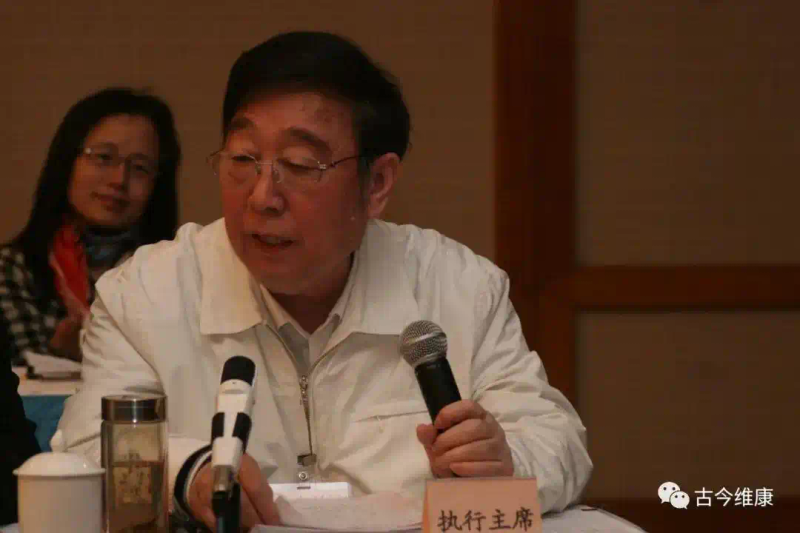
As one of the executive presidents of this meeting, the wang young infine academy
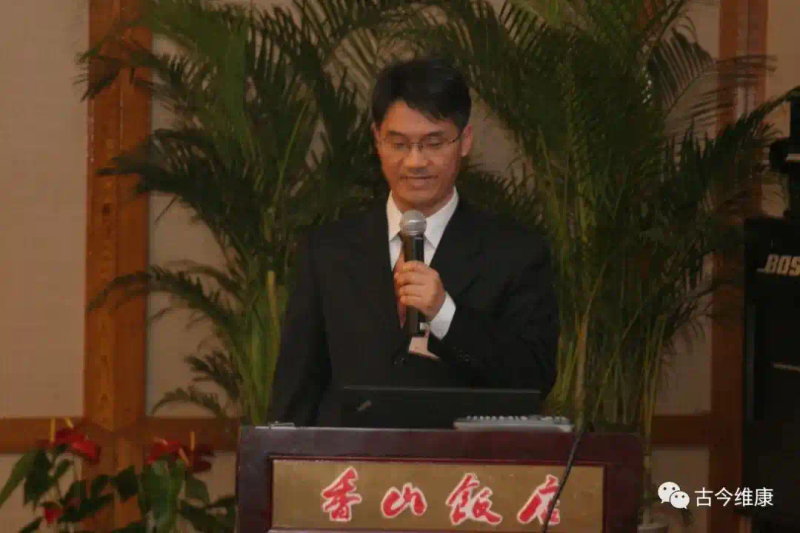
Professor zhang kai minh is speaking
The briefing will be as follows:
I. Major issues involved
There was intense debate among the participating experts about how to evaluate the efficacy of clinical treatment in chinese medicine using methods such as epidemiology, evidence-based medicine and statistics, and how to look at the characteristics of clinical evaluation in chinese medicine and whether to establish a system for evaluating the effectiveness of clinical treatment in chinese medicine。
In the view of experts from a number of western medical backgrounds, the aim of chinese medical treatment is to treat people and, like western medicine, to be in the medical field, to follow the rules common to medical development, i. E. The internationally recognized rules of clinical epidemiology. In order to remove all the disruptions and prove the true effects of chinese medical treatment, random blind trials are the most scientific approach, and it is only by this measure that chinese medical practitioners will be able to measure themselves and produce high-quality research evidence that clinical evaluations will be the best way to proceed, rather than over-emphasising their own characteristics, such as the individualization of the trial to establish a “new system” for clinical evaluation。
It was noted, however, that random cross-blind trials were used under conditions that could not be replicated in chinese medicine; that the key to the quality of clinical evaluations was control over bias, and that the choice of contrast was key; that random cross-blind tests were necessary to study the net effects of new drugs, and that the appropriateness of general forensic clinical research required careful consideration and consideration。
While it is important for chinese medical experts to learn in their own practice that random cross-blind testing is important, the results of their research do not provide good guidance on the forensic treatment and effectiveness of individual diagnostics because of their stringent screening requirements for the intervention population and their targeted limitations. In other words, this approach to clinical research, while demonstrating clinical efficacy, does not serve to improve clinical efficacy。
In evaluating the effectiveness of clinical treatment, the participating buddhist experts felt that not only should attention be paid to the evaluation of materialized indicators, but also to the evaluation of the mental factors of the human body, and to the concept of “humanization”, “conformity of form” in chinese medicine, but also to the evaluation of the change in form, as well as to the evaluation of the change in the "god" and the evaluation of the "god" and the lack of methodological research in modern clinical evaluation systems。
Experts in systems sciences, physics and philosophy point out that western medicine and chinese medicine are two distinct knowledge systems. Although chinese and western medicine has the same aims and aims, it treats people, but because of different knowledge systems, their methods of treatment, methods of assessment and tools for their application vary. Specifically, western medicine is concerned with the human condition, while chinese medicine is concerned with the sick. Western medicine, through laboratory and video tests, reflects changes in human physical entities, which are the basis for disease diagnosis. As a result, people suffering from the same disease are naturally seen as homogenous and naturally as independent and irrelevant. Thus, clinical trials and statistical analysis of large samples based on homogenous populations and independent unrelated events conducted by western medicine are naturally indisputable “the gold standard”. Unlike western medicine, however, the clinical information collected by chinese medicine through visits, hearing, questioning and cutting reflects the overall function of the human being in a natural state. This is the basis for chinese doctors to recognize diseases, to identify witnesses and to judge their efficacy. In the course of clinical treatment in chinese medicine, it is often the diagnosis and treatment programmes that evolve in response to changes in the functioning of the human body and do not continue to be treated on an individual basis. Even for persons of the same origin who have been diagnosed on the basis of physical tests, the diagnosis and treatment of chinese doctors are different because of differences in the geographic area of the season, differences in the patient's personality, differences in the doctor's knowledge and experience, and differences in the information collected through visits, interviews, inquiries and examinations. Thus, it is unlikely that there will be any real homogenous and independent incidents in the context of the treatment of individuals in the middle-level medicine of the sick. So the premise (i. E. The application conditions) of random cross-blind testing and statistical analysis is no longer available and no longer exists. Thus, the “gold standard” applicable to western medicine cannot be applied in chinese medicine, which is characterized by the identification of individual chemotherapy. For an open and complex giant system such as the human body, the functional state of the system has evolved dynamically with the impact of the internal and external environment, and it is not possible to be well evaluated using the current methodology of retrogression。
Some experts highlighted changes in the human function resulting from changes in relationships between and within medical care, considering that humans were target-driven systems towards health, with functional characteristics of self-adaptation, self-regulation, self-resiliation and self-rehabilitation, and that therapeutic effects were the result of interactions between complex treatments and complex human systems. Among them, the treatment only acts as an external aid, and the responsiveness (i. E. The self-regulating mechanism of the human body, referred to as god by the chinese doctor) is more critical. The objective of the treatment is to be shaped in a natural state for a period of time. Systems science, methods of complex science should be introduced into clinical evaluation studies in chinese medicine。
More experts argue that western medicine has a different approach to development than chinese medicine, and that the new methods of western medicine and prescriptions are mostly derived from the results of basic research-model biology studies, which are then tested in the human body under ideal conditions and eventually promoted in clinical practice. Current concepts and approaches such as clinical epidemiology, evidence-based medicine, and transformational medicine are based on this path of development. New methods, prescriptions, technologies and theories in chinese medicine are largely derived from clinical practice, namely, “from clinical to clinical”, which is developed differently, and clinical research methods should be differentiated rather than “repeated”. In conducting clinical evaluations in chinese medicine, due consideration should be given to the special characteristics of chinese medicine and to adapting the methodology to the subject being evaluated, rather than adapting it to the so-called quality。
In the discussion of the characteristics of the clinical evaluation of chinese medicine, chinese medical experts emphasized the “image” of chinese medicine, arguing that one “image” was presented in a natural state. That is, the observation of the “like” does not impose any restriction or pre-set on the object;2 the “like” is the whole of the object in all relationships. Changes in internal and external relations are the cause of changes in the object's “likes”;3 “likes” are the main, objective combination. Access to elephants depends not only on the object itself, but also on the intellectual experience of observers; 4 has multiple connotations. A synthesis of the physical elements, attributes and relationships of the same “like” which are often objects. These characteristics of “image” should be reflected in the methodology for evaluating the efficacy of medium-sized medical interventions and in the selection of indicators for evaluation。
In clinical efficacy evaluations of interventions, there are different concepts of how to deal appropriately with the relationship between the doctor and the intervention, the target audience and the east-west culture. Focusing on the characteristics of the discipline and identifying differences in the elements of clinical evaluation in different disciplines are key to the selection of evaluation methods and models. In response, experts from the government's chinese medicine administration concluded that “people-centred, center-centred, holistic thinking, systematic research, innovative technologies, exploration of methods, and efforts to build a scientific and normative system of theory and technical methods of clinical evaluation of the efficacy of chinese medicine”。
Consensus and recommendations
The experts at the meeting considered that actively drawing on and incorporating modern methods and theories of clinical evaluation, taking fully into account the scientific characteristics of chinese medicine, and seeking an internationally common approach to demonstrating the efficacy of chinese medicine, increasing its recognition and advancing chinese medicine to the world, is one of the key objectives and elements of clinical efficacy evaluation in chinese medicine. Efforts to construct evaluation theory and methodology are important elements of the continuous development of chinese medicine, based on the pattern and clinical characteristics of chinese medicine. The therapeutic effectiveness evaluation system is a ruler, and if the ruler is wrong, the result is certainly unfair. In accordance with its own characteristics, chinese medicine must gradually develop and improve its own system of clinical evaluation to make it a true “fair balance”. The chinese doctor's clinical evaluation takes two legs to walk, and the breakthrough and innovation lies in the theory and methodology of the “real world” clinical evaluation. High-quality random control trials can evaluate clinical efficacy and increase recognition, but they do not solve the problem of improving clinical efficacy in chinese medicine; the theory, methodology and technical system of clinical evaluation in the real world will fundamentally promote and guide the emergence and development of new chinese medicine methods, new medicines, new technologies and new theories. They are key and breakthroughs in the continued healthy development of chinese medicine, and they are potential contributors to international clinical research methodologies. Developments in such areas as complex science, information technology and physics have provided methodological and conceptual insights for the evaluation of medium-sized medical effects. New concepts of holisticism, such as genomics, proteomics, and research models in bioinformatics, systematic biological dry and wet experiments, have flourished in biomedical circles and have clearly marked the beginning of a methodological revolution in modern science, biomedical communities. Chinese medicine should seize this opportunity and use the results of the methodological revolution to work towards rapid development of chinese medicine theory and objective evaluation of clinical efficacy。
Participating experts made recommendations on how to establish an evaluation of clinical efficacy in chinese medicine
1. To pool resources to select a few prescriptions and methods that reflect chinese medicine's characteristics and efficacy, with a view to conducting high-quality, large samples, forward-looking or cross-border clinical efficacy evaluation studies using internationally accepted methods, highlighting the therapeutic advantages of chinese medicine and promoting its dissemination and application
2. Establishment of specialized, multidisciplinary and organic clinical research teams, development of a large pool of leading clinical research professionals, introduction, digestion, re-innovation, establishment of clinical evaluation data management, quality control and clinical research design methods and technical systems that reflect chinese medicine concepts and characteristics, to guarantee a high level of clinical research
3. Actively build the theoretical, methodological and technical systems of clinical research in the “real world” to promote the continuous stability and rapid development of chinese medicine。