As the internet, short video, and knowledge-sharing platforms, short video bloggers, and communities have emerged, there is a lot of analysis of financial literacy videos and market hot spots. From macroeconomic interpretation to household asset allocation, from the concept of basic finance to product-specific analysis, the threshold of access to financial and economic knowledge by the audience has been lowered, providing an avenue to enhance investor education and public financial literacy. However, in the mixed information, there is a clear flow, but also a muddy, deep-seated reef。
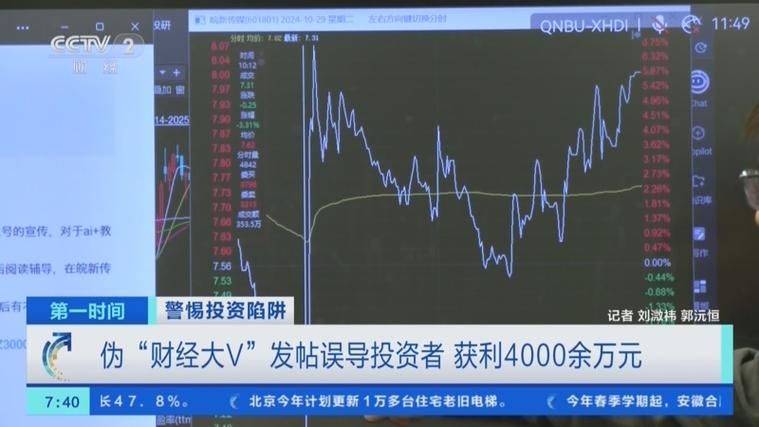
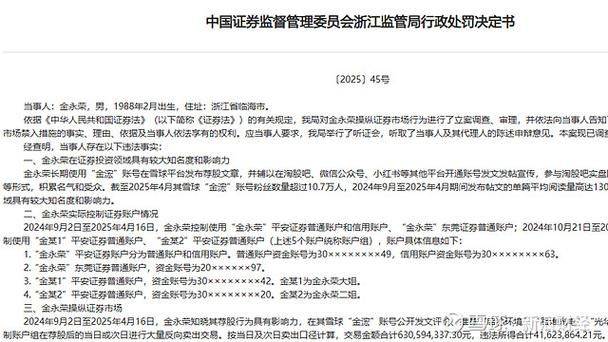
A securities investor on a short video platform focused on one of the "fubred generations of kyoto" was attracted by his "inventory of investment cut-off" and transferred 150,000 yuan into the "inventory of stock". However, the investor, who believed that he had the “fiscal code”, had found that he was running a loss and running it. In fact, it's a carefully packaged scam. Over 40 reports have been received from the relevant authorities concerning the "fuier two generations of the beijing circle" and the cumulative fees paid by the whistle-blowers are approximately $5 million, a figure much higher than that for all investor stock losses. After investigation, the so-called “kyoto two generations” did not have any qualification in securities and constituted an advisory service on illegal securities investments, which resulted in two years and six months' imprisonment and a fine of $15 million。
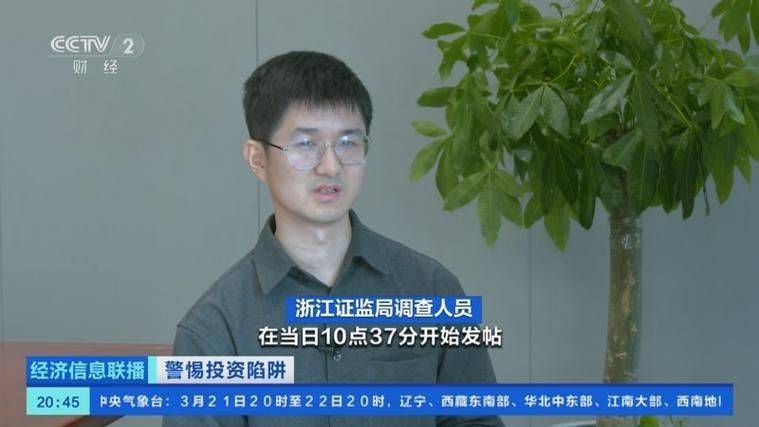
There is no basic financial expertise or professional qualifications. “handjacking” is the usual method of illegal profit-making — illegal elements build their warehouses and then induce investors to buy and sell at high prices and quickly sell their profits. There are also incentives for investors to download false apps and transfer funds for fraud on the basis of fees. Groups that lack the capacity to identify and have insufficient investment experience are highly vulnerable to economic loss。
The distribution of financial and economic information and ecology is a matter of “money bags” and investor confidence, and more of financial stability and social stability. In-depth efforts have been made to address the web-based misinformation about capital markets, to regulate online live marketing, to deal legally with accounts of rumours and illegal offerings, and to intensify the black-and-shell campaign in the financial sector, to guide financial institutions in strengthening investor education, to expose risks by way of case-based statements ... A series of “portfolio fists” are accurate and effective in cleaning up the network environment, and to demonstrate a firm determination to maintain financial market order and the interests of financial consumers. In the future, there should be a sustained increase in the level of response and a clear red line for the dissemination of financial and economic information。
It is also important to note that the consolidation of the platform's primary responsibility and the strengthening of self-regulation by financial content creators are important aspects of the clean-up of cyberspace. As a gateway to information content dissemination, the web platform aims to strengthen the capacity of science and technology, explore effective initiatives, effectively fulfil the obligation to review, and eliminate offending elements from breeding ground. Financial content creators must value their reputation, fear the law, convey rational investment ideas, spread financial common sense and interpret market logic. Illegal incitement and inducement to trade are punishable by law。
Financial institutions have much to offer to clean up market ecology. With professional investment teams and a compliance control system, licensed institutions can actively use channels such as official networks, clients and social media to foster a web of knowledge, regularize and diversify investor education and financial and economic literacy, and help financial consumers to build trust in and dependence on formal information channels and squeeze the space for false, inferior content。
Financial consumers themselves need to shine their eyes, proactively choose formal access to information and invest rationally in finance. Learning about finance, choosing the content of information published by formal financial institutions, mainstream media, and not relying on the so-called "big v" initiative. It is understood that “the sky does not fall out of pie” and that a “cut-off” may be a trap. To protect the “money bag”, every financial consumer is his “first responsible”。