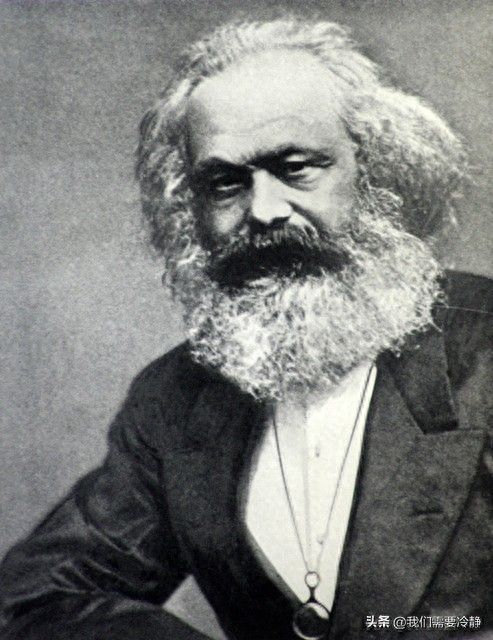
Common sense was published in january 1776. Common sense, which i have in my hand, is a version of pann selected, published in 1981 by the commercial print library and printed in 4500 copies, which is thirty-third of the current year's circulation, while in 1981 the population of china was about 1 billion, about 500 times the total population of the united states in 1776. You can say that these comparative figures are not very meaningful, they don't prove anything. The situation may not be the same if we go behind the figures。
I would like to emphasize, more than anything else, the core value of pan and his commons: politics is one of justice and injustice, and good politics has a solid moral foundation. It is precisely this that makes the british citizen pan, who is not afraid of being held hostage to the “treason” of the united states, head to north america to advocate independence. That is also the point, urging him to “go to north america” and “go to france” — to join the french revolution and then to return to the united states to criticize the policies of those in power, without falling into poverty or even prison。
In fact, pan’s commons is a rhetoric that contradicts all skepticism and rejection of north america’s independence, pointing out the uglyness and injustice of the british empire’s rule over north america, and strongly advocating that the people of the north american colonies should rise up and run themselves and live according to their own expectations. Words, common sense, make them immortals in the american founding literature。
At the beginning of 2009, guangxi university press published a book entitled common knowledge, by liang dynasty, a continental reader, a well-known writer and mediaman. The first 30,000 copies, which were listed around 10 january, were cancelled in mid-february, despite a spring break. It's not surprising. One hundred and eighty-eight, like 108 good men, sits in the next row, "understanding the 70 critical slices of contemporary china" and "seeing the local angle of the world." in his interview, mr. Liang wendao said that the name " common sense " was incidental and inevitable. Well, please join me in sharing mr. Liang's “accidentally and necessarily”。
Your commons, i looked at it on the spot, and i went home, and it gave me the feeling of reading pan's commons。
Many chinese, including most of the intellectual elite, are lost in a period of dramatic transformation. Although some feel that they are some sort of partisan... China is fast, complex, grotesque, unimaginable, and confusing. At a time when there is a toilet outside, with a distance but not too far away, the eyes and heart are concerned with the “margins” of these events – he is soberer, with information from abroad, from hong kong, and well-trained, able to remain sensitive to china’s realities and incredible events, and close to “common sense.” you and your commons are good examples. And i found that your chinese expression is very close to the mainland. Moreover, whether you quote it or say it about the events of the problem, about the factual grasp of the process, including from the perspective of your observation of the problem, there are new intentions that differ from those of the intellectuals on the continent. A question can be drawn from different angles, even common sense, and common sense can be said, for example, when you look at the political situation in thailand and the collapse of his letter ... You often give me a different sense of talking about these things with mainlanders。
Let's just call your commons the liang commons. 780 short, thousands long, read it, minutes, 10 minutes one. This is important. What i would like to know more about reading complete books is whether you write normally or in this episode, is there some textual or spiritual connection between what you want to say and pan's “common sense”? There must be, of course. Actually, it's an unexpected title. When guangxi's publisher made me read it again, they said it was one name. I went back to the hotel for two days, and when they came back to me, i said, "don't do it." they asked why. I said it wasn't good. They say it's bad? I said it wasn't really worth it, because i suddenly came up with the word “common sense”. Because i write common sense! It's nothing. Although this is an unexpected title, i must say i have always been spiritually in agreement with pan。
What is tradition? In two senses: first, the tradition of pamphlet writers, actually, was a writing method that began in europe in the 16th century. I later found out about the brochure, and the united nations has an official definition. The page of the united nations educational, scientific and cultural organization (unesco) stated that the booklet was a print and could not be less than five pages or more than 48. Very funny. It has a long tradition of being particularly light, thin, light, short and easy to read when the press is not yet available and is not yet widely available. “i will provide only some simple facts, obvious arguments and common sense”. This is how the booklet is written, and it does not write deep, ambitious theories, it is simple and it is the best place to talk about public affairs. One-size-fits-all is about specific issues。
Right. And the booklet has a purpose: “to give the truth to the public”. Later, pan and edmund burke had a famous debate about the french revolution. In that debate, both sides were fighting for that role. Supporters and opponents from both sides gathered in more than 150 copies of the same booklet that is being circulated. Although many scholars later agreed that burke had more depth and that burke had won, that was a later theory. In the circumstances, most of the authors of the booklet supported pan. And pann books sell more than burke. Their debates are a model:
Give the truth to the public. What it means is not that intellectuals are high and spread the theory from top to bottom, but that i believe that my readers have reason, are able to judge right and wrong, understand logic, and we write, who is wrong and who is right and what is truth, and then leave it to the public to judge. Another interesting feature is that, although the form of booklets emerged in times when the press was not universal, it existed even when it was out of reach and has been written to date. Like pierre bourdieu in france. Charles wright mills has written quite a lot of pamphlets, but today they are not considered to have been translated very well. Why do you write books in newspapers? It is the author's belief that something has to go beyond the normal newspaper to be clear, but it's not a theory. I very much agree with this tradition, with the way in which this writing is written and with the attitude that i feel like i want to be placed under the tradition of such an intellectual. I am not a person sitting in a temple. I am a person who wants to speak to my readers in simple language, directly, or even with a common sense attitude, to judge whether or not this is the case。
Second, academically speaking, today pan is not a big thinker, and many of his thoughts are in fact a summary of what was before him, and he is deeply influenced by john locke. The tradition of the entire phuiger party is deeply influenced by him. He is a man who can express many of the old theories and philosophy in a simple way. That is what i agree with。
Finally, of course, the name “common sense” was not his name, but suggested by his friends. Let's think of a problem, when commons sold particularly well in north america, and the whole of north america sold just over 2 million copies. Particularly horrible, and from today's perspective, too. One in 20, one in almost 20. Almost literate, including those in the military. 150 thousand copies sold, but look at more than one, one by a few. It was almost universal。
That's the problem. Today, when we talk about pan's commons, we rarely talk about another question, which is why it sells so well. I think one of the reasons is that he said what everyone agreed and that he said what everyone thought was right. It's kind of like liang kai, and i like liang kai kai, who says things that make people feel like he's talking。
One of the two situations that pan wrote in his book was that some people wanted to say they wouldn't say, and he said well. There are others who want to say they dare not, he dares. Yeah, so that's common sense. In fact, the set of things that he talks about is a summary of the ideas of the ancients, which have already spread out in pieces. For example, he began by drawing a distinction between society and government: society was driven by human needs; governments existed to punish and control people. That distinction was not his original idea, as had been the case in north america. And unlike the british and north american colonies, which were self-governing from the beginning, they know too well what societies are created by human beings. One person in the western film just called himself a sheriff, then took over the post. There is no country but a society, and it is only after a certain degree that they feel the need for a government. That's why the north americans were right. That's how we came. So it sells best because it speaks of common sense, which always exists, but it just doesn't know why a mouth is missing, and nobody says that it is finally spoken。
I appreciate what i just said about the three routes down pan. As to whether he is liberal or republican, i will not speak for the time being. Of course, i'm not writing a brochure, i'm writing a newspaper commentary, but i'm using a method, a philosophy, a belief that i want to express, so i don't think i write something that surprises people, but a lot of readers tell me that my things are not really great. That's what i want: nothing great。
In north america, there were only 23 million people, divided into 13 plots of land, and information was underdeveloped, with only the post office, and with no newspaper, so many writers were able to hang around a text like a booklet. And now we have so many audiences, so many questions, how many writers are willing to work for it? Is the time going backwards or is the author going backwards
You just said the tradition of pamphlet, even then there was a brave question. Because it was in favour of the independence of the americas, although it was in the heart of many that it took courage to come forward. There was a bit of relative moderation, saying that we reconciled with britain. He is opposed not only to anti-independence but also to reconciliation, with whom he fights not only those pro-british elements but also those who advocate reconciliation. It is in this context that he explains why north america is independent. I think pan did step out of this, standing up and coming out。
Today, everyone is unaware of his contribution to the united states and even of the name “united states of america”. But let's not forget that he's not really an american. He's an englishman. Franklin invited him to north america. Go to america and tell them you should be independent. Then he went to france and told the french you were going to revolution. He was famous in all three countries and ended up in france as a member of the national assembly. Yes. Member of parliament in france. So you saw him go first and his body is free. It reminds me of a certain degree of nationalism in which intellectuals have a place to run。
Secondly, and even better, pan went back to england, where he was with burke during the debate. We would like to note when that time was when he encouraged the return of a traitor after the independence of the americas. So you imagine what england is like。
1880s, '78s. I think that is important, and that courage is supportive. He was a traitor, and an advocate of division returned to the capital from a divided place. He dares to go back. There was something going on, but nothing at first. This is a very special state. What kind of country and what kind of soil was britain at the time? The british at that time, although not at the level of democracy today, was under the gestation of a free atmosphere, a thing that was moving forward, a national of his own openly declaring a division of the land, returning to his home, and leaving behind books and bickering. Can you imagine
What's going on with this tradition? It's supposed to be after the renaissance. A lot of people wandered around in a carriage to hide from the royal family..
And one thing, of course, is that europe is a complex context, where tolerance of democracy and national issues has many reasons. At that time, the nation-state was not fully established. It was a period of recent transition from the past family dynasty. Secondly, there is a fairly strong tradition of tolerance of speech in the united kingdom, which i feel is related to the separation of the united kingdom from the catholic church. And i think the british tradition of liberal tolerance was based on the fact that there was no absolute monarchy at the time, and no one could decide. So it depends on whether state power is monist。
Secondly, i have recently seen a french psychoanalyst talking about france's critical intellectual tradition. Today, when we talk about french intellectuals, we usually think about the kind that began with zola, where sartre was standing on a barrel in a car factory; foco's bald head was beaten by a police baton... All in the face of the government. But we often ignore an important event, the behaviour of french intellectuals in the face of the nazi german invasion. How many of these intellectuals wrote from france when the nazis invaded france? Like braddock, founder of the yearbook school, how heroic. Braddock fought the first world war. He's a lieutenant. He was in fact 54 years old at the time of the second world war, a well-known university, and the united states asked him to leave. He went to lyon and sent leaflets, went underground and was arrested. Four months of torture, fingernails, ice buckets, burning, and the gestapo's final execution. Four men standing in a row, standing next to him, a 16-year-old boy, who was shaking at a young age, and he asked if braddock was in pain? Braddock says it doesn't hurt. Don't worry, it'll be over soon. That's the last words of the maestro. And the nobel prize winner of literature, the french novels, claudel, also worked in the underground. These people are heroes, aren't they? The problem is that the same group of people, a large part of the world's population, joined a movement in support of the algerian independence movement shortly after the war. How could you support the independence of a colony when many people accused them of being traitors and of treason? Why is it that the same people are willing to die for their country
I was most impressed by the words of jean pierre vernan, the french classical master: for us in the past, it was impossible to allow the nazis to invade our national territory, and it was necessary to fight to the end; likewise, it was impossible, unified and consistent, to take away from algeria our right to defend our lives. Why is he so brave and brave? He said courage did not come from emotional subjects, not individual subjects. It's not a connection to a country, it's not a local identity. It's a kind of generalization (universal rule) that takes me completely out of the realm, and the outbreak of that universal rule at that moment is called heroicism。
Time and space have changed, but the concept has not changed and the logic of principle has not changed. Unlike today's china, we put patriotic intellectuals in some way against public intellectuals, and we think they are two different people, but they are the same。
And patriots cannot love empty. Those anti-german intellectuals later found themselves patriotic, even if they supported algerian independence. Why? Because what they believe is that nations have ideas. What this idea is, they go back to the french revolution, how our country was founded, free, equal and fraternal. That's the idea. We fought against the nazis on the basis of the same ideas, and we supported algeria on the basis of the same ideas, which are a defence of national dignity。
States should be built on a moral basis and politics divided between justice and injustice, or else the foundations established by the state will be transformed into the destruction of their own toxins. I can only say that you're a fake and a hypocrite. Yes, when he did those actions, he used his body, his language, his article to show what france was。
Reader's “the spectator” series, which includes liu surry 1 + 12: the way to common knowledge, zhou xian jian, the possibilities of justice, kladen, and lee jing, mr. Tai。