The family is the first school for the child and the parents are the first teachers for the child. Family education not only affects children's intellectual accumulation, but also shapes their personality, values and outlook more deeply. As parents, we tend to focus on children's achievements while ignoring the fundamental role of family education. Today we have come to explore in depth how science-effective family education can help children grow up healthy and achieve a better future。
The core of family education: love and respect
Education is essentially love. Children need unconditional love and acceptance, not simple material satisfaction. Only in a loving environment can children build security, explore the world and face challenges。
Respect is a concrete expression of love. Respecting children's personality and choices, listening to them and understanding their feelings are the basis for establishing good parenting. Parents should avoid accusations and orders, but communicate with their children in an equal manner and stimulate their internal motivation。

Ii. The power of the role model: teaching is better than teaching
Children are highly imitated and their behaviour is profoundly influenced by the behaviour of their parents. Rather than preaching, we should lead by example。
For example, if parents are honest, the child learns to be honest; if parents love reading, the child is more likely to love learning. Good living habits, positive mindsets and healthy emotional management are passed on to children through role models。
Iii. Scientific eduction methodology: stimulation of inner drive
The modern concept of education emphasizes the motivation of children rather than relying solely on external rewards and penalties. Parents should take care of their children's interests and talents and, by teaching them, help them find the pleasure of learning and living。
Children are encouraged to set targets, progressively achieve them and increase self-confidence and sense of achievement. Support and guidance, rather than alternative solutions, when difficulties are encountered. In this way, children can develop the ability to learn autonomously and solve problems and become lifelong learners。
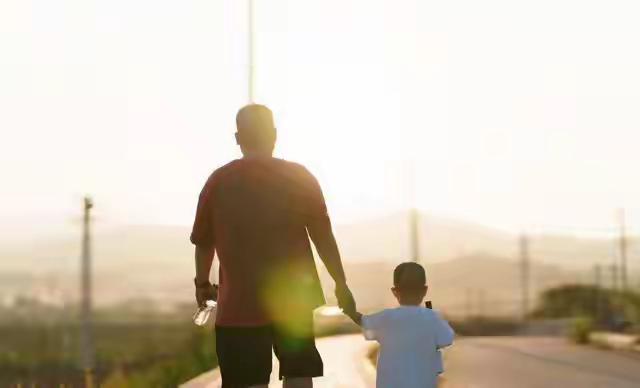
Iv. Effective communication: building a harmonious filiation
Communication is a bridge to family education. Good communication is not just an exchange of information, but a process of understanding and harmony。
Parents should learn to listen, give their children space and time to express themselves and avoid interruptions and denials. Open questions guide children to think, not simply “right” and “mistake”. For example, “what do you think about this?”, “what do you think?”, etc., can inspire children to think and express their desires。
Emotional management is equally important. Parents remain calm in their communication and avoid emotional reactions, helping to create a safe communication environment in which children are willing to share their inner world。
V. Fostering a sense of responsibility and independence
A sense of responsibility and independence are key competencies in child development. Parents should take responsibility for raising their children at a young age, giving them the right freedom and space to learn to manage themselves。
For example, arranging for children to participate in family matters, such as housekeeping, simple housework, not only to exercise hands-on skills, but also to make children aware of the importance of responsibility. When a problem is encountered, the child is guided to think of his or her own solution rather than to intervene immediately。
Independence development needs to be gradual, respectful of the child's pace of growth, and avoid overprotective or arbitrary practices. In this way, children will have strong psychological qualities and self-regulating abilities to face social challenges in the future。

Vi. Shaping good habits: details determine success or failure
The power of custom cannot be ignored. Good living and learning habits are important safeguards for children's success。
Parents should help the child to establish regular working hours, rationalize learning and recreation and avoid addiction to electronics. Healthy diets and moderate exercise are also important components of good habits。
At the same time, the time management capacity of children is being developed to enable them to develop a sense of self-regulation through planning and tasking. Through continuous habits, children will have efficient learning skills and positive life attitudes。
Vii. Treatment of favours and freedoms
Life cannot be smooth, and failure and frustration are necessary paths to growth. Parents should guide their children to view failures correctly as valuable experiences and learning opportunities。
The failure to treat children with criticism and denial is avoided, and they are encouraged to learn lessons and adapt methods and continue their efforts. In this way, children are able to develop resilient qualities and have the courage and wisdom to face difficulties。
Viii. Creating a sound family environment
A friendly and harmonious family environment is an important environment for the healthy development of children. Parents should avoid the negative impact of family conflicts and conflicts on their children and work towards a family culture of mutual understanding, support and inclusion。
Regular family activities, such as dinners, outdoors and reading by parents, help to strengthen emotional ties between family members and give children the warmth and strength of the family。
Concluding remarks
Family education is a systematic project that requires continuous learning and practice by parents. It is not only about the growth of children but also about the well-being of families and the future of society. As parents, we should be rooted in love, with respect as a bridge, science guiding our children and accompanying them to healthy and happy development。
Only in this way can we truly be “heroes, not achievements, but human beings” and help children become responsible, independent, caring and intelligent citizens of society。
From now on, let's be the strongest backstoppers for our children and shape their future