


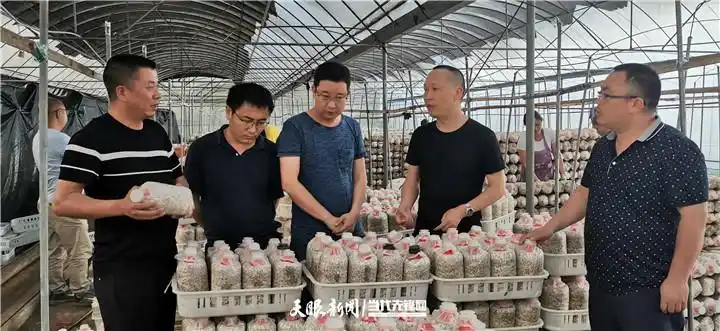
The edible bacteria industry has become a new way for the people of guizhou to escape poverty
Accompanied by professor xu yang, faculty of agriculture, guizhou university, and a group of specialists, the university of guizhou food microbacterial industry team promotes industrial development, boosts farmers ' income and provides scientific and technological support for the development of industries with the most important characteristics of poverty alleviation throughout the province, including through technical support, technical training, the establishment of technology demonstration areas, and technical difficulties in the fight against capitalism。
Journalists: the market for tea and mushrooms is good, the growing number of people growing and the competition is so intense that it can only be of good quality if it is to stay on its feet. So, how do you plant high-quality tea mushrooms? Is there a "secret"? Professor seo-yan: the first step is fermentation. We have the secret! The culture of conventional planting methods is not fermented, and mycelium growth is slow. And the fermentation that we use helps the mycelium grow and the pollution rate is low. The nutrients are mixed by formula, with a water ratio of 1:1. 2-1. 3, evenly balanced, with a hand-strangling of a culture and a drop between the fingers, but no drop, with a water content of about 65 per cent. It would be preferable to choose a concrete floor pile, with a core of bricks, with a few straws on it, with bricks at its centre, and a stack of materials of 1 to 1. 2 metres high and 1. 5 metres wide, to flatten the material, to make a hole from the top of the material to the middle of the brick, to prevent anaerobic fermentation, and then to insert a thermometer at the top of the material, refilling the plastic film. Three to four days later, the temperature to be received was 60°c, which could be rolled over the next day and again brought the water content to about 65%. Reassembly at 60°c, as previously operated, and in bulk the next day. The fermentation time of the stack is flexible according to the circumstances, and in general, it is possible for seven to eight days。
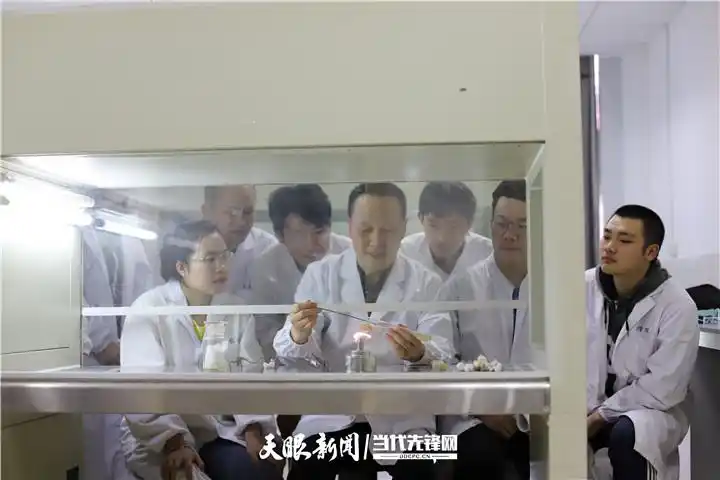
Prof. Seo-yan jun (right four)
Reporter: what's next? Prof. Seo-yan jun: pack the bag! Focus on the eradication of the disease - whether it's complete or not is one of the key factors in the success or failure of the tea and mushroom cultivation! Tea mushrooms are less resistant to impurity, so they must be eradicated completely. An option of 15-17 cm x 35-37 cm x 0. 05 cm low pressure polyethylene (e. G. High pressure fungicide selected polypropylene) bags with 720-750 g per bag (approximately 350 g dry weight) is available, which is loosed and tightened to an altitude of about 14 cm. To level its surface, with a two-cm diameter rod in the middle, with a depth of two thirds of the material, and be careful not to loosen the surface while pulling it up, and then put on the loop in time. It is often pressured to increase temperature to 100 °c within four hours and to remain at 12 to 14 hours, with appropriate reduction or increase in temperature retention time, depending on the load in the fungicide pan. The 1,000 sterilisation bags need to be maintained for 12 hours, the 2000 sterilisation bags for 14 hours and the 3,000 sterilisation bags for 16 hours. In particular, box-based steam sterilisation should be used, i. E., the bag should be placed in the box and a box should be folded into the fungic use pool。
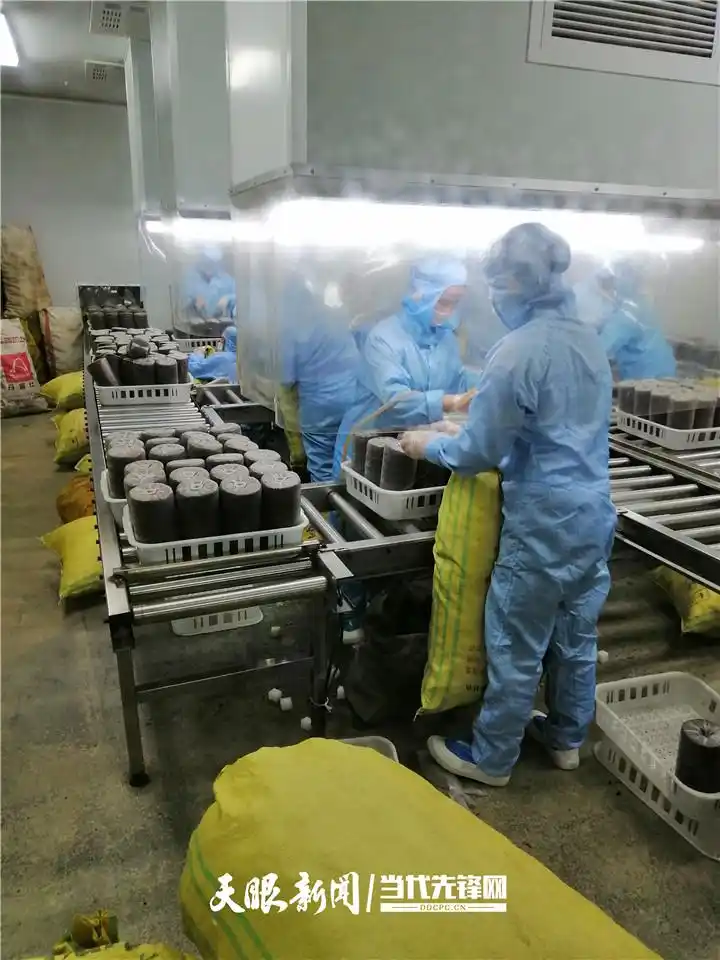
Valued edible bacteria industry teams promoting industrial development by providing technical support and establishing technology demonstration areas
Reporter: it's kind of like a pre-pregnancy check-up to make sure that no poison, no pollution, no health. Professor seo-yan: this is what we call inoculation. The sterilisation bags are moved into the inoculation box or in the inoculation room (which can only be used after disinfection), and the temperature is reduced to less than 30°c for vaccination. The selected strains are white, strong, disease-free, 10 days old, ready for inoculation after the mycelium has diarrhea. Inoculation is carried out first by cutting off a thin layer of an aging microbacterium, and then by dividing the cultivation into muscular bean sizes of 30 to 40 bags per bottle, which can be increased in order to accelerate the growth of the fungus. It's big and fast, and it reduces fungus intrusion. The culture room requires clean, dry, ventilated, and light-shield, preferably using a 50% wetble polyglycerine 800 times solution before the culture room is used, 80% dichlorvos 500 times solution spray, 1 fungicide and 1 every 1 week during culture. Room temperature is maintained at 20 °c - 28 °c, which promotes the homogenization of mycorders, e. G., bacterial bags found to be contaminated by fungi are moved out in time to prevent proliferation. If cultivated in the autumn, the temperature is high during the preceding period and the heat is dispersed, as far as possible, to contain room temperature below 30°c. The general inoculation can be filled with 40 to 50 days of mysis。
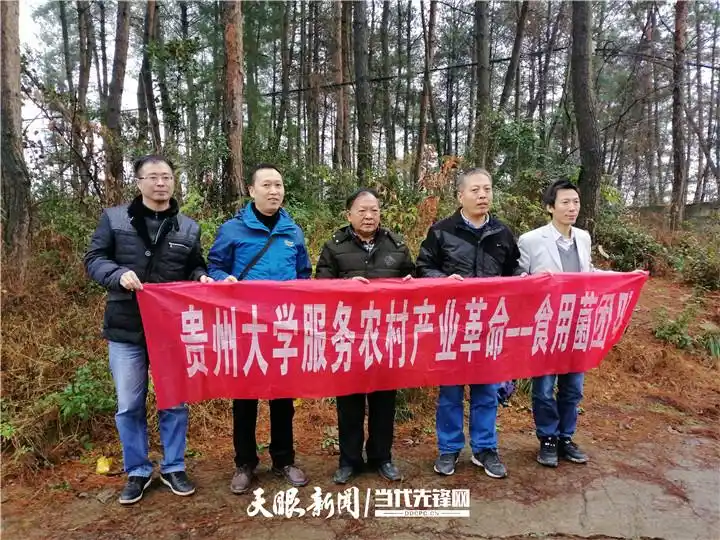
Guizhou university food bacillus industry team
Reporter: is it time for the "baby" of tea mushrooms? What does that require? Prof. Xu ying jun: professionally speaking, mushroom management must control temperature and humidity, regulate air and light. Control of temperature and humidity - the temperature range for sub-entity development is 10°c ~ 30°c, of which 18°c ~ 20°c is the best. When temperatures are below 8°c, the sub-entity cannot be formed; at 10°c ~ 16°c, the length is slow, the mushrooms are thick and of good quality, but production is low. The mushrooming phase requires a relative humidity of 90 per cent. When mushrooms are produced, a large amount of moisture is absorbed from the matrix, so the length of the mushroom period is mainly wet by spraying. Air regulation - tea mushrooms are a good aerobic fungus, and mybs need sufficient oxygen to recover growth and physical development, as well as to exhale co2. Respiration increases when the sub-entity grows and develops, and when the carbon dioxide concentration in air is too high, it inhibits the division of the base and of the sub-entity, especially the bacterial cover. Aligning light - tea mushrooms are good light fungus, with clear light. Light stimulates foundation formation. During the original base segmentation phase, a certain amount of dispersive light is to be provided, with a suitable light strength of 500-1,000-lex and the most appropriate light strength for the sub-entity to grow of 50-300-lex. The management of mushrooms in the spring is easier, as natural temperatures are an upward trend, and management methods may be required from the end of march to the end of may under mushroom conditions such as temperature, humidity, ventilation, light and so forth, with attention to pest control. Professor seo-yan: it is also important to emphasize that the key to the technology of mushroom-bearing management is chromosome. When the tea mushrooms bag opens, the light increases and the oxygen is sufficient, the essentially mature fungus becomes chromosomalized and yellow water is spitting, which leads to a gradual browning of the skin of the bag. As the ectoplasm process is prolonged and the color of the ectoplasm increases, a layer of tan on the surface of the pocket is formed. Without microcosm, the fungus loses the function of temperature insulation and no sub-entity formation. The fungus filament in the tea mushroom fungus bag is finely tanned and rusted and radiant. The fungus is normal and the sub-entity produces high yield and good quality. The management of transcretion drives is an important link in the high quality production of tea mushrooms, and attention should be paid to the following: temperature change, wet control. The indoor temperature is maintained at 23°c ~ 24°c and the relative humidity is 85% - 90% after three to five days. From mycelitis to the dichotomy of forming mushroom buds, there is a short cryogenic period, sudden warming irritating the fungus, forcing the fungus to weave each other and to twist the reproductive organs of the mushrooms - the foundation of the sub-entity. Incentives for the accumulation of small ignorance within the fungus and the formation of mushrooms. Therefore, high temperature differentials and variable humidity are an effective accelerator in tea mushroom cultivation. - get some air. In the transition phase of the tea mushrooms, where the breathing activity is strong and co2 emissions are increasing, there is a need to improve ventilation, while maintaining high air moisture levels in the mushroom houses, so that water, gas, temperature and light meet the needs of the mushrooms to grow. Direct discharge of biologically mature bags of fungi can also be carried over the walls of light, pull out of the pockets, cover newspapers with straight discharges with wetting on the pockets, increase the relative humidity of the fungus from nutrients to reproduction, increase the relative humidity of the air to 85 to 90 per cent, spray water wet to the ground and newspapers in the morning and evening, control the light at 500 to 1. 000 lx, control the temperature at 18 to 25°c, and heat differentials at night, so that 10 to 15 days after the bag is opened, so that the physical event occurs in large numbers. - harvest. The tea mushroom cover is hemispheric and the membranes are collected in a timely manner. At the same time, the basics should be seized once and the whole mushrooms should be removed to facilitate their occurrence. After harvest, the bag is cleaned, the bag is assembled and the silk is given a break of two to three days, then the bag is pulled, the water is poured once and the management is repeated. A high nitrogen content of any type of edible fungi results in a low production rate and delays in the production of mushrooms. When planting tea mushrooms, it is appropriate to have 20 per cent of the skin or skin and maize powder in the culture. Tea mushrooms usually take out a bag of mushrooms. The fungus or no fungus can be used, and the fungus can be opened after mushrooms are formed. Water can be preserved by either refilling or land cover methods after a tide of mushrooms. Land cover should take into account the fact that the soil is well ventilated and that the sandy edge is the most suitable and the thickness is 1 cm. The times of guizhou
Quixon university food industry team for editing



