Key technology for the healthy cultivation of succulent tomatoes
Fund project: national technology system for large vegetable industries (cars-23)
Wang hai ying and others
In recent years, the taste, colour and nutritionally good oral tomatoes have become increasingly popular in the market and have become the direction of the tomato market. The characteristics of oral tomatoes include skin thinness, thickness, juicyness, sour sweetness, strong taste and sand. The most important factor in the production of oral tomatoes is the variety, which is currently widely recognized, mainly in totaro, diana, etc., but which is more environmentally demanding and less productive, usually growing more in production parks, mainly for the production of gifted vegetables or orders. In order to adapt to market demand and improve the quality of tomatoes, home-grown breeders continue to produce taste-friendly, resistant and high-yielding varieties, along with appropriate environmental conditions and health-planting management techniques. In conjunction with production, the author summarizes the technical aspects of oral tomato cultivation for the information of growers。
1 varieties
Varieties are the most important determining factor for the taste of tomatoes, and generally the skin, juicy and tasteful varieties of tomatoes are selected in production. For example, high sugar, sweet summer sun, busan 88, golden sun; large and medium fruit varieties that are sweeter or less sour 73-190, kyoto 308, kyoto 309, saffron 882, ginobili, thai golden lotus, small fruit types of yellows, etc.; relatively tough or thinner fruit-skines, kyoto 309, strawberry tomato series; meat-rich provence, thai golden lotus, crown 6 etc。
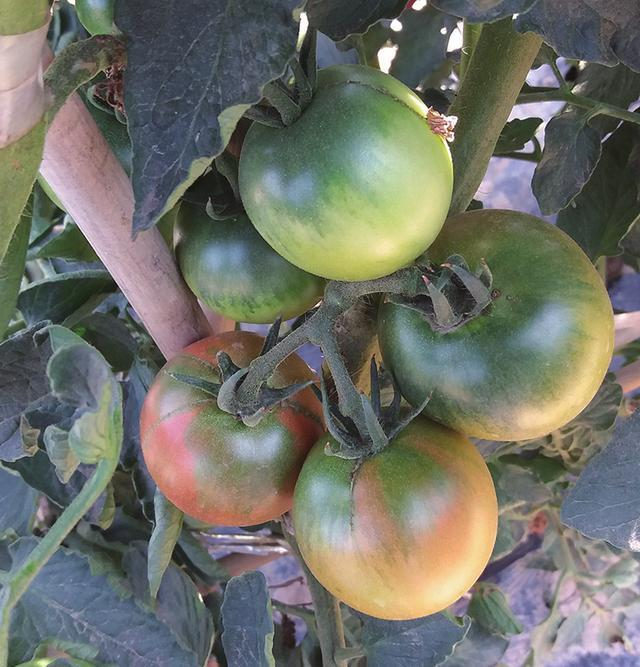
Figure 1 kyoto 308
1. 1 the yu linggian academy of technology and the su xinghong city institute of science and technology co. Ltd. The fruit is slightly flat, the berries are green, the ripe fruit is dark pink, the seating capacity is strong, 4-5 results per ear, and single fruit mass is around 120 g. Tomato erythromatic and vc levels are higher than normal tomatoes. The heartroom, with a juice rate of 42 per cent, the fruit tastes fine, the juice is sour, the sugar is about 8. 5 per cent, and the wind tastes sour。
Kyoto 308 potatoes selected by the vegetable research centre of the beijing academy of agroforestry. Pre-cooked, fruit rounded, ripe pink with green nuts, non-fracky, single fruit mass 80-120g, usually four fruit per ear (figure 1). It's juicy, it's delicious, it's delicious. It is proposed to plant around 2,800 plants per 667 m2 suitable for spring and autumn conservation and field planting。
1. 3 the golden lotus, thailand. Infinite type of growth, strong growth, moderate leaves, strong sit-in capacity, even size of fruit, single fruit mass 230-260 g, yellow skin, sweet juice (chart 2). It is environmentally resilient, suitable for early spring, autumn and winter planting, and suitable for large-scale planting and harvesting of organic plantations。
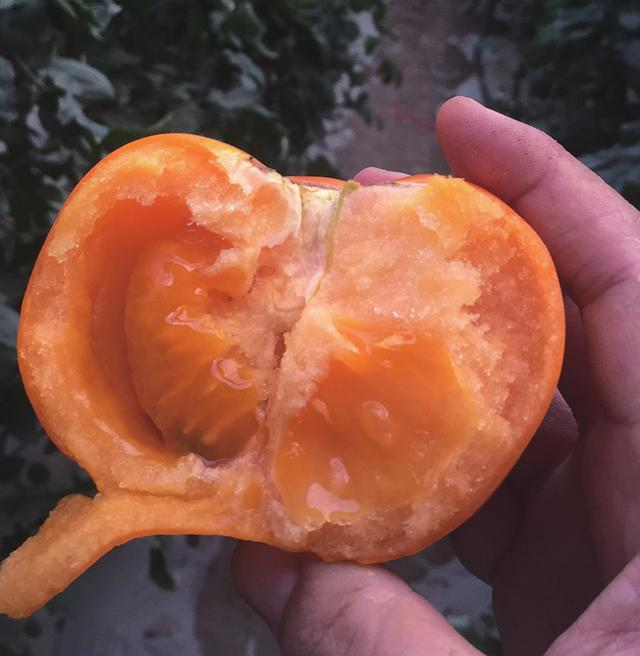
Figure 2
1. 4 73-190 rick swan (china) agricultural technology ltd. Multicardial, juicy, and a high proportion of fruit and meat compared to the medium-sized tomato varieties currently available in the market, which are soft, thin, juicy, sand and sour (chart 3). The introduction of specific planting management techniques will significantly increase the taste of fruit and its commercial character。
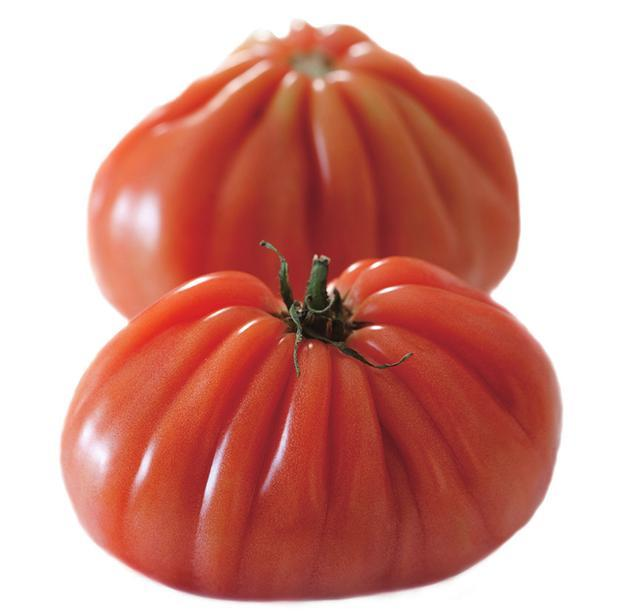
Figure 3 73-190
1. 5 ginobilie wuhanchu was selected for the biotech company limited. The fresh-eating puffy-poll-eating generation of bastards, with medium maturity, unlimited types of growth, has a strong capacity for continuous results. The fruit is round, medium size, with a green nuts shoulder, smooth, elastic, single fruit mass 220-250 g. Anti-tobacco fleastal virus (tmv), tomato acupuncture curvary virus (tylcv), cucumber facile virus (cmv), leprosy, decay disease, anti-feed wireworm, grizzle disease. In the shandong, shanxi and shaanxi regions, the sun and greenhouses are delayed in autumn, and in the hunan, zhejiang and hubei regions, in autumn。
1. 6 crown #6 survivors south australia greenhorn agriculture limited. Tastes good, big fruit, pink. North china can be planted in the greenhouses in september. They are cold, they are positive, they have a single fruit mass of about 200 g, and they have a clear advantage in fruit and taste。
2. Water quality and soil
Water quality and soil quality are important factors in the cultivation of oral tomatoes, but natural conditions are difficult to alter. In general, plots that are naturally rich in selenium, slightly alkaline, with high weather temperatures around the clock, and that contain selenium, moderate trace elements and water quality conditions at appropriate salinity levels, have a better taste of tomato。
3 elements of cultivation technology
3. 1 reduced planting intensity, which is generally lower, is more conducive to ventilation in the fields, allowing for adequate light of leaves and fruit and for the synthesis of sugar. However, planting densities also vary from plant to plant, as in busan,88 where cultivation is now too rare, leading to too much fruit and even a decline in quality, to the detriment of transport and marketing. Based on different management methods, 3,700 to 4,300 units per 667 m 2 are suitable。
3. 2 reasonable watering the production shall be infrequent with small water effort, soil moisture appropriate for dry moisture and the result period controlled by mild foliage at noon, but will return to normal in the evening, which will improve the quality of tomato fruit. In particular, prior to harvesting, the effect of water irrigation on the taste is greater and the soil moisture is as low as possible. It is therefore recommended that planting be undertaken and that the drip irrigation be accompanied by scientific irrigation。
3. 3 organic fertilizers in lieu of fertilizers. The cultivation of oral tomatoes is generally based on animal proteins (fish proteins, meat proteins, etc.), plant proteins (corn proteins and soybean proteins), bean cakes, green fats, straw fats, manure, etc. The type of fertilizer is selected rationally according to product location and local fertilizer sources, generally for each 667 m 2 application of protein fertilisers 500 to 1,000 kg, or bean cakes 1,000 kg, or manure of decomposed animals and animals 2,000 kg, without or without fertilizer. After planting, 5 kg of organic fattening of each 667 m 2 with water to sprung the hysteria of the ocean (produced by shandong sunshine biotechnic co. Ltd., organic g l - 1, p 2 o 5 + k 2 o ≥ 50 g l - 1, ph 7. 0 ~ 9. 0) or of the akadic algae algae algae organic fertilizer (produced by shandong sunshine biotechnic co., l - 1, k 2 o ≥ 50 g l - 1, b containing 5 ~ 15 g l - 1, ph 7. 5 - 9. 5 5 kg, can be applied 3 - 4 times in a row, and can be applied in conjunction with the full water-wedding process; other types of fertilizer can be supplemented by a combination of plant growth and sit-in fruit. When the fruit starts to expand rapidly, appropriate increases in fertilizer use are made, generally using fermentation products such as fermentation, marshes, fermentation, fermentation products such as natural circular microorganisms, soybean fluids, or fish in fish, fish roots (produced by shandong sunshine biotechnologies, ltd.), organic radium 100 g l-1, n+p 2 o 5 + k 2 o 100 g l-1, ph 5. 0 ~ 7. 0), fish titanium (produced by young-hond marine biotechnologies ltd., organic matter 60 per cent, ph 5. 0-7. 0), and fish protein organic water fattening, especially in low temperature seasons, can be applied from 5 to 10 kg per 667 m, from sitting to sowing, to improve the production and quality of tomatoes, as well as to maintain a nutritional and reproductive growth balance and improve soil. If the base weight is insufficient or the soil is thinner, water soluble fats of high potassium (n-p-k 20-10-30) range 3-5 kg per 667 m 2。
The raw material for the fermentation is a combination of plant proteins containing specific fermentation species, such as yeast, which growers can ferment autonomously by diluting water to 5-10 times in the shed and can produce bacterium fertilizer from 2 to 5 d days. Environmentally friendly yeasts are yeasts that mix red sugar, vegetables and vegetables with water at a quality of 1:3 °10, fermentation under constant temperatures of 10-30 °c for three months, and fermentation which is mixed every 2-3 d (days) every second, 2nd and 3rd months. Soybean fluid is a mixture of soybeans or soybean powder compared to water by 1 degree (5-10) of mass and is added to the em fungus by sealing off the fermentation 7-14 d (day) of manure. The aam natural cyclic microbacteria, developed by the institute of technology for natural cycles and mountains, are carried by soybeans and fish proteins and are fermented by bioenzymes. They contain 18 bacterial strains, such as bacterium, screas, saline and nitrogella, and contain microbiological metabolites and various moderately trace elements。
3. 4 use of pollination as an alternative to growth control agents, and replacement of synthetic growth control agents, such as anti-depressants, such as bear bee pollination or mechanical vibration pollination, producing more sweet tomatoes, more uniform internal and external maturity, more juicy juice and better wind. It can also lead to the normal removal of petals and significantly reduce the incidence of ashilosis。
3. 5 reasonable regulation of temperature and light the taste-type tomatoes require a large difference in temperature, day and night, which makes it difficult for the yellow river basin in july to september to produce tomatoes with a good sense of export, which is relatively better in parts of the north-east and north-west of the country. In tomato cultivation management, cooling and heating performance management should be maximized where available. During the high-temperature season, the upper vents of the facility can be opened frequently, the lower vents kept open during the day or small, and the night spread widely, increasing the temperature differential between day and night and contributing to the accumulation of sugar. The temperature in the shed should be kept at 27-30°c during the day and gradually reduced to 13-15°c at night in order to cover the temperature in time for winter. In winter, cotton is pulled up 0. 5 h (hours) with a small amount of ventilation before closing the vent, and slowly when the temperature rises to 29 to 30 °c, stabilizing the temperature of the shed at 25 to 28 °c and not exceeding 30 °c. In order to ensure night temperature, vents are closed early when the temperature in the shed is reduced to 20°c in the afternoon。
During the winter, the shampoo is kept clean and dust-free bands can be used on the film, with light-filled lamps in the shed when conditions permit. In the summer, particular attention should be paid to the proper use of sunnets, which cannot be directly covered by the shrouds, should be installed above 30 cm distance and should be readily available. Sunnets cannot be covered all day or even throughout the month, but are only used during periods when the light is particularly strong and the temperature is particularly high. Where possible, a micro-mog cooling system could be used to replace the sunnet, allowing for strong light and low temperatures in the shed, increased air moisture, higher tomato sugar production and a reduction in viral disease。
3. 6 increased application of organic and specific functional fertilizers to tomato leaves during their reproductive years, including am natural circulation microbes, yeasts, organic selenium fat, ion titanium fat, sugar and amino acids, sea algae acid, fish protein, etc., contribute to improving the taste of tomatoes. The normal choice is a smooth weather for leaf spraying, with one blow every 7-10 d (days)。
3. 7 the preservation of the lower blades of the plant in high-yielding plants, when the tomato fruit grows to a certain length of time, is usually removed from the lower leaves of the plant in order to promote a change of colour, but this reduces the area of light co-operation, reduces the duration of the fruit on the plant and reduces the quality of the tomato. Therefore, in the process of planting oral tomatoes, especially when planting is less dense, the lower leaves of the plant should be preserved。
3. 8 generally, the higher the maturity of the tomatoes, the later the intake, especially under the current new retail modes, the better protective measures for the packaging transport and the fact that the maturity of the tomatoes no longer affects transport. As a result, tomatoes can be picked up when they reach maturity, i. E., three quarters of the area of the fruit peel。
3. 9 in addition to common pests and pests such as early disease, late disease, asympathosis, folicosis, umbilical disease, ulcer disease and white lice, many oral tomato varieties are less resistant to viral diseases, and production is based on a “preventive and integrated approach”, strengthening health-plant management techniques and minimizing the use of chemical pesticides. The techniques for managing healthy cultivation include, inter alia: 1 agricultural measures such as clearing gardens, tumblings, risers and pine soil; 2 physical measures such as rational regulation of indoor air moisture and high-temperature shacks; 3 ecological rehabilitation measures such as application of microbiological products, organic calcium, algae acid and fish protein organic water solubility; and 4 biological control measures such as bee pollination and the release of natural enemies。