Zhang zongqin began to wait for a few days of training in grape health cultivation after placing the vines in the cold at the sunyang grape test station of the northwestern university of agroforestry and technology in shaanxi province。
"looks like he's a grocier, looks like he's a charcoal salesman, he's from the northwestern college of agriculture!"
Zhang zongqin, who spent 200 days at the grape test station a year laughter, called himself a “sittle qin farmer”, with dark skin, thick cocoons on his hands and sometimes a polished bubble. When he was busy in the fields, it might be difficult to link him to a doctor, a university professor。
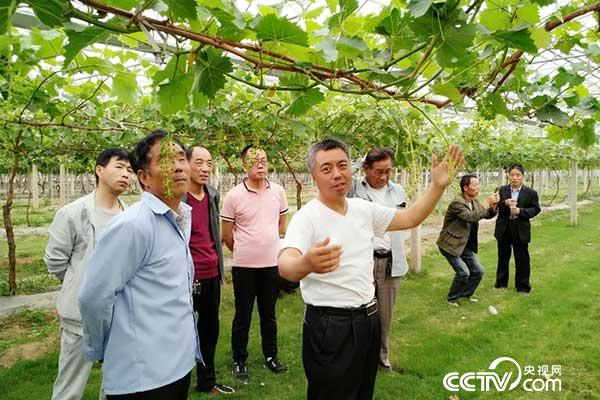
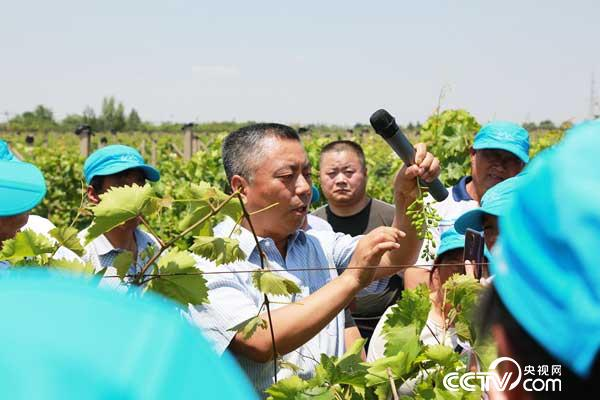
Zhang zongqin (left five) is in the orchard
A sweet farmer
After graduating from the north-west college of agriculture in 1985, zhang zongqin stayed at the north-west plant institute, located at “agriculture sanctuary”, yang ling (which merged with the north-west plant institute to the north-west university of agroforestry and technology in 1999), focusing on research and promotion of grape cultivation techniques since 2002。
Zhang zongqin is currently based in hoyang county, which is both the designated poverty-reduction district of the northwestern university of agroforestry and technology, and which is supported by the grape industries technology system designated by the shaanxi department of agriculture。
“although it was only last year that i was stationed in hoang county, i have been directing grape cultivation since 2002, and the guidance for hoyang district has been seven or eight years, two or three times a year before.” zhang zongqin said. He has been directing grape cultivation throughout the years, even throughout the country, thus increasing his understanding of the fears and anxiety of the farmers。
“physics are not used to fertilise, and circumcision is not recommended. No matter how many flowers, only one string of fruit is left on one branch, only one set of fruit." in an outdoor course, in order to make farmers more aware, professor zongqin focused on teaching in the northern language。
Zhang zongqin, who had attended more than 70 courses in hoyang county the previous year, had also given the farmers his own micro-messages to consult them on the problems encountered in the cultivation of grapes。
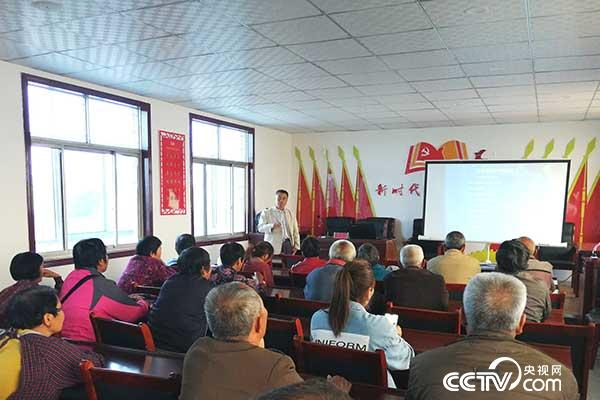
Teaching and training courses (visitees for illustrations)
Feng guisheng, who has been growing grapes for more than 20 years, is the most aware of this. Mr. Feng said, “it has been six or seven years since i met mr. Zongqin zhang, who has come to our village to lecture at training sessions, mentors in the fields, and has given us telephone numbers and telephones whenever there is a production problem, and he has been patient in explaining it, and he is the sweet man of our farmers.”
The park's “timely rain”
The growth of crops is strongly influenced by the natural environment, with sudden weather affecting harvests, and farmers often “watch and eat”. And an expert group like zhang zongqin has helped farmers to move from “seeing to eat” to “know what to do”。
Referring to the weather conditions of these years, zhang zongqin said as a number of people said: “the weather conditions vary from year to year, with drought earlier this year and more late rains. The snow of last january 3rd, the frost of april 7th, followed by heavy rains. There's more rain in these years in the western autumn..."
Frozen winters, dry springs and cold springs not only affect grape growth but also cause pest problems such as aphids. As a result, zhang zongqin keeps a daily record of weather conditions in order to provide timely early warning to the population and to mitigate or even avoid economic losses to the farmers. In his own tweets, he had to send more than a hundred pushes per year, or reminds the farmers of preventive matters or gives a timely account of the next technical steps。
In april 2018, when zhang zongqin came to the scene to study the problem of “the drug of the disease” in the northern part of the country, he explored the eight-word response to the problem of “first-class two-probation three-sides”. This approach is well-recognised and operational and is well received by farmers ' friends and park technicians。
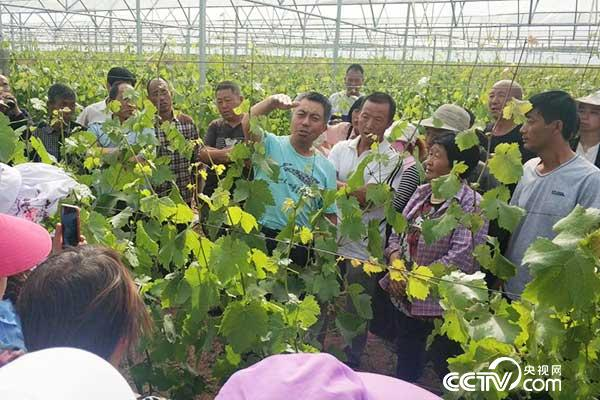
In may 2018 zhang zongqin went to the scene to check on the drying condition of parts of the grapes of a park and met with technical staff such as the school plant protection specialist, prof. Tsuhumi, and quickly found the cause of the disease and proposed eight effective responses to the problem. These “good tricks” are better than “timely rain”。
"the treasure in the hand" of the grapes
In order to avoid economic losses caused by poor management techniques during the planting process, zhang zongqin has written three books based on his years of research experience, which serve as a resource for farmers to understand, use, follow, learn and do well。
Zhang zongqin, in order to make the farmers understand and learn to apply technology, has also produced a photo- and short-text version of the cold-shed red earth grape cultivation technical book, which is both easy and easy to understand and becomes a “gear treasure” for the farmers to grow grapes。
This information not only makes the farmers aware of what to do, but also of why it must be done, on the one hand, and with targeted measures, in order to grow grapes and achieve better results。
By building cold sheds, increasing the application and rational use of organic fertilizers, and increasing the area under scientific cutting, the hoangyang county, which is a grape-eating area, with the advice and guidance of zhang zhengqin and other experts, has resulted in the overall improvement of the quality of grapes and the expansion of the area under cultivation, with an acre generating between 5,000 and 10,000 yuan, which has boosted the income of thousands of poor households. The incidence of poverty fell from 13. 2 per cent in 2017 to 1. 41 per cent in 2018, and in may 2019, it was successfully lifted。
When asked about poverty alleviation, zongqin said: “preventing poverty and technology promotion must be based on ideas and realism.”
Grapes on the ground
Zhang zongqin did not forget that he was a scientist in poverty alleviation. In addition to fulfilling his teaching tasks in the classroom, he uses the ground as a laboratory and the laboratory as an office for scientific research in production applications。
He has successfully tested sunshine roses and ota 8 wines, introduced new varieties of grapes, such as sunshine roses and sweet sapphires, introduced and promoted a 24-word planting idea of “3-six-six-six-six-six-six” and promoted “simplified” cultivation techniques, leading to the transformation of the grape industry to upgrade and enhance efficiency; and developed technical standards and published papers in cooperation with support units。
In addition, zhang zongqin was invited to interpret the concept and technology of sharing grape health cultivation at the fifth grape health cultivation conference, which was dubbed the “travel of the heart” of the “raisers”。
Zhang zongqin says that he works in agriculture: “some say we are `high' farmers, and `high' is simply knowledge and culture”. In his view, agriculture needed to be guided by the right theory, to produce quality products and to make agricultural work less difficult and to make it a happy industry。
Zhang zongqin said the most in the interview: “the needs of the local population”. For a farmer, grow good grapes to live a good life. For zhang zongqin, what he wants is not only “to enrich farmers with knowledge”, but also to produce healthy, high-quality grapes, “to make grapes taste like grapes and to make grapes taste like when they are young”。