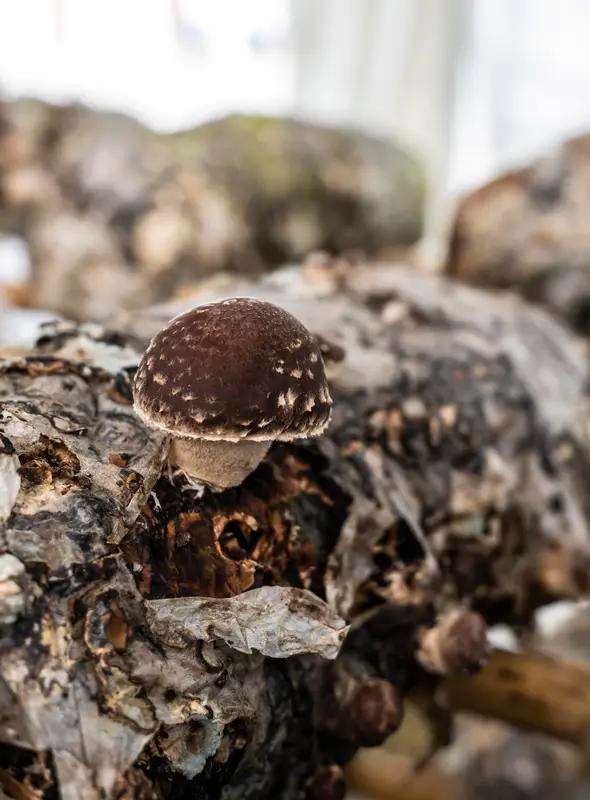
In the north-east, the mushrooms are planted artificially and a one-time injection produces mushrooms for life. The planting is preceded by the preparation of hard wood, which is suitable for twig trees, euphemism trees, euphemism trees, etc., with a thickness of 3-15 cm。
The wood is placed together with the saplings, with small branches, with two to three centimetres of thick soil and 10 to 15 centimetres of leaves, corn straw or soybean straw, so that they may ferment naturally。
When the wood is full of fungus, mushrooms come out, and there is a high yield of artificially grown grasshoppers, a pile of them. A piece of wood can produce mushrooms for four to five years in a row, until the wood is run out of nutrients, new wood is removed from the ground, and for another 15 years, mushrooms can be harvested as long as the wood is replenished. Usually, management is simple without medicine, herbs, water or fertilizer。
Artificial mushroom cultivation is environmentally demanding, with temperature maintained at 18-22°c and air moisture at 85-95%; plaster blended with broad leaf tree crumbs at 7:3 and 1% plaster to regulate acidity; light intensity is controlled at 200-500 lex and light is dispersed 6-8 hours per day。
Microbreeding is a three-tier expansion, using 750 ml vials of fungi bottles and polypropylene plastic bags for seeding; the luminous growth phase is to avoid light, with around 25 days of long bags, and stimulates foundation formation by stimulating 8-10°c temperature differentials and mechanical damage to the surface of the fungi bag。
When mushrooms are produced, 90 per cent moisture is mentioned in the current rheumatism, with three ventilations of 30 minutes each per day; carbon dioxide concentrations are maintained at less than 0. 1 per cent during the sub-entity growth phase and the mushroom body is humid with mist sprayed water; and the spray is stopped 24 hours before the harvest, and the fungus covers are collected in a timely manner when they reach 3-5 cm。
In terms of pests and diseases, 5 per cent of limewater is used to spray room walls for leprosy and brown disease; mushroom mosquitoes are treated with a net of anti-worms with yellow sticky sheeting, or 1,000 times the net of the fungus spray, which is suspended 15 days before the harvest。
An increase in production can be achieved by scaffolding, producing 15-20 kg per square metre; a second mushroom-out technique is a low-temperature irritation after 12 hours of impregnation, with a biotransformation rate of 80 - 120 per cent; and high-quality bacteria are managed with precision, with four to five production cycles per year。
The success rate of wild cultivation is more than 90 per cent, with the use of old bacterium rods being used for reuse. The suitable trees are chestnuts, eucalyptus, scallops and wood, producing 3,000 - 6,000 pounds per acre in the north-east. The planting space is maintained at a distance of 1 to 3 metres and the soil is covered with organic fertilizers to supplement nutrients。
Experts suggested that zenima growers could use a mesmerized memococcal rod with fresh wood, which would be buried at 1:1 scale, with mushrooms coming out in the second year of spring and autumn, and pure artificial cultivation of tungsten. Wood crumbs with trophic fluids or wheat acreage, with small branches, growing honey circulus for more than four months, and encapsulating the fungus to be managed in large huts and not in bags like mushrooms, which are highly risky。
Good work was done in the mushroom shed in cool water town, tumen city, which produced 500-700 kg each, and 20 sheds with a total annual value of $20-42 million, which was effective in the year in question. The tamponed mushrooms can be grown for five to seven consecutive years without rotation, and the entire industrial chain is being developed locally, turning wild resources into sustainable rich industries。