


On october 19th, sichuan news, china's new crop began after the fall harvest. In recent years, the hojiang county of wuzhou has promoted potato-free farming techniques, reducing production costs while also effectively protecting the environment and increasing potato production, making it an option for many growers。
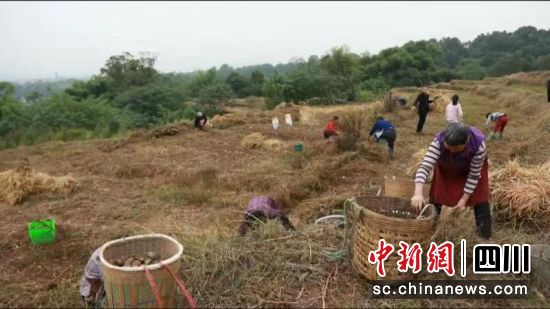
The promotion of potato-free farming techniques in the hojiang region of zhongzhou has helped to increase incomes for farmers。
Hojiang district is in the land dam village of bridge town, where villagers are busy. Fertilizers are distributed, potatoes are planted and covered with straw to keep them warm. Just waiting for them to grow in the last few months and sometimes to be cared for, the straw can be “picking” potatoes next spring. For growers, potato-free farming techniques are much easier than traditional cultivation methods。
“this year, after two days of planting, we have found that we have actually reduced some of the links, so we don't have to dig the harvest manually, just lift it with our hands, and we don't have to clean it up like the old-fashioned mud, which increases our efficiency.” the head of the food-for-families farm of the uijiang river is the minister of finance。
According to the information received, he has been working in agriculture for many years, and last year he mobilized village cadres to move to the land dam village to develop this unused land. The spring sorghum seeding of potatoes and the two two-sum cropping methods have not only led to the efficient cultivation of villagers, but have also produced economic benefits for them。
At present, nearly 90,000 acres of potatoes are grown throughout hojiang county, and in various potato-producing areas, such as bridge town, forbo town and the long beach town, no-cultivation techniques have been promoted, allowing scientificly efficient cultivation techniques to play a greater role in agricultural development。
“the first advantage of this model is to reduce labour use, without tillage, so that the straw covers it. The second is to increase the production of potatoes, which is cold in the winter. The third is to keep water warm after we have covered, and the third is to keep the soil warm. (concluded)



