


North silver apricot planting pest control and harvesting storage techniques
1. Biological characteristics
Silver almonds are large leaves, as high as 40 m, with a chest length of up to 4 m, near smooth, grey, brown, irregularly fractured, with long and slow-growing branches. The leaves spread in a radioactive form on long branches, three to five on short branches, with long leaves handles, fangs, light greens on both sides, some missing or fractured at the top of the wide edge, 5 to 8 cm wide, with most fork lengths and hysteria. The male and female species are the same, and the ball is born in a single leaf of a short branch; the male plume is in the form of a bouquet, with the majority of male and female, with two bouquets each; the female has a long bouquet, with a regular cut-off of two fork (three to five fork) and a fork bear 1 embryo with a plate of beads, often a pearl developed into a growing seed。
2 plantation
No. 13, no. 16 and no. 2。
3 cultivation management
3. 1 plantation techniques
3. 1 the planting season the planting of large caves in due course is the basis and prerequisite for increasing the rate of forestation and the production of silver almonds. Silver almonds can be planted from fall leaves to the entire hibernation period before the next spring, as long as the soil is not frozen. However, it has been proven that planting in late october and mid-november is growing faster than the following year; in mid-march, the highest rate of planting in late november was recorded, but the growth in that year was lower than that of the almonds planted in late autumn and early winter。
3. 2. Accomplishment of high-quality seedlings, large-scale seedlings. Growing and growing seedlings are well developed, have a high rate of survival, are returning to production fast and become forest forests early. Standards for seedlings: the logs have a roughness to height ratio of 1 :50, the main roots are 30 cm or more, their sides are full and they continue to crack. Pre-planting may be preceded by proper trimmeding of the long principal root to give birth to the side and the musty roots。
3. 3 holistic excavation shall have the effect of contributing to soil fertilization and pest eradication after the pre-planting season when the soil in the den is suntan or cold winter. The planting of the caves requires a width of 1 m and depth of 50 to 100 kg of soil for each of the caves to be fertilized and mixed with the topsoil, and the planting of the trees to the surface of 30 cm or so, in order to plant the soil at depths above 2 to 3 cm. Once planted, the tree is filled with water, which is then covered by a layer of fine soil. In areas of the hills where there is no water-filling conditions, the sealing of the land shall be accompanied by water pits, and the trees shall be covered with weeds, in order to protect the plume and to stop the flow of rain。
3. 2 soil management
3. 1 in order to create good conditions for the growth of silver almonds, to expand the absorption of moisture and nutrients and to promote the growth of the root systems, it is necessary to undertake deep soil reclamation and weeding work in order to improve the structure, aerobics and moisture conditions of the soil. A deep soil reclamation is best combined with fertilisation before the soil is frozen after the fall harvest, at a depth of 40 to 60 cm. The topsoil is divided between the topsoil and the bottom soil, and when it is filled, the topsoil, organic fertilizers, dead leaves and weeds are placed on the bottom floor. Every 2-3 years, one deep flip. Weeding in china takes place during the growing season and can be cultivated four to eight times a year at a depth of 5 to 10 cm, depending on the circumstances。
The method of deep turns depends on the age and size of the tree. The larvae open a ditch on the outer side of the tree canopy at 0. 5 m, wide and deep at 0. 3 m, expanding year by year; the adult apricot can open a ditch between lines at 1. 0 ~0. 5 m. The first year opens a ditch, the second year opens a ditch between the north and the south and rotates between them。
3. 2 expansion and renovation of the tree dish. Frequent mid-cropping in the tree trays can defusing the soil, avoiding weed breeding, reducing run-off, preventing soil sheeting, enhancing soil permeability, aerobic performance and facilitating the absorption of nutrients in the root system。
3. 3 fertilization
Silver almonds are fertile and resistant tree species, and the period, quantity and frequency of application should be determined by tree growth and soil fertility. It is generally spring-spring (one month before the rain), summer-spread (early june to early july) and autumn-breeding (mid-september to early october). Fertilizing in spring and summer, mainly by fast-acting nitrogen fertilizers, with appropriate amounts of phosphorus fertilizers to promote nutritional growth; and in autumn fertilizing in combination with organic or nitrogen phosphorus fertilizers, to improve the nutritional level of trees. The general principle is to look at trees, i. E., how old they are, how much they are, how much they are, how little they are, how little they are, and how much they are. In general, the result is 100 kg seed, with annual application of 400 ~ 500 kg organic fertilizer and 5 ~ 10 kg compound or nitrogen fertilizer 40 ~ 50 kg, phosphorus ~ 16 ~ 26 kg, potassium ~ 45 ~ 70 kg; unresulted larvae can meet the growth needs of the tree body by applying composite fertilisers of 0. 5 ~ 1. 0 kg per year. Fertilisation methods can be applied in circular, radioactive, cave or garden-wide fertilizer. In addition, urea and potassium phosphate of 0. 3% ~0. 5% can also be used for external fatting。
3. 4 integrative shearing
Silver almond osteoporosis is mainly for silver almond trees, which are predominantly seeded. Silver almonds are common in tree-rich tree shapes of round head, strangulation and fun. Round head dry height 0. 7 - 1. 5 m, consisting of the basic skeleton of the tree body, with a balanced distribution of three branches. General 2 floors, not less than 0. 8 m. The main stem is dry 2. 0 ~ 2. 5 m, with a visible mid-dry, with five to seven branches of the whole tree, and a thin layer is arranged on the middle-dry, generally divided into four layers, three branches of the first layer, two branches of the second, three and four floors, two branches, one, one layer, and a distance of 1. 0 to 1. 5 m, and shall be kept large and small. Without a layer, the tree is tall and dry at 2. 5 m or higher, and the whole tree has 6 to 8 branches, with a spacing of 1 m or more, with each branch having 2 to 3 branches. Silver almonds are bred, with very small annual growth and growing for more than 10 years, so they are different from other fruit trees. Silver apricing shall be performed in accordance with the basic requirements of proper weight of the main branch, an orderly side branch, and ventilation, and in accordance with the principles of winter, summer and trimmed, short-cut and back-to-back. In winter, shearing (cutting the branches from the base) is done by cutting through the twigs, the thin branches, the aging piping branches and the dead branches in order to improve ventilation in the crown. Short-cut and retrenchment in winter only occurs when the branch is repositioned and the ageing branch is updated. Short cuts are to cut one third of a single year's sprawl or to break the twig sprouts in order to stimulate new branches; a contraction is to cut one half or one third of the twigs over a period of one year, and the general diameter of the part cut should not exceed 5 cm. Spring shearing methods include stripping, vertical injury, heart breaks and decompression to adjust growth and promote secondary growth. In the case of newly planted silver almond trees, the pretense below the marriage interface should be removed in time。
3. 5 drainage and drainage
3. 1 silver almonds must be supplied with sufficient moisture from buds, leaves, branches, flowers, seeds to maturity. The duration of the water recharge should be based on the growth and development of silver almonds, precipitation and soil water content, and should be timely in the event of drought and in the event of flooding. It is difficult to specify how many times a year water should be poured because of the uneven annual precipitation, but at least four times critical water, i. E., sprouts, post-flower water, seeds, and winter water, is required. Drainage is based on the absence of water in the trees of the snowy sky。
3. 2 the frequent drainage of open trenches, whether excluding surface runoff or lowering groundwater tables, is available。
3. 6 artificial pollination
Apricot is a tree of females and males, and the new silver apricot is designed for males at a ratio of 100 males to 1 to 2 females and is equally grown. Silver almonds (trees) unplanted with male trees require artificial pollination during the flowering season. Artificial pollination methods are commonly used with male branches and mixed water spray. When pollination is low, it is carried out by a male branch, and the male branch containing the acupuncture is carried over the female wind or upper crown, and the spray is sprayed with water, which is large in pollination, before it is implemented. The method is that in mid-april, when the male curvature is reduced to yellow, the male curvature is to be taken on 20 to 25°c dry air rooms, tanned on paper, flipped three to five times a day, when the pollen is scattered out, removed the urn, packed in a paper bag or wrapped in paper for use; when pollination is to be made into a pollen fluid at a ratio of 1g of pollen to 250g water, all of the female crowns are to be sprayed with spray sprayers, and the operation should be carried out in the morning of the clear breeze 10 hours after 10 p. M. And in the absence of water before 16 p. M., with the condition that 5% of the borine acid may be mixed into the pollen so as to maintain the vitality of the pollen. Pollination should be timely and adequate. It has been proven that when 70% to 80% of the female pointy beads present a small lighthead and have a drop of dew-like beads, the optimal pollination period is one g of a female tree growing 50 to 60 kg in a mobile sprayer, two to three g of pollen in a back sprayer, and one to three g of pollen in a ultra-floor aerosol dispenser. Absorption is prohibited in order to avoid excessive seeding, resulting in a negative impact of a smaller seed, a weaker tree and a reduced production the following year。
3. 7 pest management
Silver almonds are highly resistant and are less infestable than other fruit trees. Since the 1980s, silver almond pests have occurred to varying degrees during large-scale cultivation of almonds, as a result of the deterioration of agro-ecological environments, the spread of pests and pests, and inappropriate planting practices (e. G. Single fertilization, soil lack of organic matter and trace elements)。
The main ills of silver almonds are blistering, drying, foliage, foliage and early eutrophication of silver almonds; the main pests of silver almonds are large bags of moths, yellow moths, bare-shoulder buffaloes, big moths, and super-small moths。
In the case of silver almond pests, water, fattening and soil management are often strengthened, tree power is enhanced, the anti-bacterial insecticidal advantages of the almonds themselves are fully exploited and treatment measures are implemented. Specifically, it is necessary to:
3. 71 prevention
3. 7 1. 1 locally fit for tree planting。
3. 7. 1. 2 scientific fertilization and periodic application (1 to 2 years) of organic fertilization。
3. 7. 1. 3 timely drought and flooding。
1. 7 1. 4 no damage to tree bodies during management operations。
3. 7. 1. 5 timely cutting and treatment of disease and pests。
3. 7. 1. 6 equivalently pollinating, with taboo excess seeding。
The goal of no pests or hazards in silver apricot cultivation can be achieved with the above six points. In addition, in the process of planting, timely drug control is required in the event of a disaster or disease。
3. 7. 2 diseases and pests
The main causes of this disease are early sterilisation and super-small roll moths, which are dealt with as follows:
2. 7 2. 1 early apricotosis peaked in mid-july. The causes of the disease are the lack of zinc in the soil, the planting of trees and the inappropriate watering of water (i. E. When the temperature of high-temperature soil and the temperature of well water is too high). (a) prevention and control measures: first, the spraying of 500 times the liquid dyson manganese zinc; second, the application of 0. 5 to 1. 0 kg per acre; third is the timely drainage of tree-crop water, which should be watered before 10 a. M. And after 16 p. M. In dry high-temperature weather。
2. 7. 2. 2 silver almond super-small roll moths dryed in late march with 50 copies of raw lime, 1 copy of dichlorvos emulsion and 10 pieces of salt with whitewash; in late april and early may, 80 per cent of the diarrhea was sprayed with trunks and twigs, or larvae was killed with a rheumatoid of 1000 phrines; at the end of june, four copies of the diarrhea liquid, one of the enemy killed, five of the régours and 10 of the diesel fuel were sprayed with oil mist。
3. 8 collection, storage
3. 8. 1 seed harvesting
3. 8. 1. 1 the harvest period is when the skin of a seed ball is converted from green to orange brown and tan, when the skin of a natural ripe fruit falls in brown and is softer by hand. Henan is from late september to early october。
3. 8. 1. 2 harvesting methods artificial harvesting: low tree crowns, direct manual shaking of trees or picks them with long bamboo poles; large tree crowns, which can be picked on trees by lifts or cranes. Hormonal harvesting: when 80% of the fruit matures, 600 mg/kg ethylene sprays to the tree crown fruit, accelerating the ball fruit to the same level of maturity, and then a slight vibration will release. When picking fruit, it is forbidden to damage branches so as not to affect production the following year。
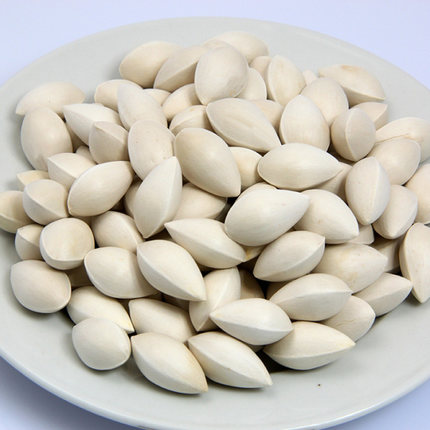
3. 8. 1. 3 following the collection of silver almonds, they are distributed (30 cm thick) in broad squares with water sources, covered with wet grass, 4 to 6 days of burning almonds, which are washed directly by water in a basket, separating the fruit and the nuclear. After the nucleus is washed, the nucleus is spread (from 3 to 4 cm thick) and dried through the seed shell. Silver almond decoders can be used when the volume is large。
1. 8. 4 storage methods the ratio of sand to seeds is 3 mil. The sand is mixed with seeds and spreads on the ground at about 30 cm thick, covering a layer of dry grass or straw curtains, 10 to 15 days to flip. The method of hiding is to dig deep 80 cm, 80 cm wide, and long-specified seed volume in a dry, drained sun, laying 10 to 15 cm thick wet sand at the bottom of the cellar, placing a pair of thick silts every 80 to 100 cm, mixing the sand with the seed at a ratio of 2 to 1 and filling it up to 10 to 15 cm above the surface, and laying a layer of 5 to 10 cm wet sand at the top of the top, so that the ground can be covered by 5 to 10 cm. Storage methods for food are indoor and thermostat storage. The cold storage places seeds in a plastic bag in a laundromat, which starts with no stabbing for a week and is then released once every one month, which applies to a small number of seeds and should be checked regularly, and when a mold is detected, clean dry. Thermal storage, which loads seeds into sacks of 25 to 50 kg each, in an environment of 1 to 4°c and 90% humidity, is generally capable of storage for more than one year。
3. 8. 2 leaf harvesting
It has been documented that the content of pharmaceutical substances in silver apricot is higher in autumn than in summer, and therefore the application of harvests is important for increasing the economic value of the leaves. If the harvest is premature, it affects the growth of the tree body; if the harvest is too late, it reduces its utilization value. Henan is the best leaf harvesting period between mid-august and early september. As a result, silver almonds should be harvested with a reasonable amount of light, based on ensuring normal growth and condensation of the tree body, so that it can be picked in stages at long branches or short branches, for a period of 9 to october. It is forbidden to damage branches during leaf harvesting so as not to affect the subsequent yield。
When the leaves are taken, the dryer should dry them and, without conditions, should be laid dry in a flat and clean square, forbidden by the sun, causing the leaves to turn yellow. Leached leaves should be placed in dry, ventilated, lighted areas for deep processing and sale。
North silver apricot planting pest control and harvesting storage techniques



