The expression and attitude of students in the teaching of biology at the junior secondary level, when it comes to “adolescents”, have profoundly affected me and feel responsible. As a result, efforts have been made to include a number of aspects of sex education in the biological teaching process in an appropriate way, so as to be more extensive and broader. The following is the results of the analysis of the state of education questionnaire。
I. Findings and analysis of students ' knowledge of basic sexuality
Before participating in adolescent sexual health education, students have a lower level of knowledge of 16 terms, such as pregnancy, menstruation, contraception, uterus, fertilisation, childbirth, ovaries, ovulation, ovulation, placenta, testicles, penises, masturbation, etc., than they have after receiving adolescent sexual health education, especially fertilisation, delivery, ovulation, placenta, testicles, penises, masturbation, etc., which has changed considerably: about 20 per cent of the previous 20 per cent to 70 per cent of the post-survey, which means that students through adolescent sexual health education are unaware of the term and are teaching purposes that justify adolescent sexual health education. At the same time, it can be seen that the level of knowledge of individual terms has changed little, and that more than 40 per cent of students are still not aware of it, the reason for the analysis is that the content involved in the course of the course is too small and that it is not explained very clearly to the student; the explanation is not listened to and ignored. This is also the main reason why students are not sufficiently aware of some of the terms, so the concept of the term should be highlighted in the subsequent education process to help them understand it better。
About half of the boys have not lost their sperm, nearly one third of the girls have not yet had their menstrual period, half and more than half of the boys and girls have had their second sex, and adolescent sexual development has begun. The fact that sex education is only now available to them is clearly lagging behind, that it is too late for nearly half of the students and that some psychological problems have arisen, makes education more difficult and requires that adolescent sex education effectively address the problems that students face. It also indicated that more comprehensive sexuality education was now necessary. That is why the results show that the students ' perception of rejuvenation and menstruation is incorrect and unclear. The difference for unknown students was from 35. 55 per cent for males and 4. 05 per cent for females to 0. 76 per cent for males and 3. 82 per cent for females. Thus, it can be seen that participation is necessary for students to properly understand their biological phenomena. However, the change is not apparent among girls, and the reasons for the analysis are: the excessive presentation in the teaching of diseases that may be associated with menstruation and the possible abnormalities of the student, which results in a refusal to listen during classes; and the difficulty of understanding that some girls have not yet experienced menstruation。
Secondary school students were not well aware of the circumstances under which pregnancy could occur, and the situation had changed through sex education. From 22. 83 per cent of the reasons unknown at the time of the previous test to 3. 05 per cent at the time of the later test, the availability of information on “accidental sex” may also lead to a significant increase in the number of pregnancies, from 17. 05 per cent to 45. 80 per cent, although 17 per cent of students still believe that handshakes, kisses and hugs can lead to pregnancy among women, which is to be reinforced in the future teaching process。
Students are less concerned about changes in their own adolescence, are more aware of changes in height and are less aware of other changes. Of the 346 students previously measured, 49. 71 per cent were height increases, followed by 70. 29 per cent height increases and other values. As a result, sex education helps students to be aware of changes in their adolescence and to be aware of changes in their minds and ready to understand changes in their bodies in advance of physical phenomena。
From the above analysis, students can learn about the terminologies through adolescent sexual health education and achieve the purpose of learning. If the content involved in the course of the course is too small and is not explained very clearly to the student, or if it is not listened to and ignored by the student, this leads to a lack of understanding of some terms. It is therefore important to focus on the concept of terminology in the subsequent education process to help students understand it better. About half of the boys have not lost their sperm, nearly one third of the girls have not yet had their menstrual period, half and more than half of the boys and girls have had their second sex, and adolescent sexual development has begun. Sex education for them is now clearly lagging behind and is too late for nearly half of the students. That is why the results show that the students ' perception of rejuvenation and menstruation is incorrect and unclear. As a result, students are reluctant to listen during classes; secondary school students are not well aware of the circumstances under which pregnancy can occur, and the situation has changed through sex education. Students are less concerned about changes in their own adolescence, are more aware of changes in height and are less aware of other changes. The situation has changed through sex education, proving that adolescent sexual health education is necessary。
Ii. Findings and analysis of forms and attitudes to adolescent sex education
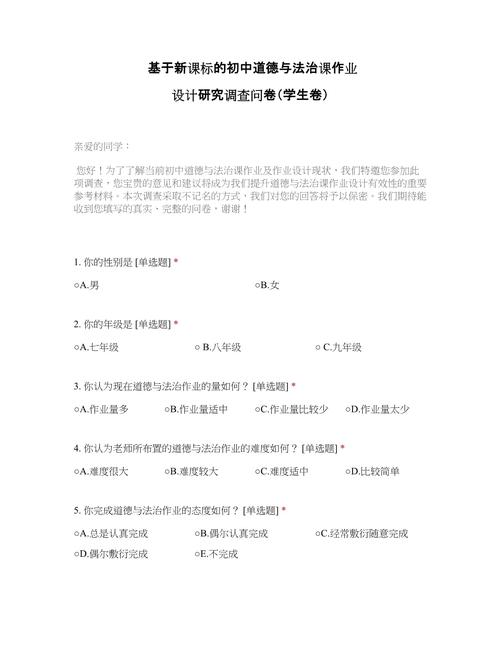
Students in secondary schools believe that the forms of sexuality education appropriate to them are mainly their own reading, teaching, parental guidance, classroom discussions and expert lectures. After learning, the students ' recognition of teachers ' classes has increased significantly, and that they are suitable for teaching, expert lectures, classroom discussions and self-reading, which are the forms of instruction adopted by researchers. This explains the appropriate, feasible and student-accepted form of education adopted by researchers. The most desirable sex educators are specialists, classmates, themselves, parents and teachers. After learning, the position of teachers has risen and students are keen to receive guidance and help from specialists. However, there are still concerns about parents, which need to be strengthened by schools and families together. The demand for sexual knowledge in secondary school students has changed from a lack of clarity and clarity to a welcome and urgent need. From 34. 10 per cent to 54. 20 per cent of students, 32. 37 per cent to 12. 98 per cent, 21. 37 per cent are in dire need. This can be seen as an indication of the impact of adolescent sexuality education on changing students ' attitudes from one that is old and unclear to one that is welcome and urgent。
Most students consider the introduction of primary sex education to be timely, while others consider it too early, which may be related to his late development or to his mindset. Almost half of the students who did not receive education recognized sex education as a science, and 78. 63 per cent of those who did so recognized sex education as a science. Through sex education, students receive better sex education as a science, creating the right awareness。
Thus, after the adoption of sex education, the results of the survey on the forms and attitudes of pupils to adolescent sex education are that students consider them suitable for their own form of sexuality education
It is mainly teachers who attend classes, specialist lectures, classroom discussions and reading themselves; they are eager to receive guidance and help from specialists; the demand for sexual knowledge has changed from a lack of care and clarity to a welcome and urgent need; most students consider the first sex education course to be timely and some are too early; and most students recognize sex education as a science。
Other findings and analysis:
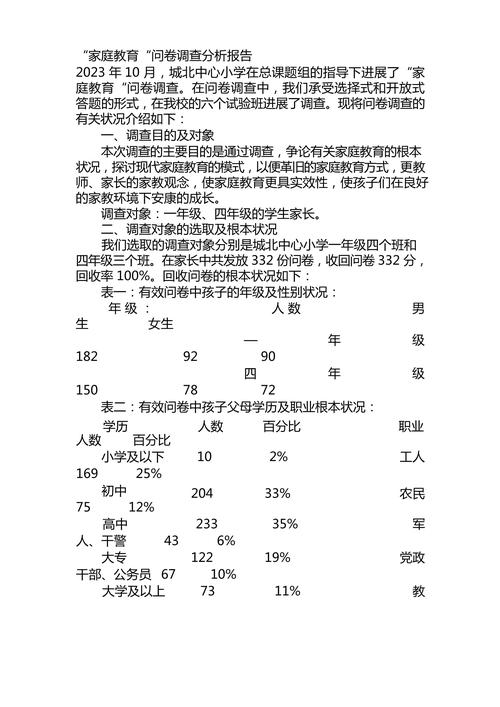
The main ways in which sexual knowledge has previously been understood by students is through books and newspapers, schools, classmates and television broadcasts. After learning, schools have become the most important means of learning about sexual knowledge. It was therefore essential to have schools as the main venue for adolescent sex education, and students were most interested in providing systematic and formal sex education in schools. The results of the survey and analysis of heterosexual relationships among secondary school students: students' knowledge of “relative friends” is not clear, the criteria for same-sex and heterosexual gender roles are not properly understood and there are significant shortcomings in the identification of gender roles; students are not indiscriminate in heterosexual relations, are unable to properly deal with specific events, are not able to make rational judgements about the fact that early love can help each other, is a need for physical development, is vague about when they can communicate with each other, is incomprehensible about when they are able to interact with each other, and has a slightly larger presence after work and at university; and students are less in a position of mutual trust and are afraid to argue with each other about the irritation and discomfort of adolescence; thus, strong efforts to educate students to deal with heterosexual relationships are better designed to help students deal with problems encountered and to help them to identify positive errors in heterosexual relations; to understand what is inevitable to happen in their growth, to acquire some of the techniques and formalities of normal interaction with others, and to establish a good relationship between them. Furthermore, gender role development requires a concerted effort by society, the family and schools, which alone rely on schooling, and sex education is more difficult to achieve. The results of the std survey and the analysis of students are unclear about the type of std, the means of transmission, the hazards, and are largely unknown or mistaken. (c) to adapt and improve the subsequent educational process so that students have increased their knowledge of the prevention of sexually transmitted diseases, systematically learn about it and improve the gaps in teaching。
To sum up, it is essential to have primary and secondary education on sexual health, but it is hoped that more schools will be able to do so to enable adolescent students to walk through their own flowers。