


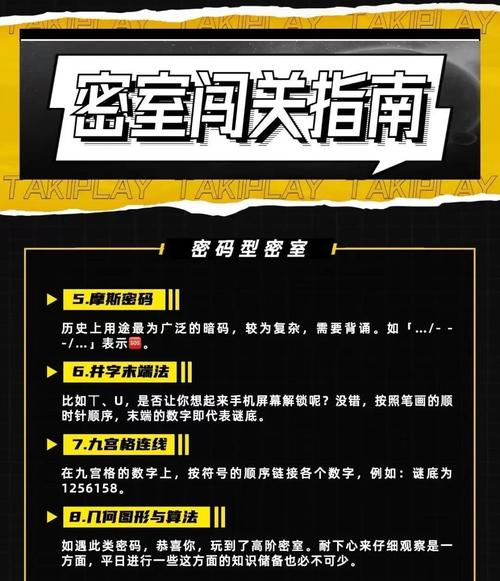
Hey, guys, are you ready for a exciting, fun, fun, fun-leave-in-the-room game? What i'm about to share is a ten-year-long experience program that will make sure your brain can open up and have fun! Let's set a theme: passing through history, decrypting civilization. Does it just feel like you're full? Let's step by step to refine this. First, the background to our activities is set in a mysterious relic of ancient civilization, where participants will become archaeological explorers, unlocking the secret room, searching for clues and eventually decrypting the secrets of ancient civilization by answering a variety of historical, cultural and scientific knowledge. Ii. Objective 1. Improve participants ' teamwork. 2. To stimulate the interest of participants in learning and disseminating knowledge of historical and cultural knowledge. 3. Enhancing participants ' logical thinking and problem-solving capabilities. 4. Create an atmosphere of ease and pleasure. The moderator will brief participants on the background, rules and attention of the event prior to the opening of the event and guide participants into the role. 2. The breakout participants in the clusters are divided into groups of 5-8 persons each. Through a few simple ice breakers, you can get to know each other and form a team. 3. Secretive escape link (1) sets up 10 secret rooms each with different difficulties and subject-matters of knowledge, including history, culture, science, etc. (2) each chamber has one or two clues, and the participants need to answer the subject, find a clue and unlock the next chamber. (3) each chamber has one or two traps, and participants need to be careful to avoid triggering them. 4. During the escape of the secret room, the knowledge contest was conducted in three rounds, including selection, filling, questions and answers. Each round is limited to 10 minutes, and the more answers are given on the subject, the higher the score. 5. The participants in the decryption chain need to decipher the secrets of ancient civilization within a specified time frame and by answering the puzzle. Successful declassified teams will be awarded the mystery award. 4. Rule 1. In the course of their activities, participants are subject to discipline and staff arrangements. 2. Access to each chamber shall be limited to one set of 30 minutes. 3. The topics and clues in the chamber are not to be taken away. 4. The title of the intellectual competition is not to be divided and the answer is to be scored accordingly. 5. The decryption chain has an opportunity for each group to be limited to 15 minutes. Activities reward 1. Successful declassification teams will receive the mystery award. 2. At the end of the event, an excellent team is selected and prizes are awarded on the basis of score ranking. 3. A fine souvenir will be made available to all participants. 6. Activity readiness 1. Preparation of secret room sites, props, titles and clues. 2. Preparation of the subject and rating criteria for the knowledge competition. 3. Preparation of prizes and souvenirs. 4. Staff arrangements to ensure smooth operation. Date and place of the event 1. 2. Location of the event: a major activity centre is concerned with the first: the solution to the security problem in the secret room: each chamber must be set up to ensure the safety of the participants. For example, if there are any links in the room that require climbing, it is important to have safety measures, such as safety ropes and cushions. At the same time, staff are required to provide on-site oversight to ensure that participants comply with safety rules. Caution ii: difficulty control solutions for knowledge topics: topics need to be modest, challenging for participants, not too difficult, and avoid discouraging them. A test response could be made in advance to adjust the subject to the results. Caution iii: time-control solutions for escapes in secret rooms: each chamber has a prescribed escape time to ensure that participants are able to meet the challenge within that time. If it is found that a secret room is too long, the difficulty of adjusting the subject or some hint may be considered. Note iv: participants ' collaborative solutions: some small team-building games could be organized prior to the start of the event to increase the sense of teamwork among participants. During escapes, participants are encouraged to help each other and to work together to resolve problems. Caution v: order-keeping solutions at the site of activities: adequate staffing is required to supervise and manage the site of activities to ensure their orderly conduct. In the event of disorder, intervention and adjustment are timely. Caution vi: after-activity feedback-gathering solutions: at the end of the event, a simple questionnaire could be designed to gather feedback from participants on the event. This allows for an understanding of the strengths and weaknesses of activities and provides a reference for future improvements. Point one: the diversity of the topics of the knowledge contest, in order to make activities more interesting and educational, covers a wide range of fields, such as history, science, literature, art, etc., taking into account participants of different ages and levels of knowledge. Some graphic, audio or video features can be designed to increase the interactive and interesting nature of the answers. Point two: in order to adapt to participants at different levels of competence, it is possible to divide them into three levels: simple, medium and difficult. Each group can choose a secret room based on its own circumstances, which will ensure that the activity is challenging and that everyone can participate and enjoy the pleasure of solving the problem. Point three: in addition to solving problems in a secret room for participants, live interaction and audience participation can include live interaction sessions, such as audience questions and answers, with the participation of others present. This will not only increase the visibility of the activity, but will also increase its visibility. Point four: taking full advantage of technology is now so advanced that high-tech elements, such as ar-enhanced real-life technologies, can be added to the activities to enable participants to discover virtual clues through mobile phones or tablet computers, thus increasing not only the scientific sense of the activities but also the participation of more young people. Point six: the educational significance of the enhanced activities is to emphasize the dissemination and educational significance of knowledge throughout the design of the activities, so that participants learn in entertainment and grow up in learning. A number of historical background presentations could be included in the resolution of the questions in each chamber, allowing participants not only to solve the puzzle but also to gain a deeper understanding of the knowledge。



