


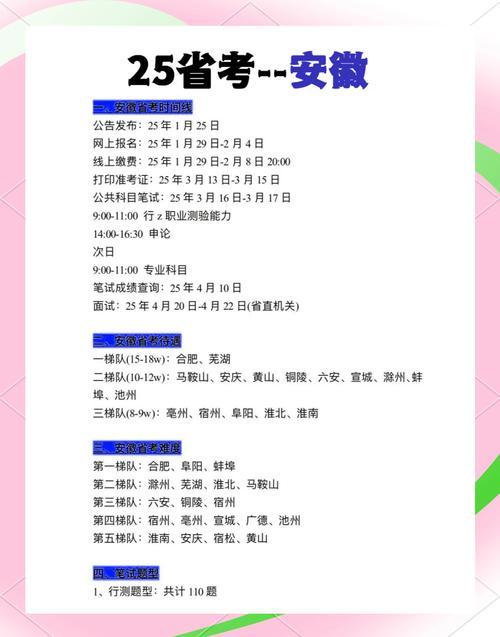
2026 anhui provincial examination - common sense assessment of efficient preparation techniques
The common sense judgement, which is the opening module of the anhui province's test, has stabilized at 20 courses, with a wide range of subjects and knowledge points, but not without rules. Taking into account the recent years (the number of political modules rose sharply to 7-8 in 2021-2022, with technology modules accounting for more than 40 per cent of the year), and the trend towards a new, independent political doctrine, an enhanced approach to the review of political theory and new laws in 2026, the following is a well-targeted strategy to achieve “precision and efficiency”。
I. Building on the framework, locking in the core scope
Prior to the examination, it is necessary to identify the “focus areas” of common sense in anhui province and to avoid blind mapping. Based on the reality of the last five years and the changes in the 2026 outline, the core examination blocks and priorities are as follows:
1. Hf core plate (over 70 per cent)
Political theory: after the addition of the independence block, which accounted for about 12 per cent, the focus was on the core elements of the party's 20 major reports (the “six have to stick to” the “two-step” strategy), the 20th mid-third plenary session resolution, the 20th mid-fourth session of the general assembly resolution, the 2025 central document, etc. The preface requires a close touch on the memory of “keywords + numbers”, such as “mainstream modernization in 2035, full modernization in 2050”, and fast-tracking answers。
Science and technology commons: the year is at the top of the list of topics, with core examinations of physics (mechanical, optical principles, such as the bernoulian principle of “swing-up” banana balls), biology (human health, biology in poetry), scientific achievements (nearly one year of space engineering, quantum information, new energy technologies) and life skills (cooking safety, everyday ingredients). There is a need to focus on the combination of theory and life and to understand sexual memory rather than death。
Humanities: focus on cultural and literary commons, flexible forms of examination (in combination with poetry, linguistics), and focus on twenty-four festivals, traditional etiquette, monolithics, near-modern literary works and territorial cultural correspondence。
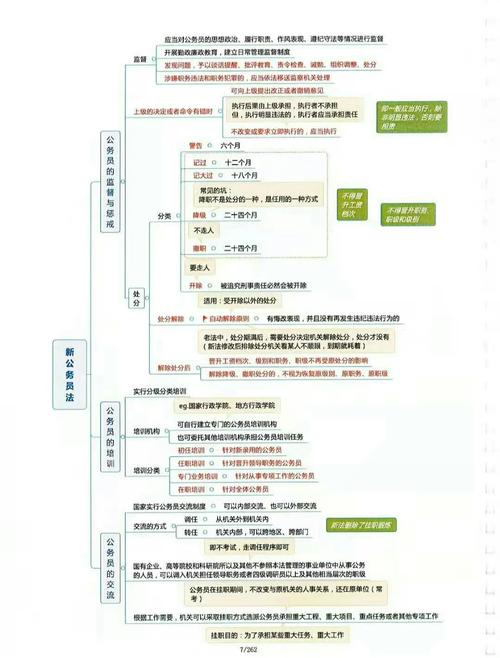
Legal literacy: 1 - 3 visits per year, 2026 focusing on the revised act on administrative review (extension of the scope of cases, principle of ex officio review), the high frequency provisions of the code on administrative penalties (no more penalties, scope of hearings) and party regulations (rules on the work of the party branches, disciplinary regulations). There is a need to distinguish between “party discipline-government-criminal” sanctions and avoid confusion in the scope of admissibility。
2. Secondary supplements
Economic commons (1-2 courses per year) focuses on macroeconomic policy, the concept of the basics of a market economy, combined with “145” planning, “155” planning, etc.; and in the first instance, management commons have been examined only once in almost five years, with no need to devote too much effort to understanding the basic concepts。
Ii. Phased preparation for the scientific review system
The common-sense approach needs to be gradual and advanced in three phases, taking into account the accumulation of knowledge and the upgrading of skills, and avoiding the oblivion of knowledge points resulting from “student memory”。
1. Basic phase (1 - 2 months): developing a knowledge framework that builds on core considerations
The focus of this phase is on “systematic learning” rather than blind mapping. Priority is given to the use of authoritative teaching materials (the academy of administrative professional professional professional tests, public basics) to streamline the knowledge framework by modules:
(a) modularization breakthroughs: political, technological, humanistic, legal, one-by-one, and the production of thought maps (e. G., legal modules classified as “constitutional-administrative-civil-criminal code” and labeled as confusing)
The day-to-day accumulation of time: 30 minutes per day to read in the morning, to obtain information through the “chinese government network” of “learning the powerful”, to highlight major events, policy documents, etc. During the year preceding the examination, and to avoid missing geographical points。
2. Reinforcement phase (1 month): refinement of reality and summary of problem patterns
The common-sense “tactics of the sea” needs to focus on the real issues and avoid wasting time on the myths and myths:
The focus is on the following five years of joint examinations in anhui province: a combination of the national examination and those of the provinces, such as jiangsu and zhejiang, and an analysis of the patterns of issues — such as political and current policy cross-examination, the theme of the integration of science and technology into the life scene, and the legal focus on the new law。
• scrutinization of errors: creation of error files, identification of the type of error (e. G., oblivion of knowledge points, confusion of easily confused concepts, miscalculation of issues), preparation of separate comparative tables, periodic recollection of memory enhancement, in response to easy confusions, such as the distinction between administrative review and administrative litigation, the duration of a party disciplinary action。
3. Sprinting phase (2-3 weeks): gaps identified and response techniques upgraded
The core of this phase is “high-frequency capture, practice skills”, which returns to the core points of consideration and avoids overstretching knowledge:
Hf test points: focus on the central narrative of political theory, the key provisions of the new law, as well as the major technological achievements of the last six months, the current political hotspots, and the abandonment of hard-core knowledge points (such as world history, small-scale chemistry)。
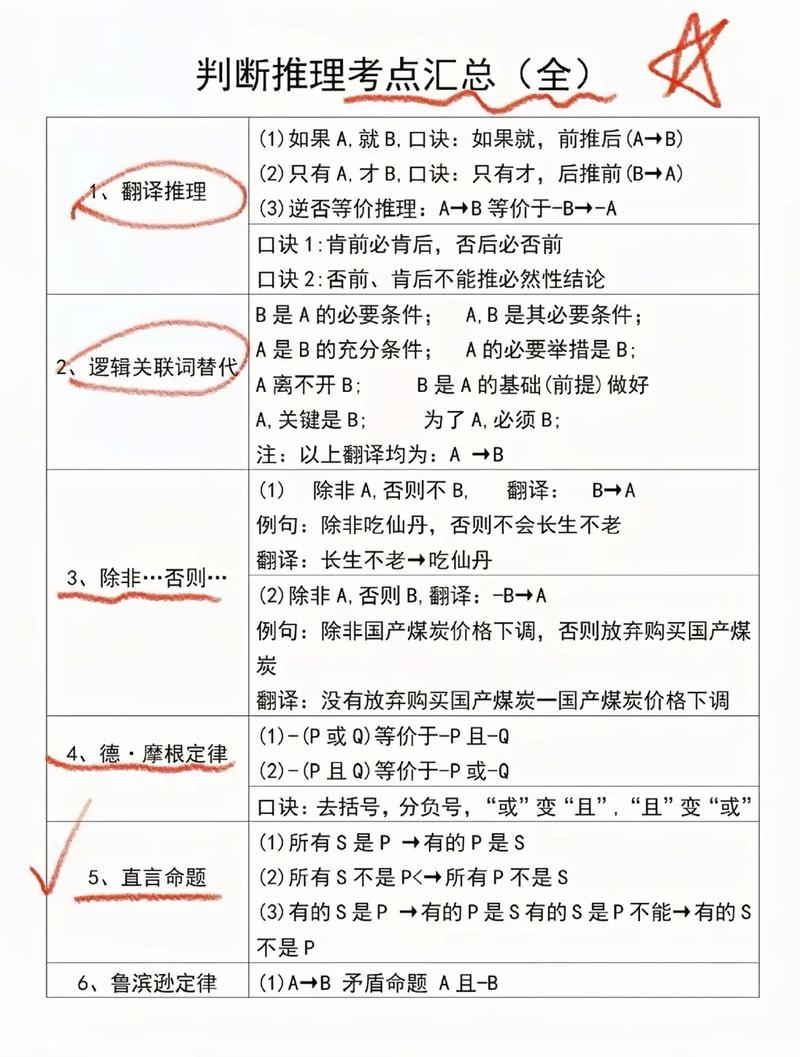
Query skills training: mastering two core techniques to improve the correctness - exclusion (preferably excluding obvious error options, such as absolute expression of “all” as “sole”), keywords (capturing core words such as “fundamental system” as “first raised” and fast positioning knowledge points). One or two complete simulations are completed per week, with strict timing (20 questions within 15 minutes) and adaptation to the pace of the examination。
Iii. A guide to hole avoidance: circumventing common points of failure, precise points
The average correctness rate for the common sense section of the anhui province is only 46-56 per cent, and most of the errors are due to confusion and misalignment of political memory, which requires targeted evasion:
To avoid conceptual confusion: to distinguish between the content of “china-style modernization” and “common wealth”, the scope of the “administrative review” and “administrative litigation”, the easy-to-mix concept is presented as a comparative card with repeated memories。
The development of the new law is not missing: the legal module focuses on the laws and regulations that were implemented in the first 1-2 years of the examination, such as the revision of the administrative review act of 2025, which is highly probable。
Rejects an absolute formulation: when the word “must” appears in the option, the majority is the wrong option and can be excluded (except for special formulations)。
Iv. Resources and time management recommendations
1. Quality resource recommendations
In the case of teaching materials, priority is given to the selection of tutorials that fit the curriculum of the provincial examination in anhui to avoid a lack of specificity in the general teaching materials; the library can be used for the fine-tune online modeling system to match the test; and the accumulation of time allows for a focus on the monthly collection of political events organized by the huai chart institutions, thus saving time for processing。
2. Timing techniques
A day-to-day one-to-two-hour review of general knowledge, a morning reading of the politics of memory, the law, etc. That needs to be recited, and a nightcaping of errors; a week-by-day reduction in the number of brushes, with a focus on error books, thought maps and core points, to keep the memory clear. At the same time, the mindset is adjusted to avoid anxiety over the multiplicity of common sense points of knowledge, and confidence is enhanced through a series of small goals (e. G. 20 practical questions per day, one legal provision)。
The core of the common-sense examination is “focusing, building, skills”, which need not be “across-the-board”, but rather focused on high-frequency (hf) test points and embroidered features, with steady improvement through scientific planning and continuous review. May the candidates look for the right direction in their preparation



