Recently, ms. Zhang came to the hospital for medical attention due to pain on her shoulder, rigid shoulder and restricted mobility. She said that her shoulder was like “frozen” and that a little activity caused tears, which were more visible at night. After a medical examination, ms. Zhang was diagnosed with an arthritis around her shoulder joint。
Surrounding shoulder arthritis (hereinafter referred to as shoulder arthritis) is also referred to as “frozen shoulder” “50 shoulder” etc. According to chinese doctors, this disease falls within the category of “prevalence”. When human liver and kidney losses and absindation are experienced, wind, cold, and damp infestation can lead to a “unusual pain” in the form of incontinence and lack of blood。
Shoulderitis occurs in and around the shoulder arteries, muscular scrotums and scrotums, characterized by shoulder pains, especially at night, and the limited and increasing functioning of shoulder joints, which are gradually reduced to a certain degree until full recovery. When a patient has an illness, the shoulder joint can have extensive stress and radiation to the neck and elbow, and can have a different degree of trigonobular atrophy. Without effective treatment, the functional activities of shoulder joints may be seriously affected。
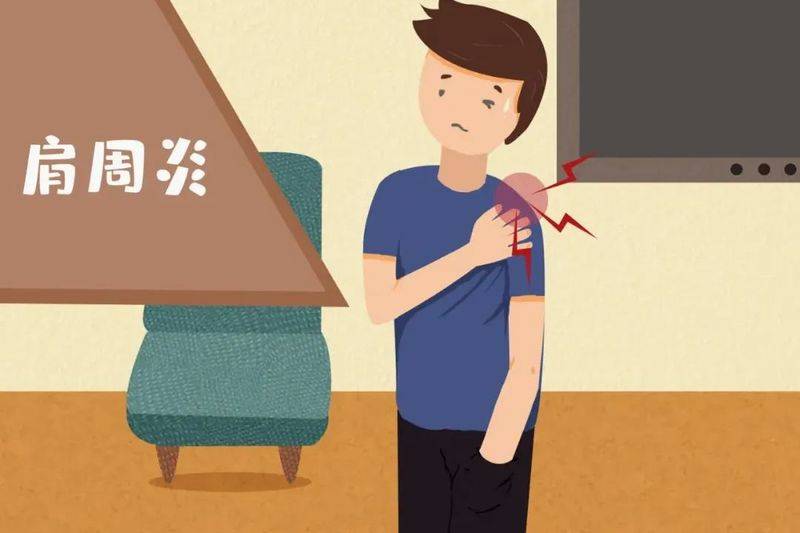
It can be divided into three stages
The pain period (which lasts 2-9 months) is dominated by pain, which can weigh on shoulder joints, upper arms, elbows, and even forearms, which can increase during activity and affect sleep。
The rigidity (4-12 months) is dominated by the rigidity of the joint, and the patient cannot reach the full range of joint activity even if he/she suffers from pain or with another hand。
Pain and rigidity gradually abate or disappear during recovery periods (5-26 months)。
Rehabilitation is an important way of preventing and treating shoulder-to-peer disease. Before undergoing rehabilitation training, the patient should be partially warmed, bathed in hot water before starting practice, and with hot towels to cover his shoulders for 10-15 minutes。
The following is an introduction to a few exercises for those affected by shoulder-to-peer inflammation。
Climbing walls
Take a stand, face the wall, keep a third of the arm distance from the wall, with both hands or one hand moving slowly up along the wall, so that the upper limbs can be raised as high as possible and then slowly return to their original position 10-20 times a day。
Round and round
Take a stand or seat, hold hands up, hold hands forward, keep elbow joints, wrist joints intact, shoulder joints forward, circle back, cross over, 15-20 times each。
Hands up
Take standing or seating positions, stretch out your arms, flat, side lift, lift up, repeat 10-15 times one time, three times a day。
Round your shoulders
To take a standing position, the arm is naturally laid down, the elbow is stretched straight, the arm is moved forward, upwards and recoiled, ranging from small to large, repeating 10 to 15 times a day, 10 times a day。
Shrimp in front of the shoulder
Take a standing position, stretch your arms forward, hold your hands against one another, stretch your shoulder bones back and forth, and feel close on both sides, repeat 15-20 times。
I'll raise it with my bare hands
Take a standing position, close to the wall with shoulder cheekbones and shoulders, move forward with hands, point to the point, stretch up and down with arms, move slowly along the wall, feel close to the shoulderbone and repeat 15-20 times。
In the event of shoulder inflammation, senior and middle-aged persons should be provided with timely medical consultations and functional exercise in order to reduce shoulder pain, shorten the pathology and avoid after-effects. In addition, chinese medicine seals, lacquers, cans of chinese medicine, acupuncture, needle stings, pusher techniques, etc. Are an effective way of mitigating the symptoms of shoulder cycling。