How do you plant prince zin? Today, the main focus of a young editor of the weinon network is on princes' low-altitude, high-altitude, medium-altitude variety characteristics and planting techniques, which can be used more frequently by farmers' friends who need them。
1 possibilities
1. 1 varieties
Based on the ecological differences in the variety of resources, it is possible to divide the princes cucumbers into the grand leafs and the wild princes into the little leafs。
1. 2 eco-adaptiveness and reproductive characteristics
The porcupines are suitable for planting in low-altitude hill eco-regions, the wild porcupines are suitable for planting in high-altitude eco-regions, and the porcelains are suitable for planting in mid-altitude hills。
In the production zone, where pristine is grown at low temperatures, it is expected to grow late in october, when temperatures fall below 15 °c and earth temperatures reach 10 °c, so that it begins slowly to germinate and take root, and after winter, the seedlings will emerge in the second year. The seed will break up when the pyrotechnic fruit matures, with some difficulty in artificial harvesting, while the natural growth rate of pyrotechnic seeds in the field is low, with low-temperature treatment if artificial seed is to reproduce, and therefore the pyrotechnic zones are generally used for breeding。
1. 3 plantation characteristics
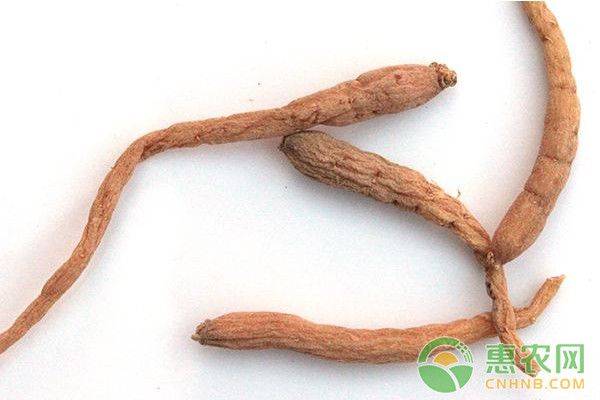
The size of the large leaves is wide, with a larger number of leaves and branches, thick, well-defined root, large and small, and root is hammered. The wild type of crown prince is long and thick, has fewer branches, is unclear, has small and many roots and has carrots. The little leaves are long and small, have more branches and leaves, are thinner, have clear roots, have small and many roots, and are shaped by round rods。
Taken together, the leaf-type varieties are a resource for the excellent varieties of prince zin, which are also high-quality high-yielding types in prince zin. Wild varieties are highly resistant. Large-leaf varieties are low-yielding and resistant, but they have the advantage of large nuances and appearances。
2 prince zin's planting technique
2. 1 princes of large leaves
The use of arcade cultivation is more productive than the flatly grown method. There is a higher rate of seedling than in small cases, with large- and medium-scale participation as a reproductive material. A range of 16. 7 cm x 5 cm should be set, with a planting density of about 1. 2 million/hm2 and low-level fatting. Gravity treatment and shade treatment can further increase yields。
2. 2 princes of folate
The use of arches is more productive than the use of flats. Compared to small species, large and medium species are used as reproductive material, with higher rates of seedling. The line range combination should be set at 12. 5 cm x 5 cm, with a planting density of 1. 6 million/hm2. The pursuit of fat is dominated by low-level pursuit of fat. Gravity processing does not increase yields, but shade treatment increases yields。
2. 3 wild type prince zin
The use of archer farming methods has resulted in higher yields. Large and medium cucumbers are used as reproductive material with a higher rate of seedling than small cucumbers. The line range should be set at 12. 5 cm x 5 cm, with a planting density of 1. 2 to 1. 6 million/hm2. Gravity processing can further increase yields, but shade treatment does not significantly increase yields。
First, different land-based approaches also have different impacts on the production of crown ginseng, which is higher than the production of flat ginseng. Both porpoises and porpoises are artificially domesticated, are less resistant to disease and are more susceptible to foliage, and their production needs to be reduced accordingly. The wild paragus has a strong resistance to disease, and the use of archipelagic cultivation, although less productive than flatly grown, has increased production, owing to the thickness of the earth under which archipelagic plants are grown, which enables the root to grow well and, in turn, fosters the growth of the crown。
Second, prince ginseng is the use of underground roots as a breeding material. Given the fact that farmers sell large princes and leave small princes as seed participants, but that the yield of large- and medium-stakes is higher than that of small ones, it is recommended that the 7. 5 to 1. 25 g/ root princes, i. E. Medium-stakers, be used as breeding materials to obtain high-yielding, efficient and high-quality crowns。
Thirdly, the distance of the plant may also have some impact on the prince's gin production. The planting of a large-leaved porpoise should be properly increased and reduced by 16. 7 cm and 5 cm. In the case of wild princes, the distance should be reduced appropriately, i. E. The distance should be set at 12. 5-16. 7 cm and the distance at 5 cm. The planting of the young leaf plume shall be accompanied by an appropriate reduction of the length of the line and the length of the strain, so that the range is set at 12. 5 cm and the distance of 5 cm. Thus, for the three varieties, the increase in the range of the long-leaved princes, the reduction of the small-leaved princes, and the introduction of the wild princes, would yield better productivity gains。
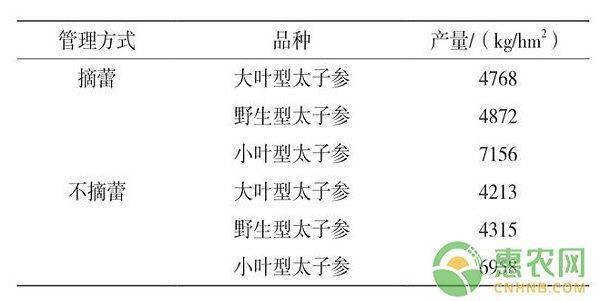
Fourthly, the collection of laces and shade treatment will have an impact on the prince's participation in production. Plants that are root-intoxicated are the principal acquisitions in the subterranean part of the prince, where the flowering of the surface part of the ground has a direct effect on the transmission of nutrients to the ground. Thus, the processing of the pickle increases the yield of the prince and the effect of different management methods on the production of the prince under the same conditions is shown in table 1. Moreover, in the fujian region, higher summer temperatures and lower growth temperature requirements for crown ginseng contribute to increasing the yield of prince gin by delaying seedling time through shade treatment。
Table 1 impact of the pickle on crown gin production
3 concluding remarks
In the application of the prince's high-yielding planting technology, it is recommended that it be strengthened in the seven areas of landscape consolidation, seed selection, rational planting, membrane cover, manure control, laceration and shade。
The use of arches for cultivation has helped to control the incidence of diseases and to increase the production of pamphlet. The use of medium-sized large symbiotics as the main material for reproduction, with a range of 12. 5 cm by 5 cm and 16. 7 cm by 5 cm by 5 cm by a reasonably dense plant, limits planting density to about 1. 2 million to 1. 6 million/hm2. In addition, this method of cultivation using membrane cover allows the prince to grow early, retreat and rewind, and the effective extension of the period of birth of the prince has led to a significant increase in the yield of the prince. Because of their strong intolerant fertility, prince zin is expected to grow mainly with base and organic fertilizers, with a small additional application of nk compound fertilizer, which will help to promote faster growth of plants, followed by higher yields. For the type of flowering species in which the large-leaf princes are involved, an appropriate pick-up helps to increase production. The shade treatment has a positive effect on the safety of the prince's involvement in seeding, the subsequent push of seedlings, the extension of long-term life and the increase in yields. It is recommended that soybeans be used as shaded products, and at the later stages of the prince's growth, inter-line seeding can contribute to increasing the prince's yield。
Finally, the junior editor of the network reminds us that prince zin, as a species of great nutritional value and economic value, can only promote healthy growth and maximize the economic benefits of prince zin, based on a knowledge of their growth characteristics and sound cultivation techniques。