


Traditional cultivation practices, increasing barriers to soil connections such as harmful bioaccumulation, secondary salinization and trophic imbalances in soils, have a direct impact on production efficiency and product quality security. Ground-based planting techniques can effectively address the challenges of soil connectivity and provide effective pathways for the sustainable development of solar greenhouse vegetables。
Base-based cultivation means the establishment of plant roots with a solid matrix (media) and the absorption of moisture, nutrients and oxygen by the matrix as a soil-free culture. The matrices are classified as inorganic and organic。
Organic foundational cultivation is the cultivation of vegetables using a proportional mix of shredding of crop straw, mushroom slag, rice shells, sawdust, etc., and animal excreta, which, after fermentation by micro-organisms, forms a relatively stable and buffering whole-nutrient foundation. Inorganic materials, such as river sands, slags, leeches, pearls and disease-free soil, may also be mixed in proportion with organic matrices to improve the physico-based nature of cultivation, forming organic inorganic planting matrices。
Technical highlights of simple organic matrix cultivation:
I. The planting troughs are subsurface and subsurface 1. Pattern
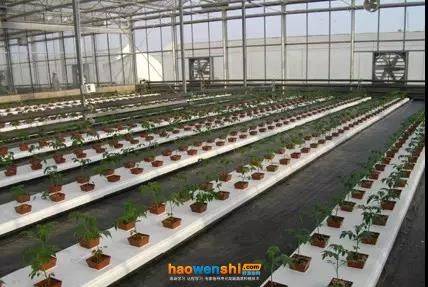
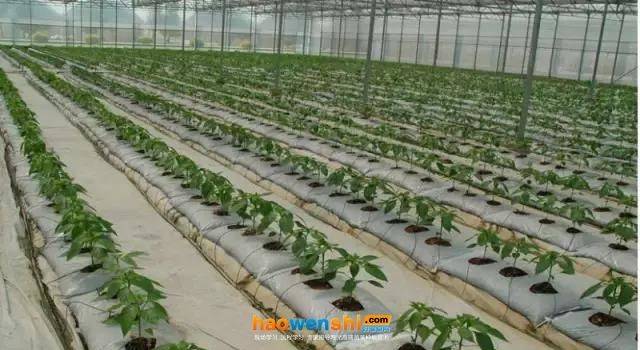
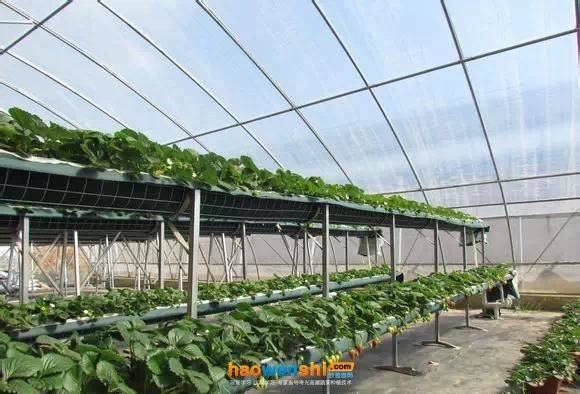
Ground
The above-ground planting cell was selected using a standard brick base of 24 cm x 12 cm x 5 cm with an inner diameter of 48 cm, 20 cm high and a distance of 140 cm。
The tanks are isolated from the soil with 0. 1 mm general polyethylene filament, and covered by the membrane of the intertrenchment。
2. Underground
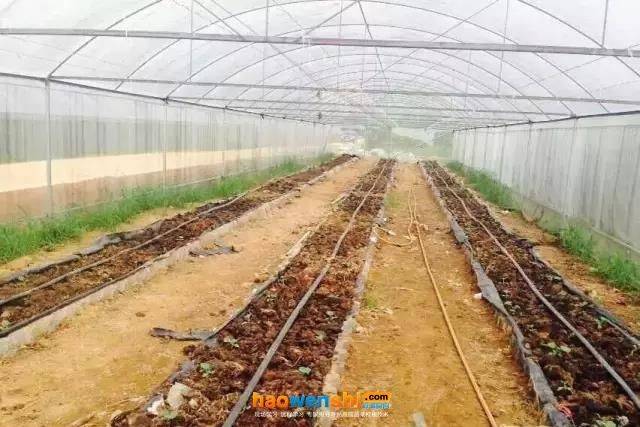
Underground
Underground planting tanks are ditches with a width of 35 centimetres, with a bottom width and a depth of 25 centimetres, with a parallel trajectories across the surface of the solar-heating room, at a distance of 140 centimetres。
Ii. Plantation matrix formulation (volume ratio)
1. Fermented rice husks of rotted chicken dung river sand (or uncharted sand) = 3° 1° 1
2. Obscrutinized cow dung decomposed and fermented chicken dung fermented rice husks (or uncharted sandy soil) = 5:1:3:1
3. Corn or wheat fermentation slurry with fermented chicken dung salsa (or uncharted sand) = 4 = 1 & 3
4. Fermented rice husks, cow dung, rotted chicken dung dung, river dung sand (or uncharted sandy soil) = 2:1:1:1。
Base materials can be adapted to local conditions, and crop straws, mushroom slags, rice shells, sawnop, etc. Can be mixed in proportion with animal excreta, and microbial fermentation can form a planting matrix。
Iii. Water supply and fertilizer systems
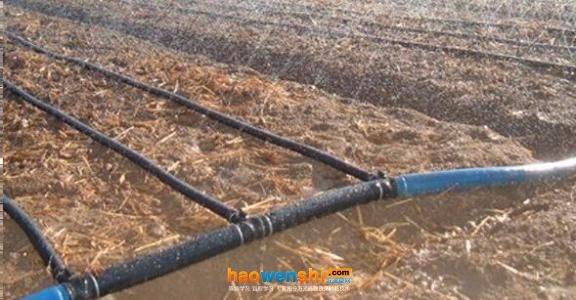
Dripbelt
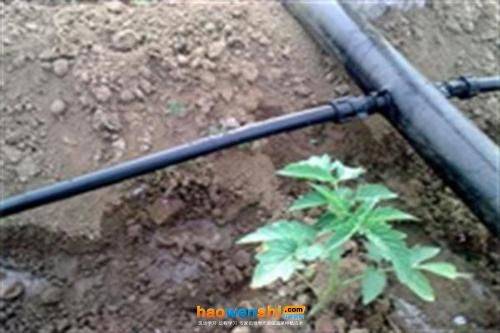
Dripping pipes
One or two micro-dips or drip-dips in each cell can be linked to the associated fertilizers for integrated management of fertilizers。
Iv. Fertilizer
The nutrients of organic matrix cultivation are derived mainly from organic fertilizers and partly from fertilizers. Organic fertilizers may be adapted to the use of sufficiently decomposed particulate organic fertilizers such as chickens, cattle, sheep, pig dung, or fermented dry。
Cultivation management 1
Three to four days prior to planting, the matrix was watered and the matrix was fully wet. Two rows of tomato and cucumber cultivation are grown per tank, with a concentration of 3,000 units/acre。
2. Fertilizer
Using the formulation matrix described above, the target production of cucumbers and tomatoes is set at 15,000 kg/acre, with only 6-7 water soluble fertilizers to be applied during the whole reproductive period, equivalent to 30 kg/circa urea and 60 kg/circa sulphate, respectively, at the beginning of the outcome and during the spleen period. The total amount of cucumber fertilizer is 45 kg urea per acre and 50 kg ecstasy per acre。
The formulation matrix trace elements are adequate and generally do not suffer from deficiency symptoms, but when the matrix or groundwater is too alkaline, some trace elements may be difficult to absorb by plants, especially when the seedling is smaller, and there may be physical handicaps that can be applied to composite fertilizer that sequesters the trace element one or two times. The principle of water management is that the relative water content of maintaining the matrix is around 80 per cent。
3. Temperature light management
The winter spring festival, which is characterized by low-temperature and weak weather, ensures, as far as possible, that the temperature at night is not less than 10°c and that under extremely low-temperature weather it is not less than 5°c. Without reducing the temperature of the greenhouse, and as much as possible to receive solar light, “temperature preservation” is the principle of vegetable management in the solar greenhouses in the middle of winter。
Temperature above 15°c in the spring and autumn at night and 25-30°c during the day。
Vi. Substrate disinfection and reuse
In summer, when you change, you press the old matrix in the planting tank. The proportion of 10:1 decomposed chicken dung adds cyanide dung and 80 kg/acre of calcium carbide, which is fully mixed with the old matrix and waters are poured out, the tank is covered with plastic sheeting, and the sealed greenhouse is disinfected for 10-15 days. After disinfection, the plastic sheeting of the pyrotechnics is removed and a 5-7-day drying of the matrix is allowed for the next planting。
Organic matrix, planting cell, matrix formulation, water supply, fertilizer, matrix disinfection 2019/4/11 16:24:15
Next: what are the investments in planting techniques for soilless cultivation? Which vegetables can be cultivated without soil



