Recommended language
Oil tea is one of the world's four woody species of oil trees and is unique to my country. The country has a long history of oil and tea cultivation and has a large area of cultivation. Tea can produce not only high-end edible oil, but also many chemical products. Tea oil is of high quality and is known as “oriental olive oil” and has high food and medical and beauty values。
Tree archives
The tea is part of the tea and is different from tea. The high oily rate and production of oil and tea seeds is a natural and advanced oil material unique to our country. The main distribution of oil and tea trees is in the 14 southern provinces (districts, municipalities). The main varieties are: ordinary oil tea, chinese oil tea, chinese red flower tea, zhejiang red flower tea, zhejiang red flower tea, bobega fruit oil tea, zhengda red flowers oil tea, zhongzhou oil tea, tea with tea with tea with red flowers and pitab tea。
Tea and palm oil, olives and coconuts are also known as the four woody tree species of the world. Oil tea is unique to the south of china, with more than 70 different islands from the south of the wei river to the south sea, from the yungui highlands to taiwan, with the largest distributions concentrated in 14 provinces (districts, cities) of hunan, jiangxi, guangxi, fujian, guangdong, hubei, guizhou, henan, sichuan, etc., and hunan, jiangxi and guangxi provinces (districts) being the main production areas. The province of hunan accounts for 31. 4 per cent of the country's total area under cultivation, while the province of jiangxi ranks first and second, with 22. 69 per cent。
The secretary-general is concerned with the oil and tea industry
The general secretary of xi has been concerned with the development of the oil and tea industry and has on several occasions given important instructions for its development. In 2015, during the two national conferences, xi jinping, while participating in the jiangxi delegation, asked the relevant national ministries to study and support the development of the southern oil and tea industry. On 17 september 2019, xi went to henan province, guangshan county, to the ma light oil tea park to learn about the development of the oil and tea industry and the alleviation of poverty in the local industry. He noted that the promotion of oil and tea cultivation in the desert mountains had boosted the access of the population to employment, boosted its prosperity from poverty and improved the ecological environment。
In december 2006, the national forestry administration issued its opinion on the development of the oil and tea industry, and in july 2009, the state council approved the national plan for the development of the oil and tea industry (2009-2020). Since then, the national oil and tea distribution department has been preparing local plans for the development of the oil and tea industry, providing advice on the development of the oil and tea industry and providing full support for its development in terms of policy, funding and security. In recent years, the governments of the oil- and tea-producing regions have adopted oil and tea as a dominant industry for the rural rich and for the poor, promoting the prosperity of farmers from the poor and promoting rural renewal。
By 2018, 67 million acres of oil and tea were cultivated in the country, at the forefront of all types of economic cultivation. In 2018, the total value of the oil and tea industry in the country was 102. 4 billion yuan。
It's a strange habit to carry a baby
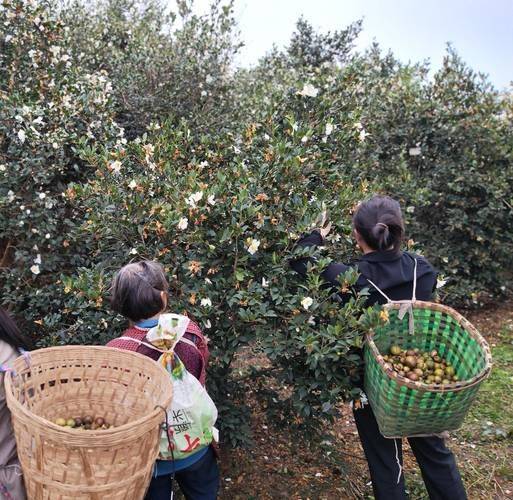
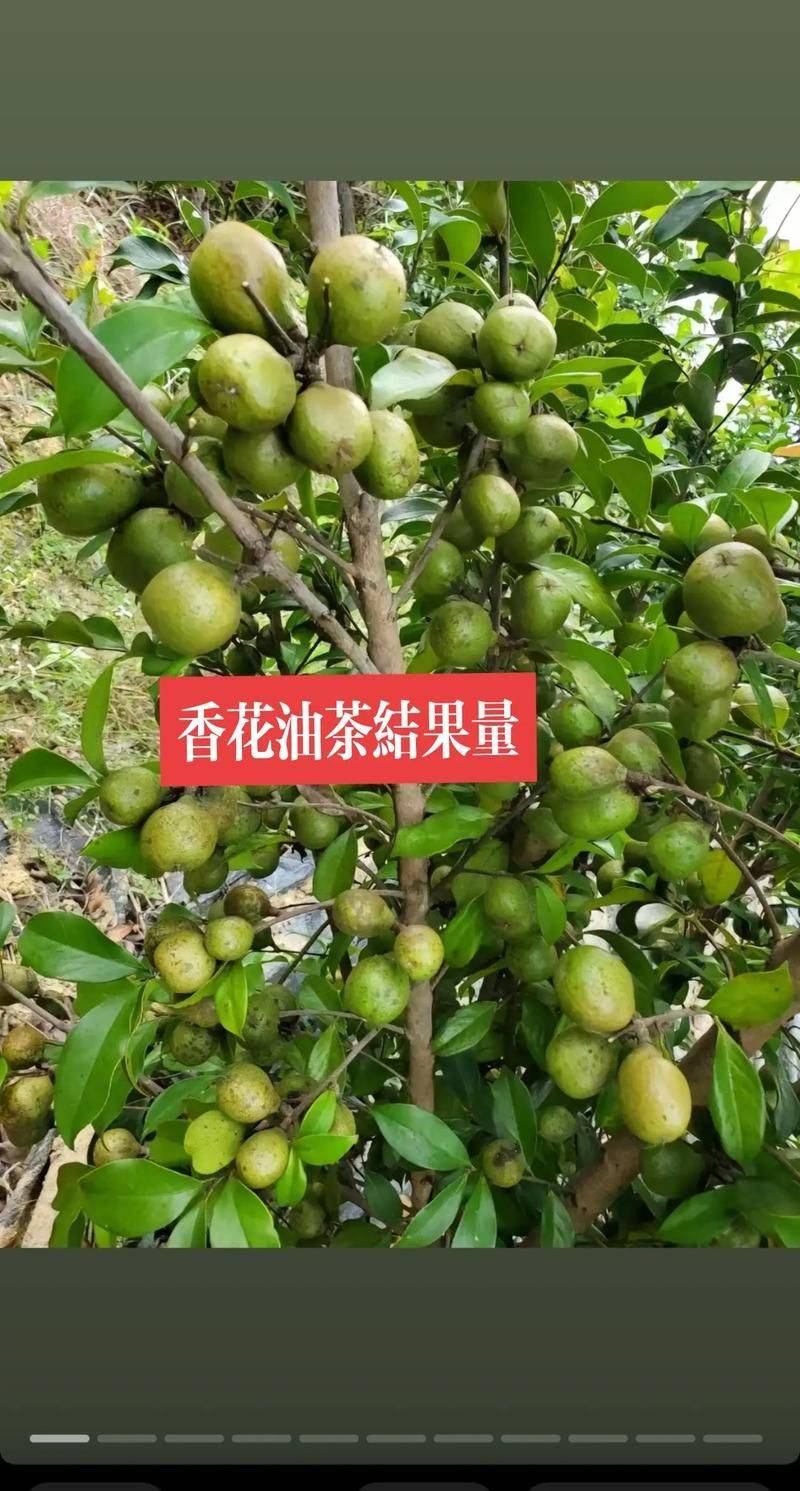
Oil tea has habits. After almost 12 months on a tea tree, each year in early november, the tea flower blooms, and at the end of the month, the tea berries are conceived and continue to grow until early november of the following year. During this period, the bud began to divide in mid-june, and between the end of august and the early part of november, both the oily fruit and the oily tea flowers were present. The reason for the special physiological phenomenon of the bouquets is that they are long-lived and that the buds have a short time to divide。
The main pollinating insects in oil tea are not bees. Bees pollinate most fruit trees, which is common knowledge. However, honey bees do not pollinate oil tea, and when they collect oil and tea pollen, they cause physical metabolism and indigestion to be poisoned, as they contain bioalkali, molasses, oligarine and other harmful substances. The main pollinating insects of the oil tea are earth bees, such as oil bee, big bees, tattoo bees, hummings, etc。
Oil tea can create a pleasant tourist landscape. When the autumn is high, the white oil and tea are open to each other, and they are covered in mountains, and they are swollen and beautiful. You can watch carefully the whole process of pollinating the tea and bees. This pollinating elf came out of the year only when the oil and tea bloomed and the rest went underground. You can also take a straw and suck nectar in the yellow nectar of the oiled tea. In the spring, you go to the oily wood, and the tea and the bubbles of the trees attract you, and you can pick as much as you like。
Tea oil is of good quality
Vegetable oils extracted from mature seeds of oily tea trees are called mountain tea oils, which are purely natural and high-quality edible oils, similar to olive oils, and are called “oriental olive oils”。
The main fatty acid components of mountain tea oil are 78-86 per cent oil acid, 8. 6 per cent sub-oil acid, 0. 8-1. 6 per cent leperate, 8. 8 per cent palm acid and 2. 0 per cent hard lipid acid. The unsaturated fatty acid of mountain tea is 85-97 per cent, higher than 75-90 per cent of olive oil, the crown of all kinds of food oil. The edible therapeutic function of tea oil is both superior to olive oil and better than any other oil, and contains a specific physioactive substance not found in olive oil, tea polyphenol and mountain tea, which can effectively improve cardiovascular disease, reduce cholesterol and empty abdominal sugar, and inhibit the rise of triesters of glycerine, which can also have a significant effect on cancer cells. In addition, tea oil has a molecular structure that is smaller than olive oil and is consumed without fear of side effects and greasy oil, which is the first health-care plant of fao。
Cultivation has a long history
Oil tea has been cultivated for more than 2300 years in our southern low hills. Because of the uneven socio-economic development of the oil- and tea-producing areas and the wide variety of cultural backgrounds, there are a number of aliases of oil and tea, such as “mongwood” “tip” “tip tree” “sand” “sand” “silk” “silver” or “silver” etc。
More than 2000 years ago, tea oil was used as cooking oil in the south of the country。
In 1150 a. D., there was a better understanding of the growth properties of oil and tea, and that oil and tea seeds could be used as breeding materials for large-scale artificial cultivation. In his general book, song zheng chong, it is written that “the land of the mountain is planted with wood”, which is a description of how people planted oil tea at that time。
In 1061 a. D., song dae-su-shun, among others, documented in some detail the nature, origin and utility of the tea in his drawings, testifying to a comprehensive understanding of the tea。
In 1621 a. D., king mengjin of ming gave a detailed account of her tea in the " tropics " , indicating that awareness of tea oil had been expanded。
Lee qu-jin's book, the script of the south, the trees and trees, the drys and the leaves, is a medical search for oil tea。
Suh guangqi's agricultural encyclopaedia also documented the benefits of combining oil tea with tarp cultivation: “the pedestals, the pedestals, the pedestals, the peddles, the teas, the circulations, the closer and longer of the seed”, which is a further increase in the level of cultivation。
The value of medicine is highly appreciated
It has been documented in the present synopsis that wild mountain tea oil has the effect of “obvious hair, intestines, hysterics, hysterics, detoxification”. The chinese medical monument has documented that wild mountain tea oil is supplemented by therapeutic tinkles, mosquito-resistant bites, the removal of thalliums, sun-proof wrinkles, etc. The platform is documented as: “tea oil can be fertilized, gastro-cleaned, detoxification, fungicide, etc。
The use of tea oil by pregnant women during pregnancy not only increases breast milk but is also beneficial for the normal development of the foetus. The consumption of tea and oil by infants and children, as well as the use of potable gas, defecation, fire suppression and digestion, are instrumental in promoting the physical development of the bones and the like. The elderly eat tea and oil to burn, paint, see, hair and slow ageing. Tea oil is also resistant to uv, sunscreen, wrinkled, and can be used directly to prevent mosquito bites and has a good itch effect. Tea oil also has the effect of treating the head, hair, skin and itch。
Tea oil is also clearly effective in beauty. It can be used to prevent pregnancy tattoos, dilution and decomposition. In addition to pregnancy tattoos, they can be used for plastering, pox removal, wrinkle removal, mosquito bites, burns, decorated skins, knife wounds, as well as for coarse, rough, skin-proofing and constipation。
They're all treasures
Tea oils produce oilic acids and esters and produce soap, vasilin, hard-fat acids and glycerine, etc. Tea oil is also a medical raw material used in the production of injections and in the preparation of various ointments, pills, etc. The use of high-alcolate tea oil can nourish the skin and absorb the most harmful short-wave ultraviolet light in the human body. The refined tea oil allows for the production of natural, high-quality cosmetics。
Tea is a solid residue of oilseeds extracted by pressure and contains a large quantity of sugar, protein and soap that can be further exploited. Where tea is used to extract residual oil, solvent leaching is used, with a withdrawal rate of 5-6 per cent. Tea can also extract soap. Oil and tea soap, i. E. Tea and tea horns, is a good surfactant and foaming agent, with a strong decontamination capacity and is widely used in the chemical, food and pharmaceutical industries for the production of shampoo, detergents, food additives, detergents and blowing agents used in fire extinguishers. Tea is also used as feed. The total protein and sugar content in tea is between 40 and 50 per cent and is good for plant protein feed. Disinfected tea can be mixed or fed directly to livestock, and can be used for various types of aquaculture. Tea can also be used to make polished powder, to extract oil from it, to crush it into 200-purpose powder particles, which can be used as polished powder for advanced car beds at a price and effect better than that of the existing type of polished powder。
Teashells, i. E. Oily fruit, typically account for between 50 and 60 per cent of the fresh weight of the tea fruit. For every 100 kg of tea oil produced, 36 kg of cedar, 32 kg of thallium, 60 kg of activated carbon, 60 kg of potassium carbonate and 25. 6 kg of sodium soyate can be derived. At the same time, for every 100 kg of tea oil produced, 90 kg of soap, 20 kg of coarse tea oil and 200 kg of good quality feed can be extracted。
To make a fortune out of poverty
Since the 18th anniversary of the party, our oil and tea industry has achieved significant results, with more than 20 million acres of oil and tea growing nationwide more than 10 years ago. In 2019, social capital was invested in the development of the oil and tea industry, amounting to 7 billion yuan, and the total number of enterprises involved in the development of the oil and tea industry in the country was 2523, 5,400 specialized oil and tea cooperatives and 188,000 large households, boosting the income of 1. 73 million poor people。
There are 642 districts in the main oil- and tea-producing regions of the country, many of which are poor at the national level or provincial poor districts. Quality development of the oil and tea industry has been identified by local governments as an important initiative to promote industrial poverty reduction, secure the basis for a stable rise in poverty and build wealth. It is expected that by 2025, the country will have 90 million acres of oil and tea cultivation, 20 million acres of low-yield, low-yield oil and tea plantations, and 2 million tons of tea and oil produced annually, with a value of 40 billion yuan。
Introduction by the author
Irin jiangxi vice-researcher of the forestry sciences academy of jiangxi province, member of the expert advisory committee of the oil and tea industry branch of the china forestry and environment promotion society, and managing director of the professional committee of the oil and tea industry institute of jiangxi province. Research is directed at the prevention and control of oil and tea diseases。
Pan yingwu secretary-general, china forestry and environment promotion council, oil and tea industry branch。