On 8 september 2025, on the occasion of the eighth anniversary of its establishment, the hangzhou court of intellectual property held a press conference in which it systematically reviewed the history of the cross-regional jurisdiction in the technical patent-related cases of hangzhou, lake county and shuzhou since its inauguration on 8 september 2017. Over the past eight years, the tribunal has concluded more than 24,000 intellectual property cases, successfully tried a number of “first cases” of domestic and foreign influence, continuously exploring and refining intellectual property justice mechanisms and models, and has been working to build high judicial intellectual property protection sites。
In reality, the trademarks of cars are well understood, and how do digital (virtual) scene trademarks be judged and regulated? The judges of the hangzhou intellectual property court met with this case -
Company a is the only legitimate brand holder in china for a well-known automobile brand. The defendants used the car brand sign extensively, without authorization, either to themselves or to authorize others to engage in the production, sale and advertising of the car, as well as to engage in commercial activities in the name of the car brand, such as virtual game branding, fund-raising, etc。

In the face of this complex case, which cuts across reality and virtual frontier, the trial team has moved from virtual to real, trying to clarify that the use of trademarks in the digital (virtual) scene is the key to abuse。
During the trial, the court, taking due account of the greater relevance of the virtual vehicle proprietors to the actual nature of the car goods, on the basis of their functions, uses, production sectors, distribution channels, consumer groups, etc., and taking into account the visibility and visibility of the trademarks of rights, the combinations and brand values highlighted by the defendant in the actual publicity, as well as the potential for confusion among the public concerned, concluded that the virtual car and real car goods in the game constituted similar commodities, and that the use of tort marks by the defendant on similar goods without permission constituted a trademark violation and that civil liability for cessation of the infringement, elimination of the effects and compensation of the damage。
“the difficult question in this case is how to analyse, in the determination of trademark infringement, the equivalence or similarity between goods or services in the virtual world and goods or services in the real world. The court's combination of multiple aspects of the findings of confusion provides an instructive idea for dealing with similar issues.” professor lauway of the shanghai school of intellectual property of the same university, which has always been concerned in this field。
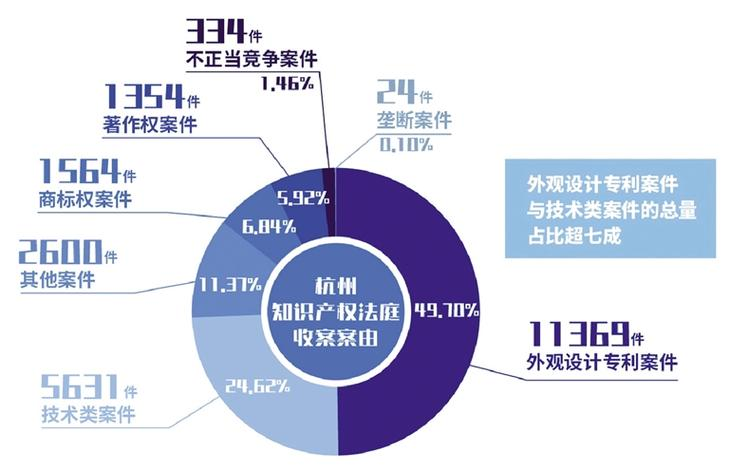
In the face of a rapidly changing scientific and technological landscape, the hangzhou intellectual property tribunal has been at the forefront of technological development and has successfully concluded a number of national “first” cases of rule-making importance, such as the first “screen secrets for data products” case, the “first digital collection” case, and the “first virtual digital digital case”, which provides a model for similar disputes, demonstrating the professionalism and openness of judicial protection in hangzhou and responding positively to the need for new quality productivity development。
Their exploration is far from over, and after hearing a number of cases involving artificial intelligence technology, such as the “access to copyright and unfair competition by generating artificial smart platforms” and the “defence bill for the use of al tools”, they distilled the rules from case-by-case exploration, issued the opinion on safeguarding the construction of artificial intelligence highlands with a high level of intellectual property legal services, and clarified the concept of adjudicating six types of classic artificial intelligence disputes, committed to a chain-wide system of judicial safeguards that provides stable and predictable guidelines for the healthy development of artificial intelligence industries。
The rule of the referee and the rule of governance have become a prominent line of work for the hangzhou censorship court. And behind this is a powerful technological underpinning — not only at the cutting edge of the concept, but also at the back of the professional judiciary, backed by a solid technical think tank. According to the information received, the tribunal currently has four full-time technical investigators and 43 part-time technical investigators, covering a wide range of fields of specialization, including mechanics, computers, medicine, electronics, communications and chemicals, which provide professional and strong support for the rapid and accurate identification of technical facts。
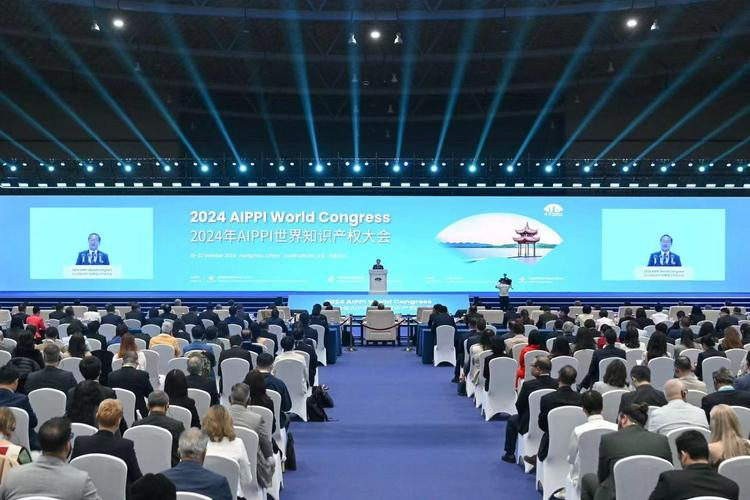
“there are judges on the bench and technical investigators in the technical fog.” this was the exasperation of a guest following a patent infringement case involving artificial intelligence during the hanzhou congress of the international association for the protection of intellectual property rights (aippi) in 2024. The main subject of the case was an “ai digital person” who was able to give a high-level version of live live video by inputting audio or text. The case involved a patent in the field of interaction between natural persons, and the controversy focused mainly on whether the plaintiff's patent rights had been infringed by the audio-driving character oral model used by the defendant in the “ai digital person” service. The technical issues involved in the case were extremely complex and highly professional, and in the face of complex software source codes and algorithms, the tribunal sent a “foreign support mission” in the field of computer science and technology, which was composed of full-time and part-time technical investigators, to provide technical support for the judges' decisions. Following the meeting, aippi and its china chapter and china trade promotion association sent letters of thanks for the highly professional nature of the proceedings and for the excellent professional and open image of the judges。
The hangzhou intellectual property tribunal has always defended the legitimate rights and interests of innovation subjects with an “as i am” awareness, working to make intellectual property protection more “harder”, more “lower” of the cost of defending rights, more “quick” of the loss of rights and more “higher” of the cost of infringement。
To insist on the utmost protection and to set up a judicial bar to punish and promote good. The tribunal has struck hard at malicious violations and has established a clear position of “the strictest protection”. In the case of “whegrade”, involving the products of infants and young children, the tribunal decisively applied punitive damages to the long-term, large-scale malicious tort of the defendant, calculated at four times the profit of the tort, fully upheld the plaintiff's claim of $30. 55 million and powerfully deterred potential tortists, thereby achieving “the strongest protection” for the “softest groups”。
True judicial wisdom is reflected not only in the rigidity of judgements, but also in the resilience of substantive resolution of conflicts. Currently, the “china (hhangzhou) intellectual property rights international commercial conciliation cloud platform”, which integrates professional mediation forces and provides a chain-wide solution to problems, has successfully settled more than 12,000 cases, and a large number of disputes have been resolved in the “clouds”。