Competition among modern firms is a competition for talent, at the heart of which is a competition for professional levels. The greatest bottleneck affecting enterprise development is the lack of a sufficient number of highly qualified professionalized workers, i. E. The strength and weakness of the core competitiveness of an enterprise depends on the degree of professionalization of the workforce. Because any strategy ultimately requires the implementation of staff, professionalized employees are the foundation of the enterprise's breakthrough and the key to its success。
So what's professional? Professionalization is the creation of a sense of self-employment among employees, the development of a sense of self-employment, the standardization, standardization and institutionalization of work, with a view to developing a professional mentality, professional ethics, professional norms, professionalism and professional behaviour, which strengthens the sense of success, accurately plays a job role, performs professional tasks, improves job performance and maximizes personal value。
As a rule, an employee can only perform 40-50 per cent of his or her abilities, but if he or she receives a good vocational qualification, he or she will be able to do 80-90 per cent of his or her abilities, so that an enterprise must continuously engage in the training and training of its staff. Training not only enhances the professionalization of staff and job performance, but also enhances business cohesion and is an effective way of reducing the loss of highly qualified staff. The establishment of a complete training system requires an effective integration of the systems in the human resources management system (recruitment, training, performance, pay, benefits, etc.) and also includes vocational training for new and older staff。
Older employees are bound to be present in an enterprise, older employees have been in an enterprise for long periods of time, are familiar with written and unwritten rules, are entrusted with tasks that often do not require much accountability by supervisors, but the quality and efficiency achieved are stable, which is the advantage of older employees. However, many old employees often call themselves old-fashioned, precisely because they are too familiar, and it is clear which of the company's rules and regulations are to be followed and which are to be ignored, so it is easy to make mistakes when there is a lack of motivation or a lack of risk-taking spirit and even a lack of attention to supervisors。
In the area of staff training, many enterprises are often caught in the trap of focusing on the training of new employees and neglecting the vocational training of older workers. Businesses think it makes sense: the capacity of older employees has developed and is a success, so there is no need for more training. Indeed, this is a mistake. In masnoll's no-tiered demand theory, employees seek to develop, pursue continuous improvement in their work skills and qualities, and progress to gain a sense of achievement, which requires companies to recharge their employees and make them feel that they will always progress and grow to meet the high-level demands of self-realization。
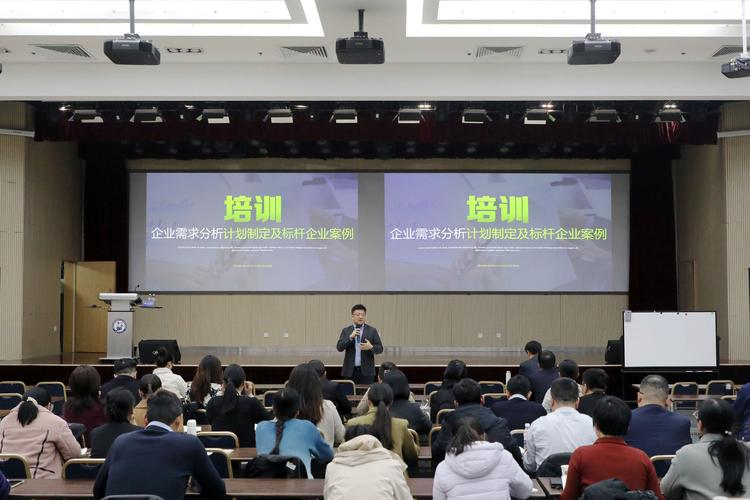
Focus of vocational training for older employees
Professional qualifications include three aspects, the first of which is professional skills, which are essential to the well-being of a person, are exclusive and have an irreplaceable character in the short term. The second is professional ethics, which reflect a person's personality, mind and upbringing, which is the basis for professional qualities. Stereotypes are the core of the occupational quality structure, with good nutrition, professional skills and ethics。
For older employees, training to enhance their professional literacy is the priority, in addition to the vocational skills training for the advanced. Professionally qualified employees must be committed, responsible and learning people who are team-minded, committed and capable of carrying out their work proactively and spontaneously, and who are extremely dedicated to their job. When enterprises have these older employees, they can also serve as a model for new employees, thereby creating more good employees。
Since older employees have been working in the enterprise for quite some years, have a better understanding of the development, history and culture of the enterprise, have received a lot of training in the skills training industry and are less touched by it in general, the following four additional courses can be used to train older workers:
1- group approach: staff group discussions on training content, actively involving staff in course content。
2. Case analysis law: analysis of success stories with employees, enhancement of training content, enhancement of motivation in staff training, initiative in thinking。

3. Role-playing: to enable employees to play roles related to work that have not been experienced, to feel the mentalities and behaviours of the roles they play, and to contribute to more effective performance。
4. Brainstorms: open the minds of employees in training, create creative storms in the minds of visions in collisions, stimulate creative thinking among employees and break long-established group thinking。
Attention should be paid to the training of older employees, with little thought, more institutional means, more substantive content and practical cases, and the discussion and resolution of specific cases and problems in their own businesses。
The training of new and old employees is highly valued in many international companies, such as volkswagen, which has set up many training points around the world, mainly to train new entrants to become full-fledged technicians, and to keep skilled workers in the world up to date with advanced technology。
For disney's old employees, they need more training than new staff, from content to form. In disney, most of the training courses were designed and arranged in response to the requirements of staff quality improvement and career design, with greater staff choice. For example, during the career promotion week, employees can choose to attend the future career course, which will inform employees of new opportunities in disneyland and how to prepare for them. There is also a course known as the “admission course”, which trains staff in how to make a good curriculum vitae, how to recommend themselves through the curriculum vitae and how to conduct interviews. There are, of course, a variety of training courses, such as “how to transfer”, “way to the stars”, and “we come all the way”. Through these trainings, staff are given additional energy to be dynamic and to work hard in a relaxed mentality, which is why disney ensures that guests enjoy themselves and that they develop rapidly。
In ibm, companies have well-developed employee training systems and implementation plans. In addition to the traditional training of lecturers, online training is widely used. Ibm has set up its own network university, where employees can schedule their studies at any time according to their own time, which resolves the conflict between their training and practical work. The curriculum is more practical in terms of both learning materials and training in real or virtual projects. Ibm members study at work or during their leisure time in various courses to increase work efficiency and personal development potential. Employees can propose what they need to attend, and as long as it is work-related and reasonable, the company will agree to and provide funding, which effectively balances the training needs of both the enterprise and the staff。
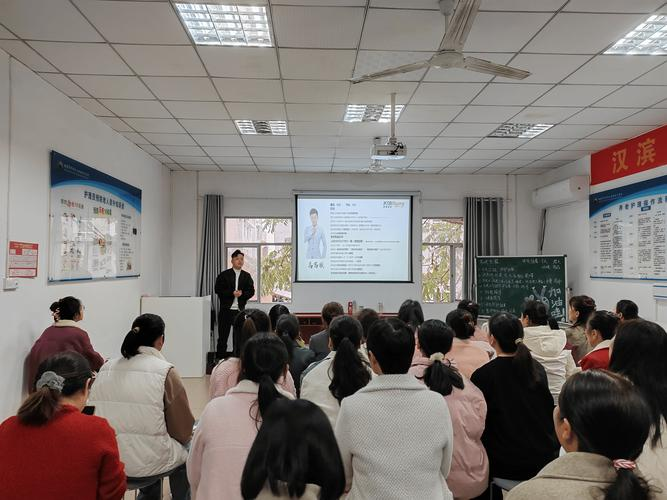
Ibm also attaches great importance to succession training and selection and training of managers through job rotation. Once qualified personnel have been identified, ibm will appoint them, giving them the opportunity to exercise in management practice, and senior managers and human resources departments will be responsible for testing and evaluating the qualifications of the incumbent effectively, with both advantages and disadvantages, while the process will be one of mutual review of adaptability between the company and future management。
Ibm views employees as the most important asset of the enterprise, based on the principle of “respect for employees, assistance in self-esteem, merit, potential, talent development and skills upgrading”. The first claim of ibm is respect for the individual, which is the supreme principle of the company. Ibm places great emphasis on equal opportunities, and the company offers every employee the opportunity to try. This is extremely valuable to a commercial company. In its management letter, employees are given challenging jobs, training and opportunities for success, emphasizing the value and satisfaction of their work and their growth with the company。
Ibm's “brainbrain development, skills upgrading” provides every employee with the conditions and even the development space they need. The company provides both managerial and professional career development channels for employees, giving them multiple opportunities to realize their individual career aspirations. If an employee is in a managerial position and moves to a management path, the company examines whether he has managerial competence and potential. If there is a potential for development, the employee is placed in the management pool, included in the manager training plan and arranged for three months of manager training. In the course of the training, it will also be given a specific project to appreciate the responsibility and obligation of team leadership. Those who have completed the course and are qualified can be placed on the job when there are vacancies in the company. If an employee is willing and suitable to be a technical expert, ibm also provides him/her with the space to develop upwards at one level. When they reach a certain level and bring in new employees and attend courses in company training, they can take examinations organized by the company and defend themselves, and qualified persons receive the title of a senior technical expert。
The majority of older employees in the enterprise will be the backbone of the enterprise, which is why enterprises value vocational training for older workers. Businesses do not need too many good, but less loyal, employees, but a lot of good, long-term stability. It was therefore of paramount importance to tap the potential of older employees, develop their talents and enhance their loyalty to make them highly qualified and stable over the long term。
Enterprises should be aware that, as enterprises develop, the quality of their staff needs to be improved simultaneously, and that for employees, in the face of intense competition and self-development aspirations, it is necessary to keep up to date and constantly update their knowledge and skills. In this regard, classroom learning may no longer be their primary choice, but rather from a realistic perspective, they prefer to be able to gain from their work and to be able to offer them adequate training, learning and development opportunities. An enterprise with the greatest number of new and old employees will certainly become a respected enterprise。