When i first got into business, i always thought the electrician was just a screw and a wire. - how could it be a problem? Master came by and asked me, "did i count the wires
It later became clear that good electricians were never “manual” masters, but rather “understand people” who used formulas to clear circuits. Today i'm going to take out five common electrician formulas that i've treasured for years
We'll put in a list, you can save it, and we'll break it down:
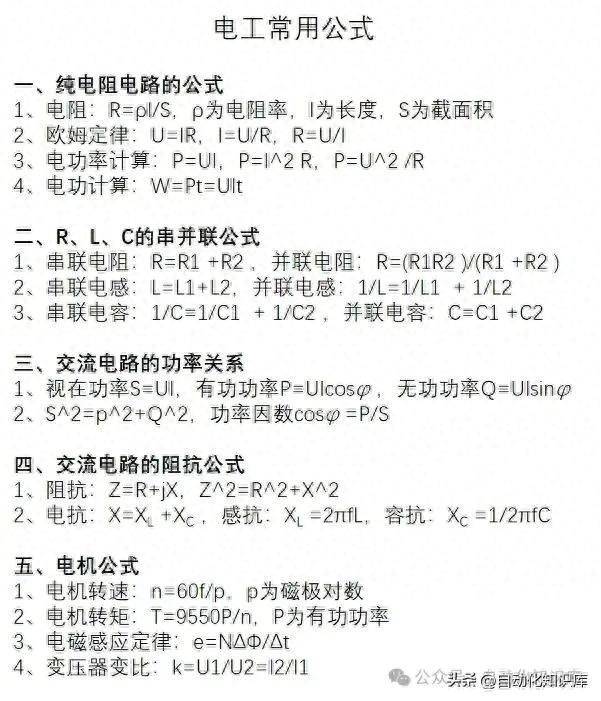
There's a lot of electrical formulas, but that's all we usually do. I'm not just a formula, but i'm going to combine it with the real scenes of powering and repairing the equipment in a normal time, so you can use it when you're done
I. Pure electrical resistance circuits: most basic and most commonly used
Pure electrical resistance circuits are the only ones that work with resistance, like our usual canteens, heaters, incandescent lamps. There's four formulas in here that we could get to work every day。
1. Guided electrical resistance formula: no longer afraid of wire heat jumps
This formula really sucks. Every time i pull long wires to a factory or wire a large power device, i do it first, or it's easy to heat a wire, jump a switch or even burn a wire。
The formula is r = old l/s, which may look a little abstract, and i'm going to translate to you the "human voice": the conductive electrical resistance = the resistance properties of the material itself x the length of the line transect。
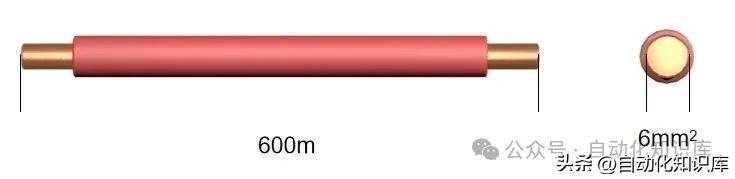
To give a real example of what i saw last year: it was about 600 metres away from a machine bed at the workshop, and it was six squares of copper. Copper's rate of resistance is always fixed, 1. 75 x 10^-8 m, with a direct formula calculation:
R = 1. 75 x 10^-8 x 600÷ (6 x 10^-6) = 1. 75 times。
When i'm done, it's a good line. If it's four squares, it's gonna heat up. After that, it took six months, without a problem. Now, freshman friends remember, long distance connection or high power equipment, you have to count first
Om's law: “the master key” for electricians
This law, i dare say, is carved into the bones of every electrician, u=ir, which is voltage = current x electrical resistance. When my master taught me that, he gave me a special image: to compare currents to currents, the voltage is the water pressure that drives the currents, the resistance is the barrier in the pipes。
You know, the more obstacles in the pipes, the smaller the current, the smaller the pressure, the larger the pressure。
Last time a colleague had a problem: a 220-v wind machine, with 110 electrical resistance, wondered what the current was at normal work. Directly using the omc law backwards, i=u/r=220÷110=2a, even if it's out, there's a basis for changing fuses or choosing open spaces。

Resistance power formula: do not make equipment “overload” work
Power formula p = ui, power = voltage x current, which is the “useful power” of actual consumption of equipment, also known as power, in watts (w). That's what we're talking about, "this water heater is 2,000 watts."。
And here's to be careful, the power and currents in the communication circuits have to be calculated using the "validity value" -- the 220v voltage in our home. And this formula can be combined with om's law, for example, with resistance and voltage, and can be calculated using p=u2/r。
I helped my family repair the heating, which means i lost the book and i don't know what power. I measured the resistance 100 times with a house voltage of 220 v, directly: p=2202 ÷100 = 484 w, which is exactly what i remember。
It is also a reminder that power is consumed only by electrical resistance, and that the elements of electrical senses, and of electrical energy, are not consumed, as will be mentioned later。
Electric power (electricity) formula: earning the “electricity bill” is simple
The electron formula is w = pt, electricity = power x time, and what we call "one degree of power" is a kilowatt-hour (kwh), or 1,000 watt-hour of equipment。
Many friends are confused with the difference between “power” and “electricity”, and i would like to give an example: the light bulb at home is marked with 500 w, which means that it consumes 500 j per second; if it is lit for three minutes (i. E. 180 seconds), the electricity consumed is w = 500 x 180 = 90,000 j, and conversion is 90,000 ÷ 3. 6 x 10 ^ 6 = 0. 025 degrees
Last time the factory owner asked me about the 10 1,000-w windmills in the workshop, which were running for eight hours a day, and how much electricity it cost a month. I'm using this formula: 10 x 1000 w = 10 kw, 10 x 8 = 80 kwh per day, 2400 degrees per 30 days per month, multiplied by the unit cost of electricity, and the boss says i can figure it out。
R., l., c. Conjunction: remembering the rule is easy
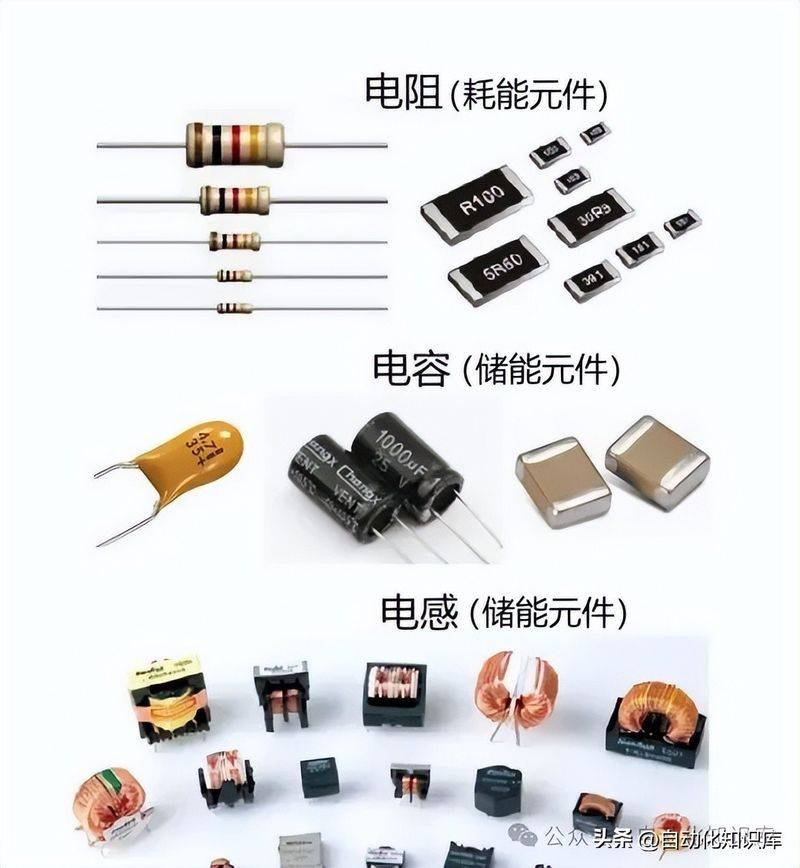
The combination of resistance (r), sense (l) and capacitor (c) seems complex and follows a pattern. Let's start with a simple barrier, then a special one。
When electrical resistance is linked, total resistance becomes larger, as it connects two conduits, longer, and natural resistance becomes larger; and when it joins, total resistance becomes smaller, amounting to a larger cut-off of the circuit, and the resistance becomes smaller. The wires are identical to those of resistance, and friends who cannot remember can apply resistance patterns directly。
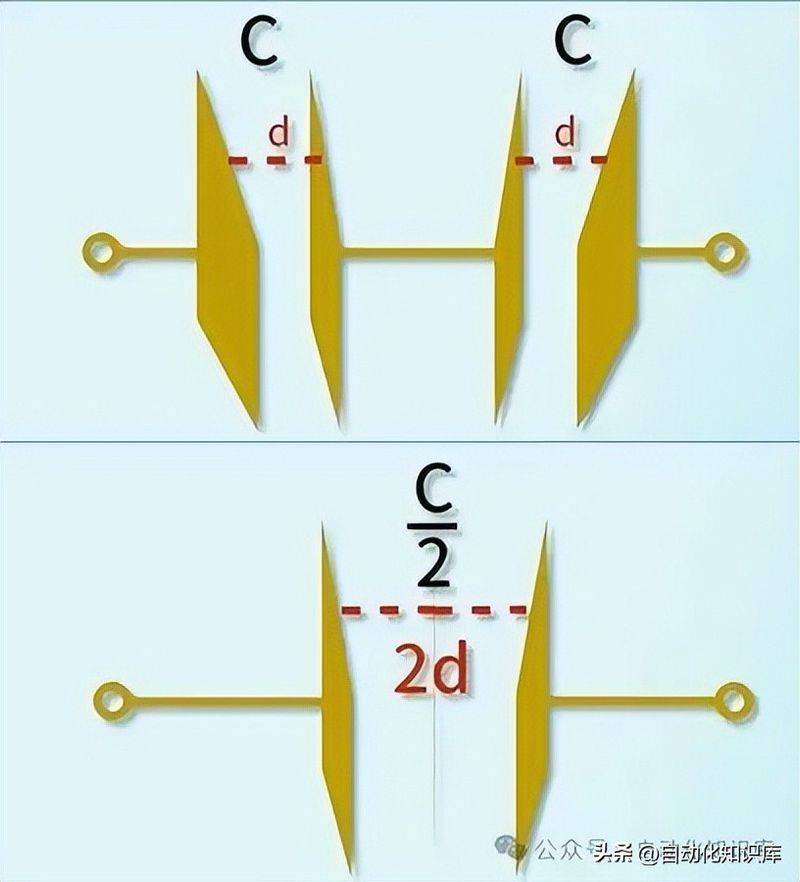
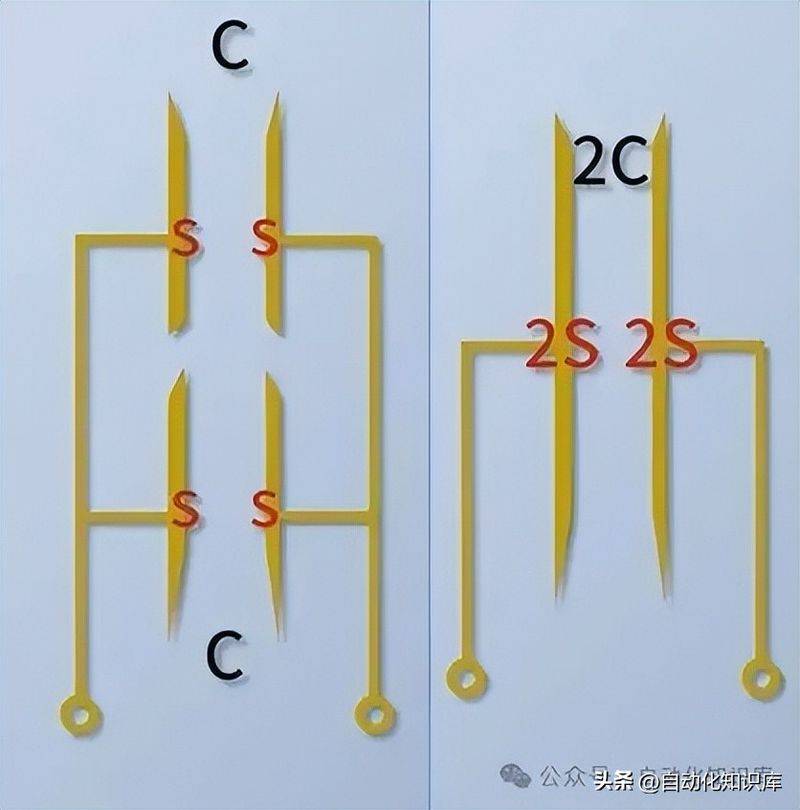
The most special is the electricity, which is the opposite of the resistance: when the total capacity becomes smaller in a chain and when it becomes larger in a combination. My master taught me a good way to understand it with parallel panel capacitors:
The size of the capacitor and the distance between the polar plate are inversely proportional to the area of the polar plate. The two capacitors are connected, as long as the distance between the polar plates is raised, and the capacitors are naturally smaller; when they are combined, it is equivalent to aggregating the two panels together, which is larger in size and larger in size。
The last time i fixed a generator's start-up cap, it was 200 meters f, and when it broke, it was only two hundred meters f, and i put them together
The condensation value c and the polar plate are positive to the area s, so that the two conjunction is equivalent to an increase in the condensed plate to the area and an increase in the total condensation, as shown in the figure below。
Communication circuit power: don't be fooled by “no power”
Communication circuits are not the same as direct current circuits, and electrical senses and profiles are “special”. Let me start by telling you the common sense: electric sense is like a short circuit in a straight-flowing circuit, like a conduit, but it creates a voltage in an exchange circuit that prevents current change. On the contrary, the current circuit is broken and the communication circuit is able to pass through the current。
That's why there's a division of labour in the power of communication circuits:
Power (p): the power of electrical resistance consumption, the power of real “work”, such as light bulbs, electric heat, etc., all rely on it。
Powerlessness (q): this is power derived from a sense of power and from a “scramble” of electricity, which does not consume energy, but exchanges energy between power sources. For example, electrical sense in an electric power plant requires powerlessness to create a magnetic field to drive the equipment。
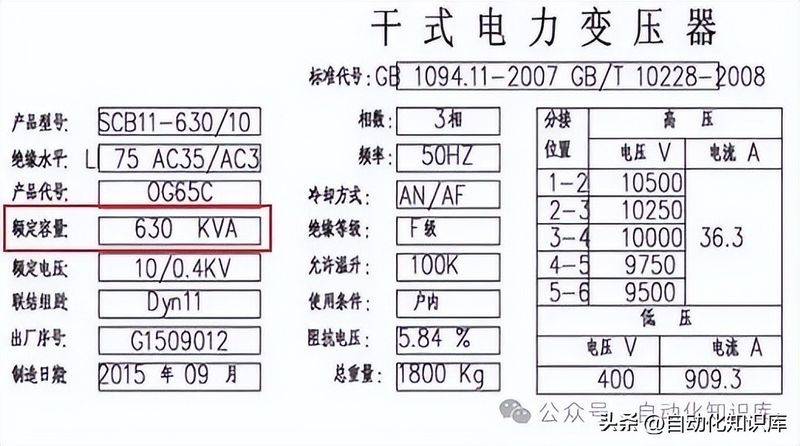
Depending on power (s): is the “total sum” of power and powerlessness, which corresponds to the total capacity provided by the power supply. The formula is s=√ (p2+q2) and is consistent with the definition of quantities, as is the slant of the straight-angle triangle。
Here, it should be noted that power generally refers to the capacity of the power source, such as a transformer, which is the total voltage x total current when the power is calculated. The transformer at the last workshop, knowing that the total power of the equipment was 80kw and that the power factor was 0. 8, counted as 100kva at s=80 ÷0. 8 = 100kva, was sufficient。
That said, the power factor, which is the ratio of power to power, is required (cosφp/s). The higher the power factor, the higher the “utilization” of power. For example, a power factor of 0. 85 is marked on the embankment, which means that 85 per cent of total power is absorbed while the electric power is working, while the remaining 15 per cent is no power。
We used to have a low power factor at the plant and a fine at the power department, and then we added to the power-compensation, we added a power factor of 0. 9 or more, and we spent a lot less on electricity each month, which is the practicality of the power factor
Communication circuit resistance: “obstructive force” of the electro-sensitivity
The word resistance (z) sounds like a professional, but it's the total barrier to currents in the communication circuits of electrical resistance, senses, and electricity. We all know the effect of resistance, focusing on the "special obstruction" of the sense and the capacitor:
Resistance (x l): the greater the frequency, the greater the resistance of the electric sensor to the current. For example, the electromagnetic furnaces that we normally use are the high-frequency currents that make electrical sense, so heat up food。
Persistence (x c): the greater the frequency, the smaller the tolerance, the less the resistance of the electricity to the barrier to the exchange of currents. For example, the tune-up on the radio is to receive radio signals at different frequencies by changing the resistance。
The combination of resistance and resistance is called "electric resistance (x), " resistance and resistance (z) " , and the formula is z = √ (r2+x2). In short, when frequency changes, resistance and resistance change, and resistance changes。
Last time i repaired a high-frequency heater, the heating efficiency went down, and i measured the resistance to the downing, and i found that it was much higher than normal, and that it was the shock of the electric wire, the normality of the drying, and the heating efficiency, which was the practical application of resistance。
V. Electronic electronic approach: direct note, used to work
And finally, there's the formula for the electric power, which is not much of a theory, but of direct use, such as the rated current and the speed of the electric power, which can be calculated by the formula。
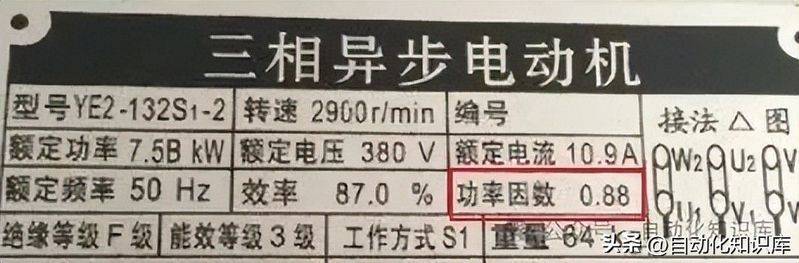
I usually use these formulas when i pick the machine open and calculate cable lines. For example, a three-phase machine of 380 v, 7. 5 kw, with a rated current of approximately i = 7. 5 x 1000 ÷ (√3 ×380 x 0. 85) ≈13. 4a, with an empty opening of 16a, which does not jump or fail to protect。
I put these formulas in my cell phone memos and flip them over when i'm not sure
One last word
In fact, in the electrician business, screws, wires are the basis, and what really opens the gap is whether or not the formula is used to calculate the “doorway” in the circuit. When i first got into business, i was afraid of formulas, and i felt too complicated, and then a few times more, i realized it wasn't that hard。
The five formulas that i share today, which i often use for my work, can be collected first, put out a set of scenes, and remember with much more。
Which formula do you work most often? Or did you have problems with the calculations? Welcome to the comment section. Let's talk about progress