Implementation of a full strategy for the analysis and landing of key technologies for green strawberries
Peng
Greenhouse strawberry cultivation not only opens new avenues for farmers to become rich, but also effectively contributes to the optimization of regional agricultural structures. As consumer demand for food safety and quality increases, the application of green efficient planting techniques in greenhouse strawberry industries is important. The adoption of environmentally sound and energy-efficient farming methods not only enhances the production and quality of strawberries, but also reduces negative environmental impacts, meets market demand for high-quality green fruits and enhances industrial competitiveness. The analysis of the specific application of key greenhouse strawberry green efficient growing techniques in local greenhouse strawberry cultivation, taking into account the actual situation in the police district, provides scientific evidence and technical support for green development in the strawberry industry。
1 greenhouse strawberry-growing environment analysis
The police district of the city of sutze is located in the south-west of shandong province. It is geographically superior, has four seasons and belongs to the temperate monsoon weather zone. This type of climate makes the local winter cold and dry, the summer hot and rainy, and the two seasons warm and pleasant. The average winter temperature is around 0°c, the average summer temperature is over 30°c, and the temperature has stabilized at 10 to 25°c in the spring and autumn, with the appropriate temperature range suitable for greenhouse strawberries. Especially in the spring, the temperature is gradually rising and the light is abundant, facilitating the fracturing and flowering of strawberries。
In terms of soil conditions, the police district is dominated by tidal and brown soil, which is medium-quality and has better water and fertility protection. However, soil fertility and acid alkalinity vary from region to region, and there may be problems of insufficient fertility or imbalance in acid alkalinity in some regions. Therefore, soil improvement requires the rational application of organic and trace element fertilizer based on soil tests, thus increasing soil fertility and adjusting acidity, with an appropriate ph range of 5. 5 to 6. 5. At the same time, the soil structure is improved and pests and pests are reduced by agricultural measures such as deep tillage and rotation。
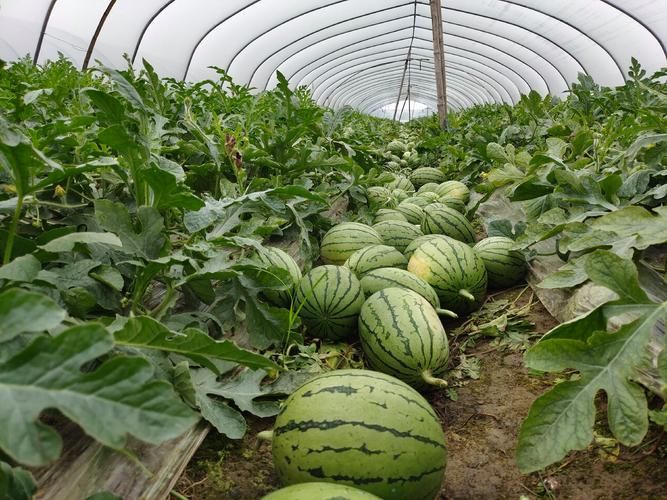
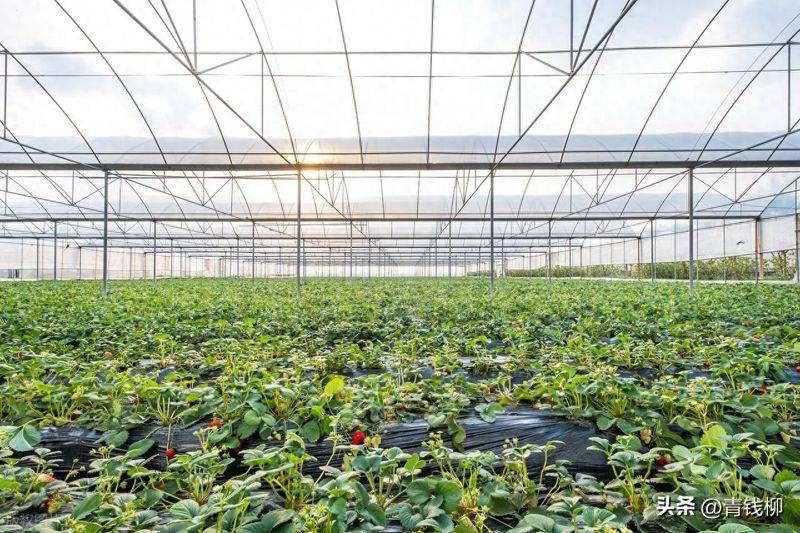
In the selection and design of greenhouse facilities, solar or modern smart greenhouses should be selected in conjunction with local climatic characteristics. Daylight greenhouses, which use solar energy for temperature protection, have simple structure and low cost characteristics and are suitable for smaller farmers. Modern smart greenhouses are equipped with state-of-the-art temperature, ventilation and light systems that allow precision regulation of environmental conditions and improve the yield and quality of strawberries, but construction costs are relatively high. In the design of the greenhouse, emphasis should be placed on the optimization of temperature protection, such as the introduction of double film, enhanced greenhouse sealing, and at the same time, the rational installation of vents and light windows to ensure sufficient air circulation and light in the greenhouse to create the optimal environment for strawberry growth。
2 greenhouse strawberry species selection and nursery techniques
The selection and breeding of greenhouse strawberry varieties is a key step in the success of strawberry cultivation, and the implementation of scientifically sound species selection and breeding techniques for temperate monsoon weather areas in the district of sutze, shandong province, is important for improving the production, quality and economic efficiency of strawberries。
2. 1 greenhouse strawberry species selection
In combination with the climatic conditions in the field of policing, the choice of greenhouse strawberry varieties should be based on the principles of early ripening, coldness, disease resistance and fruit beauty. Pre-literate varieties can be marketed early and pre-marketed; cryogenic varieties can be better developed in the winter and harvest periods can be prolonged; disease resistance can reduce pesticide use and production costs; and fruit beauty can increase commodity value and meet consumer demand. According to the current cultivation, the zhangjiang, ningyu, fungxiang and others are performing well in the district. The long cone of the zengriberries fruit, which is fine and fragrance, but which is softer and unsustainable, is suitable for development on the outskirts of the city; the round cone of the zongrya strawberry fruit, which is full in size, is small in size, is large in hardness, is resistant to storage and is excellent in integrated form; and the vanilla is very popular in the market because of its early ripening, fruit size, sweet taste, and durable storage。
2. 2 breeding techniques
Detoxification techniques can effectively improve the quality of strawberry seedlings. Detoxification seedlings have the advantage of strong growth, high number of outcomes and high single fruit, which can effectively improve strawberry yields and quality. Detoxification is usually carried out using stalk tissue culture, using the full capacity of plant cells, cutting from the point of a healthy strawberry stem to a growth point of 0. 2 to 0. 3 mm and obtaining detoxification seedlings through sterilization, vaccination, culture, etc. Cave-creed seedlings are planted in a base plate for integrated management. Caucasian seedlings have the advantage of saving land, facilitating planting and managing it, and can significantly increase their productivity. Temperature, humidity and light conditions should be strictly controlled during nursery time to promote the robust growth of detoxified seedlings。
Classification based on seedling standards is a key indicator of the success of strawberry seedlings. The seedlings shall have morphological characteristics such as a well-established roots, a short leaf handle, a moderate number of leaves and a thick green leaf. The development of roots is conducive to nutrient absorption and water transport; short-strength leaves indicate that the plant is strong and resilient; and a moderate number of leaves ensures the efficiency of light cooperation. During breeding, management of hydro-fertilizers should be strengthened, soil moistation maintained and the rational application of potassium nitrogen phosphorus compound fertilizers and trace element fertilizers promoted plant growth. At the same time, emphasis should be placed on pest and disease control, using a combination of agricultural, biological and chemical approaches to effectively control the occurrence of pests and diseases. For example, common pests, such as as as grey silts and aphids, can be combated through regular spraying of microbicides and insecticides; biological control can also be carried out using natural enemies and biological agents to reduce the use of chemical pesticides。
3 greenhouse strawberries and field management techniques
The greenhouse strawberry plant and field management techniques are essential links in the strawberry process and are directly related to the production, quality and economic benefits of strawberry. Science-based planting and field management techniques should be implemented in the police district of santung province to achieve efficient greenhouse strawberries, taking into account local climatic conditions。
3. 1 greenhouse strawberries established
Pre-plant preparation is carried out in the context of soil realities. First, soil laxation, fragmentation and flattening can be achieved through soil preparation, facilitating the growth and development of strawberry root systems. During the process, weeds, stones and other impurities should be removed to ensure that the soil is pure. Second, they are fertilized in combination with strawberry growth needs and soil fertility to provide the required nutrients for strawberry growth. The soil in the oydian district is mostly damp and brown, with varying fertility levels, and it should therefore be rationalized with farm and fertilizer based on soil tests. Farmers are fat, such as decomposed cow dung, goat dung, and are rich in organic matter and trace elements that improve soil structure and increase soil fertility; fertilizer can quickly provide a large number of elements such as nitrogen, phosphorus and potassium, which are required for strawberry growth. It is recommended that each acre be used to fatten up to 3,000-4,000 kg for mature farmers and 50-60 kg for compound fat. Soil management, which is commonly used in greenhouse strawberry cultivation, is used to make the bed, which helps to increase soil temperature, promote root system growth and facilitate drainage and field management. The specification and direction of the bed shall be based on a combination of greenhouse structure, light conditions, and shall normally be 60 to 80 centimetres wide, 25 to 30 centimetres high and 40 to 50 centimetres long, with the north-south orientation of the bed conducive to the full utilization of light resources。
In terms of timing and density, in the field of policing, the best timing of green strawberries is usually chosen between the end of august and the first half of september, at a time when temperatures are appropriate for the recovery and growth of strawberry root systems. Cultivation density should be considered on the basis of factors such as variety characteristics, soil fertility and management levels. The two lines are the usual planting methods for greenhouse strawberries, usually with a distance of 25 cm and a distance of 15 cm, with 8,000 to 10,000 plants per acre. A reasonable planting density would ensure that strawberry plants had sufficient space to grow, while making full use of light energy and increasing yields。
3. 2 field management techniques
Field management techniques are multifaceted and have important implications for strawberry growth. First, the management of hydro-fertilizers should be based on the growth needs of strawberries and soil conditions, and the application of drip fertilisation techniques can accurately control water fertilization and increase its utilization. During the critical period of strawberry growth, such as the current period, the flowering period, the period during which the fruits expand, etc., the nutrients should be replenished in a timely manner. Plantation adjustment is an important measure in greenhouse strawberry field management, including the removal of runners, old yellow leaves, sick leaves, weak sprouts, thereby reducing nutrient consumption, improving ventilation and improving fruit quality. Second, temperature control varies from growth to growth. Strawberry root systems grow at a maximum temperature of 15-20°c, above the ground at a maximum temperature of 20-25°c and during flowering results at a maximum temperature of 20-22°c. Therefore, the temperature of the greenhouses should be reasonably adjusted to the growth phase of strawberries and weather changes to create an appropriate growth environment。
Finally, assisted pollination during flowering can improve strawberry sit-in and fruit quality. Bee pollination is a common method of pollination of greenhouse strawberries and has the advantage of being even, efficient and cost-effective. Placing a proper quantity of bee boxes in the greenhouses, freeing the bees to fly and pollinate, can effectively improve the yield and quality of strawberries. In cases where bee pollination is ineffective or unable to be pollinated by bees, it can be assisted by artificial pollination, with a quill or pollinator touching the flowers lightly and promoting pollination。
4. Green control techniques for strawberry pests in greenhouses
Green control techniques for green strawberry pests are an important means of ensuring their healthy growth, productivity and quality. In the perdane district of santung province, a combination of agricultural, physical, biological and chemical prevention and control strategies, taking into account local climatic conditions and strawberry growth characteristics, should be adopted to reduce pesticide use and protect the ecological environment while reducing the incidence of disease and pests。
4. 1 agriculture control
Agricultural control is the foundation for green control of greenhouse strawberry pests. The incidence of disease can be effectively reduced through the selection of resistant varieties such as zhang jie and ningyu. At the same time, the development of strong seedlings, which are more resilient and resistant to disease, is being implemented and are better protected against pests and diseases. In the process of planting, deep crop rotation can destroy the environment and reduce the accumulation of pests and diseases. Deep tillage is generally 25-30 cm and can rotate with green fertilized crops and herbal plants. In addition, the timely removal of weeds, strains, residues, etc. In the fields can reduce the breeding and spread of pests and diseases. Through agricultural interventions, the incidence of green strawberry pests can be reduced by more than 30 per cent。
4. 2 physical control
Physical control is the use of physical methods to induce pests to kill, reduce the number of pests and reduce the risk of pests to strawberries. In greenhouse strawberry cultivation, insecticides can be induced by physical methods such as insecticidal lamps, stickers, and sexual baits. Using the luminantity of pests, pests are attracted to pest-killing lamps and killed; using the yellowity of pests, pests are adhesived on sticky boards; and sexual inductions are able to simulate pest sexual information, attract pests to mate and trap them. Physical control methods have the advantage of being simple, inexpensive and non-polluting, and are important tools for green control of greenhouse strawberry pests. Through physical control measures, the number of greenhouse strawberry pests can be reduced by more than 20 per cent。
4. 3 biological control
Biological control is a method of combating pests and diseases using biological factors such as natural insects and biological pesticides. In the case of greenhouse strawberries, aphids, grasshoppers and other natural insects can be used to fight pests such as aphids and pink lice. These natural insects are capable of feeding and reducing the number of insects without polluting the environment. In addition, biopesticides such as multi-facile sprouts and dinol soluble liquids may be selected for treatment. Pyramid sprouts can produce antibacterial substances and inhibit the growth and reproduction of pathogens; butyl cyanol solubility liquids have a wide spectrum of fungicides and have better prophylactic effects on various pathogens. Biopesticides have low toxicity, low residues and environmentally friendly advantages and are important options for green control of greenhouse strawberry pests. Biocontrol measures can reduce the incidence of green strawberry pests by more than 15 per cent。
4. 4 chemical control
In case of serious pests, low toxicity and low residual chemical pesticides may be selected for control, but safe intervals should be strictly observed to ensure the safety of the fruit. In greenhouse strawberry cultivation, the commonly used chemical pesticides are aphids, avimectin and dyson manganese zinc. Aphids are an efficient, low-toxic insecticide with better control effects for pests such as aphids and insects; avimectin is a broad spectrum microbicide with better control for various pathogens; and dyson manganese zinc is a protective microbicide that prevents disease. In the use of chemical pesticides, reasonable quantities, concentrations and frequency of use should be determined on the basis of a combination of factors such as type, occurrence and properties of the agent. For example, the dose of aphids is typically 20-30 grams per acre at concentrations of 2000-3000 times more liquid and sprayed every 7-10 days; the dose of avil is typically 50 to 70 grams per acre at concentrations of 1,500 to 2,000 times liquids and sprayed every 10-15 days; and the dose of dyson manganese zinc is typically 100 to 150 grams per acre at concentrations of 800 to 1,000 times liquids per 7-10 days. At the same time, care should be taken to rotate medicines and to avoid the long-term use of the same agent, leading to resistance from pests and diseases. Following the use of chemical pesticides, safe intervals should be strictly observed to ensure that pesticide residues in fruit conform to national standards and ensure the health safety of consumers。
5 greenhouse strawberry harvesting and storage technology
Greenhouse strawberry harvesting and storage techniques are key to ensuring that strawberries remain fresh and of good quality from the field to the consumer. In the police district of santung province, the timing and method of harvesting, storage and preservation of strawberries in greenhouses are carefully managed to maximize their taste and nutritional value。
Strawberry maturity is marked by a change in the colour of fruit to fresh red, when the fruit is full, bright and fragrance. When harvesting takes place, a clear morning or evening should be chosen, when strawberry fruit is less hot and not perishable. When harvesting, hold the handle lightly and avoid pulling the fruit directly, otherwise it may damage the face of the fruit and affect its storage and preservation. The correct approach is to break the handle light and light and separate the fruit from the plant. The frequency of harvests should be adjusted to the growth rate of strawberries and market demand, and it is generally recommended that they be collected every 1 to 2 days to ensure the quality and freshness of the fruit。
Strawberry has a suitable storage temperature of 3-4°c, which slows down the breathing of strawberries in this temperature range and can effectively extend the storage period. At the same time, special attention needs to be paid to packaging, which is the preferred type of packaging, each containing a capacity of between one and two kilograms, which is easy to carry and avoids squeezing and reducing damage between fruits. During the packaging process, appropriate quantities of water-sucking paper or fresh bags are placed in the box to absorb excess water, keep the fruit dry and extend the shelf life。
With regard to storage periods, strawberries can last 5-7 days under suitable storage conditions, but with time the taste and nutritional value of the fruit will decline. Strawberries collected should therefore be sold or processed as soon as possible to maximize their taste and nutritional value。
The greenhouse strawberry green efficient growing key technologies cover not only the entire chain from species selection, soil management, pest control and harvesting to harvesting storage, but also the dual promotion of eco-friendly and economic benefits. Effectively reducing the use of chemical pesticides and protecting the ecological environment through the implementation of strategies combining agricultural, physical and biological control, while improving the production and quality of strawberries using science-based field management and water fertilizer integration techniques. At the harvest and storage chain, precise timing and appropriate storage conditions are in place to ensure the freshness and nutritional value of strawberries and to extend the market supply period. In summary, the application of key technologies for green strawberry green efficient cultivation not only contributes to the sustainable development of the strawberry industry, but also provides consumers with safer, healthy and delicious strawberry products as an important way to modernize agriculture and revitalize the countryside。