


High-yielding production in the red strawberries south greenhouse: innovative technology pathways and exploration of efficient production models
Li yanfang
In the early 1990s, the prefecture of penang began to develop strawberry cultivation, and to date it has grown on a growing scale, with more than 300 cooperatives and family farms, with more than 360 hm2 of strawberry cultivation, with an annual value of 100 million yuan, to become a specialty for local farmers. Cultivated areas are mainly located in towns such as brick ports, horses and ponds. Red is the main plant species。
1 red strawberry varieties
Strawberry (fragaria x annanassa `benihoppe ' ) was conceived by the jiangang county agricultural experiment in japan, which was nurtured in 1996 by a hybrid (father) with zhang ji (mother) and officially introduced into china in 2007. Vegetable cones, deep-faced red-coloured wax radiant, single fruit mass 26 ~ 50 g, maximum 130 g. Jelly red, soluble solids at 9-14%, sugar acids at 7:3, sweet cherry fragrances and soft acidity, unique flavor. It's 10-15 cm tall, it's big and flat, it's long, it's long, it's strong, it's strong, and it's over 85%. It is more sensitive to anthrax, ashilosis。
2. Selective fertilization
2. 1 land selection
The red strawberries have the properties of water fattening, glamorous, and flood-resisting properties, and are therefore suitable for planting in sandy soils, which are well ventilated and loose and have a strong capacity to protect their water. Strawberries are forbidden to be planted on the same plot on a continuous basis and require rotation. In selecting a precipice crop, it should be avoided from being adjacent to an eggplant crop, which would be more suitable for strawberry cultivation if the precipice were beans or melons。
2. 2 fertilisation
In the greenhouses where strawberries are prepared, base fat should be applied. Per 667 m2 strawberries should be applied to approximately 4,000 kg of rotable organic fertilizers, 30 kg of calcium per phosphate and 30 ~ 50 kg of composite fertilizers to ensure sufficient soil nutrients. After the fertilizer is distributed, the sheds are immediately required for deep-soil conversion at a depth of 30 to 40 cm. Then, the earth was made to a height of 40 cm wide, 20 cm high and 25 cm wide. This structure facilitates the growth and drainage of the strawberry roots。
3 selection
It is recommended that one generation of detoxification and two generations of detoxification be chosen, a generation of well-developed seedlings with high yield potential (up to 320 g per plant), suitable for planting, subject to careful management (e. G., oozing, control). The second generation is highly resistant to disease and has a steady yield (280g) and managed with a low rate of deformity, which is the best option for newers. High-quality seedlings should have more than 60 per cent white root, with primary roots of more than 10 cm, 4-6 staggered leaves, complete tissues, non-decomposition or dry roots, requiring heights of 25-30 cm, leaves without spots or curls, thick greens with light, and healthy plants. Priority is given to the second generation of detoxification seedlings at formal nursery sites, which avoids slow growth and vulnerability to disease from the root causes of the disease (figure 1)。
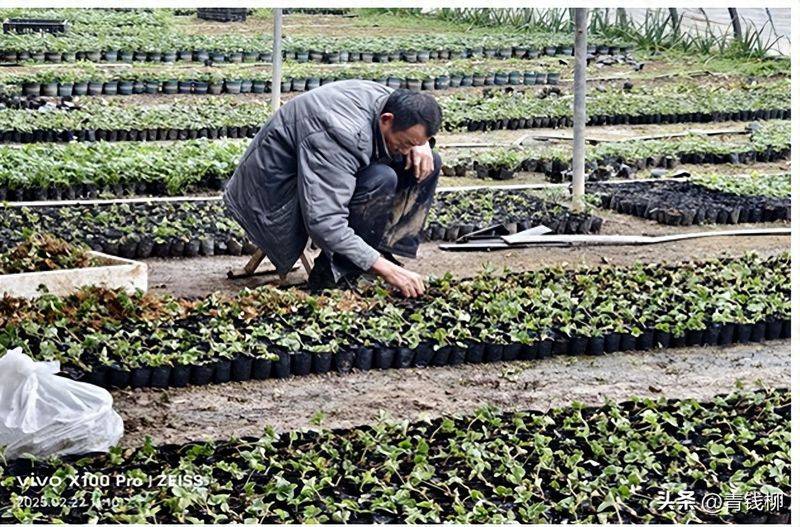
Figure 1 strawberries
4 plantation management
4. 1 reasonable secrets
Under the weather conditions in penang county, it is proposed to plant it in late august to early september, using a “triangular” line with 30 cm range and 13-15 cm range, at a rate of 700-8000-666 m2. The depth of the plant is suitable for “deeply unheard, shallowly unearthed” and, as it is planted, the strawberries have bows on their backs. Upon planting, water is poured out and the soil must remain wet for a period of one to two weeks and, if necessary, light seed water. At the same time, the sheds also have to use the black nylon net to cover the sun from 3-5h to protect the seedlings from excessive temperatures。
4. 2 temperature management
Temperatures are kept at 28 ~ 32 °c during the day and 12 ~ 15 °c at night, at a minimum of not less than 8 °c. At this stage, high temperatures are needed to promote root system development, but care must be taken to avoid damage to plants due to high temperatures exceeding 35°c. Soil water content should be maintained at around 70 per cent to ensure proper root growth and water demand. At this point, air moisture should be controlled at 40-60 percent, avoiding over-drying of air and sound pollination。
5 long-term management
5. 1 leaf picking promotes thawing
Red strawberry enters life in time to remove old, sick leaves in time to ensure that 8-10 functional leaves are preserved for each strawberries, thereby feeding the fruits. In the management process, appropriate application of 15% more than wettable powder per 667 m2 can be used to effectively suppress the hair of the stubble and to promote the separation of buds. When the buds of the top buds emerge, they should be carefully chosen to retain only two fine and robust breaths. This not only optimizes the growth of plants, but also significantly improves the production and quality of red strawberries。
5. 2 bee pollination
Bee pollination, as a natural and efficient strategy, can significantly increase the yield of strawberries and ensure a positive end to the fruit and reduce the abnormality. As a rule, every 667m2 fit for 6,000 bees, while the bees should be in the middle of the shed. In order for the bees to better adapt to the new environment and to effectively visit the flowers for honey in the new environment, it is advisable to move the bees into the shed one week prior to the flowering of strawberries (figure 2). Controlling indoor temperatures is the key to increasing honey bee pollination, and when the temperature in the shed is 15-18°c, the bees start flying out of the box to pick honey; when the temperature is 20-23°c, the bees are the most active; but if the temperature exceeds 25°c, the effect of pollination is significantly reduced. In addition, bees need to feed sugar once every 2d to keep them alive. At the same time, pesticide use should be avoided during strawberry flowering in order to avoid harm to bees。
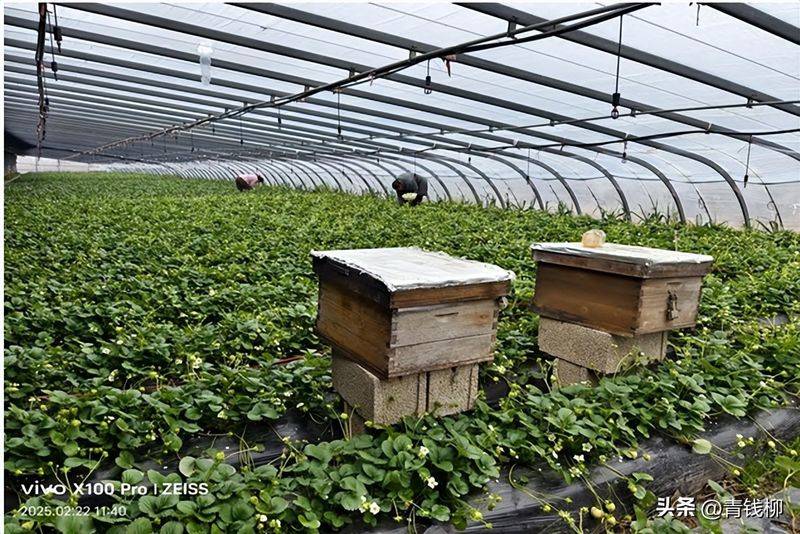
Figure 2
5. 3 temperature management
The day temperature of the flowering period is maintained at 22-25°c and 8-10°c at night. High temperatures (over 25°c) reduce pollen sprouts and increase the proportion of abnormal fruit, while low temperatures (below 8°c) affect pollination. More than 70 per cent of the soil is to be maintained to ensure normal opening of flowers. Watering should be avoided at noon so as not to affect pollination, and it was suggested that it should be chosen for the sunny afternoon. The temperature remained at 20-25°c during the outcome period and 5-8°c at night. High temperatures (over 25°c) lead to a smaller fruit and low temperatures (below 5°c) affect the expansion and colour of fruit. This period is the period of greatest water demand, with soil containing more than 80 per cent of water, contributing to the rapid growth of fruit. At this time, the frequency of water irrigation needs to be controlled so as to avoid the planting of water leading to the softening or decay of fruit, and it is proposed to use drip irrigation or sub-drink irrigation to avoid water spraying on the leaves and to maintain “wet, dry and dry”。
5. 4 the solar light
Visible or white building materials in the back walls or between the greenhouses, with increased dispersive light. Or recommend the installation of 100 w incandescent lamps or led patches per 20m2, hanging 100 cm above the plant, with a daily light of 4-6 h, which promotes the growth of leaves and the colour of fruit. Simulates natural sunlight. It is not appropriate to over-intensify the light to avoid exceeding the saturation point of strawberry (2. 5 ~ 30,000 lx)。
6. Fertilizer management
After planting, 20-30 d, mainly nitrogen fertilizer, 5~8 kg urea per 667 m2 urea + 2~3 kg potassium phosphate, promoting tubular leaf growth. Potassium phosphorus fertilizer 7. 5 ~ 10 kg/667 m2, or fermented fermentation em, for the initial flowering period, for water rinsing, to promote chromatization and increase sit-off rates. The emphasis on potassium fat for the larvae boom is 10-15 kg per 667 m2 potassium sulphate or potassium nitrate, combined with water soluble fat of fertilized acid 3-5 kg per 7-10 d per application。
7 plumbing fruit
When the buds are separated from each other but not open (no later than the first flower), the emphasis is on the removal of the upper and late and weak buds, and the preservation of the strong and low-grade buds can be reduced by 20 to 25 per cent of the inefficiency of flowers. In early childhood, deformations, insects and thin little fruit with weak fruit handles are eliminated in time to avoid the waste of nutrients. The first sequence leaves 3-4 fruit, and the subsequent sequence can be increased to 5-6 fruit. A strong plant leaves 12-16 fruit per plant, and a weak plant leaves 8-10 fruit. Priority should be given to the retention of one-stage sequenced fruit (the largest fruit type), to the selective retention of the second-level sequence, and to the complete elimination in principle of the three-stage sequence and above (figure 3)。
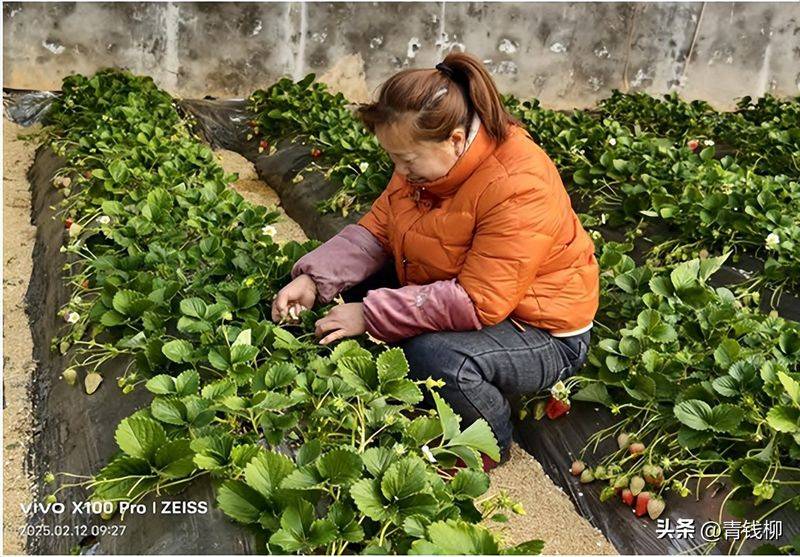
Figure 3
8 pest management
8. 1 anthrax
Strawberries are more susceptible to anthrax in high temperatures, wet environments and in the presence of wounds, especially at 28 - 32°c. Prevention methods include the timely removal and centralized destruction of sick leaves, rods, dead leaves, leaves and all strains with disease; the use of high-strength cultivation and timely ventilation and moisture to reduce soil moisture; and the use of 70 per cent of the acetene zinc humid powder and 25 per cent of the ethylene esters between planting and the beginning of the spasm suspended agent 1200 ~ 1500 times liquid alternate spray protection, once every 7 ~10d spray。
8. 2 ashkilosis
Strawberry greystery is a fungus disease, and after the onset of the disease the plant changes the bouquets, red and brown, and the fruit rots locally and loses its value. The pathogen should be removed in a timely manner; it can also be sprayed with 40% phenylmethyl ester suspension of 1000-1500 times, 5d with one spray and 2 in a row, with clear results. 8. 3 aphids, lice; timely removal of old and sick leaves; yellowboard entrapment; application of 3% aphid cream 1000-1500 times liquid spray, or 5% avi amphibian emulsion 1500-2000 times 3-4 times at intervals of 7-10d。
Summary
Soil nutrients and pests should be monitored on a regular basis, under the guidance of local agricultural extension agents, and management programmes should be optimized in order to achieve a high yield of greenhouse strawberries through species optimization, precision environmental regulation, scientific hydrofertilizer management and pest control. It is recommended that technical details be adapted to the growth status of the plant, and that practical experience be accumulated to improve the production and quality of red strawberries (figure 4)。
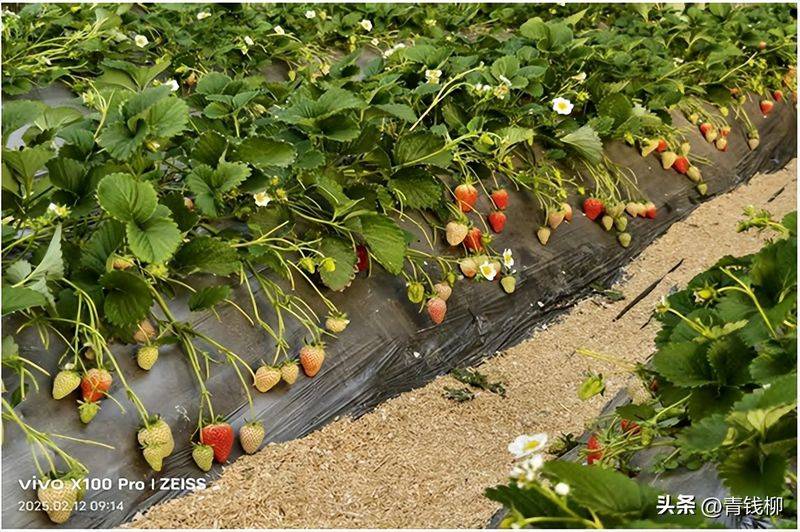
Figure 4



