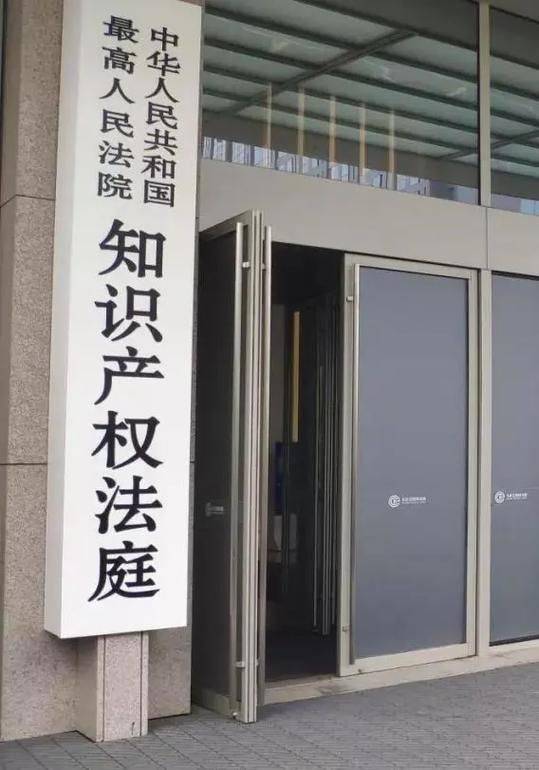
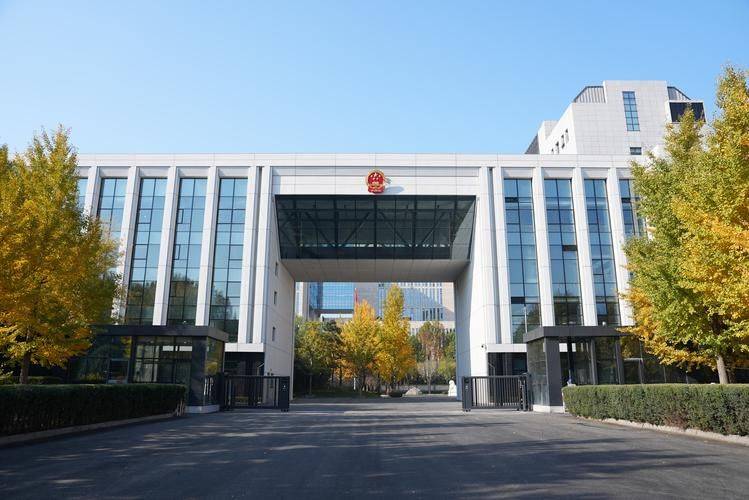
On 14 february, during an interview with a journalist in the china daily news, the vice-president of the beijing intellectual property court, china daily news (journalist tsao cao), said that since its establishment in november 2014, the beijing intellectual property court had stepped up its efforts to improve the quality of commercial secret cases and promote an open and transparent rule of law environment and a market environment of equal competition。
Song fish water points out that commercial secrecy, as an important component of the intangible assets of enterprises, plays an increasingly important role in market competition in today's rapidly globalizing trade. The party's 20 major reports have called for a market-based, rule-of-law and internationalized business environment. To this end, the beijing intellectual property court attaches great importance to cases of commercial secrecy and, in the course of its proceedings, it has always been guided by the principle of equal protection of the law, both at home and abroad, by the fair and impartial handling of cases, the promotion of an open and transparent rule-of-law environment and a market environment of equal competition, and the demonstration of our confidence and determination to protect innovation and openness。
Commercial secrets usually refer to technical information, business information, such as information that is not known to the public and that is of commercial value and that is kept confidential by the person entitled to it. “on this basis, the protection of commercial secrets is necessary and important.” song fish water says。
In recent years, against the backdrop of increasing commercial secrecy as a strategic resource for competition in markets, the world’s multinational rights holders have followed closely the protection of china’s intellectual property rights, but at the same time commercial secrecy has become a pretext for some countries to accuse china of inadequate intellectual property protection and of waging trade wars。
Indeed, china has always attached great importance to strengthening the protection of commercial secrets. On 30 november 2020, general secretary xi, in his twenty-fifth collective study at the central political bureau, stressed “the need to improve the level of legalization of intellectual property protection” and “to strengthen legislation in areas such as commercial secrecy”. In september 2021, the state council issued the programme for the construction of intellectual property power countries (2021-2035), which states that china's system of intellectual property laws and regulations is gradually being improved and that the protection of trade secrets is being strengthened. In addition, china's civil code, anti-improper competition law, criminal law and related judicial interpretations, sectoral regulations and local regulations provide for the protection of commercial secrets。
The song fish water reports to journalists that china's judicial protection of commercial secrets is being further strengthened in the light of these evolving laws and regulations。

According to her, since the establishment of the beijing intellectual property court at the end of 2022, 182 cases of disputes involving violations of commercial secrets had been heard and 136 had been concluded, including cases involving foreign nationals, including a dozen states, namely the united states, japan, the united kingdom, india and germany. There are more cases where the parties have claimed commercial secrets involving new and emerging areas of high technology, mainly in the areas of internet, energy chemicals and biomedicine, and mainly in the areas of internet, financial services and educational entertainment。
“in these cases, the number of cases arising from staff troughs is relatively high, at 93 per cent, and the employees, former employees, who are often senior managers or leading scientific technicians, are in key positions during their service and have access to key information from the enterprise.” song fish said。
She points out, however, that in cases concluded by judgement, the claims of some rights holders have not been upheld. “... The main reason for this failure is the lack of evidence by the right-holder, such as failure to prove the confidentiality, confidentiality and value of the alleged business secret, or even the content and specific secret points of the claim. In short, it is difficult for the plaintiff in the case of commercial secrecy to prove success.”
Song fish water indicates that commercial secret disputes are more complex, more difficult to obtain evidence and more burdensome for the plaintiff than traditional intellectual property rights. At the same time, commercial secrecy protection is weak, loosely regulated, insufficient attention is given to technical and business information, and decision-making authorities are not aware of the real and potential value of business secrets, and do not pay attention to fixed retention and special protection of commercial secrets in r & d, mobility of personnel, cooperation on projects, contract performance, promotion, patent applications, etc., and do not take appropriate measures to protect them and there are cases of random disclosure。
In october 2021, the beijing intellectual property court published the english and chinese version of the reference to evidence in civil cases of violations of commercial secrets (hereinafter referred to as the reference to evidence) in order to solve the evidentiary difficulties of the parties involved in a commercial secret case. Subsequently, the international trademark association sent the evidence reference to its global membership, which received continued attention from bar associations, relevant industry organizations and domestic and foreign enterprises and personnel。
The reference to evidence, comprising four sections, 58, elaborates on the basic content of the right to commercial secrecy, the legal conditions of commercial secrecy and lists common forms of abuse. In addition, it provides specific guidance on a range of legal issues relating to the burden of proof of parties in commercial secrecy cases, including damages, punitive damages, attorney's orders。
For example, the reference to evidence identifies the main elements of technology information, business information and customer information. It noted that technical information included, inter alia, information on technology-related structures, raw materials, components, formulations, materials, samples, styles, new types of reproductive materials, processes, methods or their steps, algorithms, data, computer programs and related documents. Business information includes, inter alia, creative, management, sales, finance, planning, sample, tender material, customer information, data, etc., related to business activities. Client information includes the name, address, contact information of the customer and information about the transaction habits, intentions, content, etc。
As also noted in the reference to evidence, the plaintiff's claim for appropriate confidentiality measures may be supported by proof of facts, including the conclusion of confidentiality agreements or the obligation of confidentiality in the contract, as well as confidentiality requirements for employees, former employees, suppliers, customers, visitors, etc. Who have access to, and access to, business secrets, through charters, training, regulations, written communications, etc。
Wang jingji, a partner in the govin law firm, told journalists that numerous lawyers working on intellectual property, including him, had taken note of the reference to evidence and had made a high evaluation of it。
In wang jingji's view, this chinese-english version of the reference to evidence is of great practical guidance, especially for some offshore parties who can only read english.” in chinese judicial practice, the specific content of commercial secrets is not yet clearly defined, and there is no clear definition of what constitutes commercial secrecy in a particular area. Unlike patent rights, the identification and scope of business secrets are relatively vague, and torts are more subtle and complex, so that `provenness' is indeed a key and difficult issue in cases of violations of business secrets. In previous practice, there have been frequent instances of inadequate evidence by rights-holders and lawyers on their behalf。
“the publication of this chinese-english version of the reference to evidence is therefore timely and necessary. It not only clarifies the definition of business secrecy, the legal conditions, the manifestations of torts, and deepens the intellectual property lawyer's understanding of business secrecy in order to better provide legal services, but also details the evidentiary material available to the original defendant, which can effectively facilitate the intellectual property lawyer to direct the party to the burden of proof.” wang jingji added。
In 2021, the former employee was brought before a court by the chinese subsidiary of a globally known german-based enterprise, china, because of the transfer of documents to its private mailboxes by its working mailboxes, company printers and the printing of a large amount of company-related documents during his employment and dismissal。
As counsel for the company, yang wah, the managing partner of the firm kuo-ho (beijing), told journalists that the company had initially contacted the defendant on several occasions to request the deletion and destruction of the relevant documents, but that the defendant had ignored them, putting the company at great risk, after careful consideration of the choice to seek legal action and making legal requests to order the defendant to cease the violation immediately。
According to yang hua, during the trial, the defendant claimed that the company information he had obtained was purely job information that should have been known during his work, while the transmission of mail to private mailboxes was intended solely to facilitate home-based work, and that a large number of documents containing commercial secrets had been printed during his departure, in particular for job transfer。
“in the face of the defence of the defendant, we have shown the court more than 500 pages of evidence in detail, under the guidance of the reference to evidence, including in the contract signing process, the provision of specialized office equipment, the management of the company's workplace, by means and measures of contracts, charters, systems, markings, classification, zoning, equipment, powers, etc., which impose a clear duty of confidentiality on the defendant from different dimensions and levels, including the scope of the company's business, the nature of its business, the technology contained in the documents in question, and the details of its business information. These elements are used not only to prove that the documents in question belong to the business secrets of the company, but also to demonstrate that the defendant's private transmission of documents containing the company's commercial secrets is a violation of anti-improper competition law and a violation of the company's regulations.” yang hua said。
According to the quoting judge of the beijing court of intellectual property, the case concerned the shift of the burden of proof in the anti-improper competition law, i. E. The transfer of the burden of proof of a particular fact from one party to another in the proceedings, under certain conditions. In order to further clarify this legal issue to the original defendant, article 18 of the reference to evidence explains the “condition” that the defendant shall prove that there was no violation of the business secret if the plaintiff provides prima facie evidence that the trade secret was violated. In the present case, since the prima facie evidence provided by the company had proved that the defendant had repeatedly violated the confidentiality of the company, the defendant should bear the burden of proving that the contents of the relevant documents transmitted and printed did not concern the business secrets of the company. As the defendant failed to submit the relevant evidence, the court eventually upheld the company's claim。
“the reference to evidence, which has served as an effective guide in the course of my presentation of evidence to the plaintiff, is a further complement to the relevant law and judicial interpretation, which has the effect of promoting greater evidentiary capacity and judicial efficiency for the parties involved. It can be said that the lawsuit effectively upheld the legitimate interests of the transnational corporation and created confidence in the protection of business secrets.” yang hua said。
In parallel with the implementation of the reference to evidence, the beijing intellectual property court conducted field research into the concentration of high-tech enterprises in the “three cities and one district” to hear the needs and opinions of the first line of research on intellectual property law protection; the selection of excellent cases was published in typical cases, leading to decisions on the protection of business secrets. In june 2021, the beijing intellectual property court explored the construction of a judicial think tank system for intellectual property, established a 14-member committee of innovative protection experts to provide expert advice, and in march 2022, established a specialized trial team to specialize in competition-related cases, including cases of violations of business secrets. In addition, the beijing intellectual property court has made efforts to bring international rules into line, promptly follow up on intellectual property cases such as the translation of foreign protections of business secrets, send delegates to international conferences, learn about recent developments in intellectual property protections such as extraterritorial trade secrets, and teach high-technology business representatives about the protections of business secrets in the form of a japanese law circuit, a common law course, etc., to effectively improve the quality of trials of commercial secrets cases and to create an open and transparent rule of law environment and a level playing field in the market。
During the interviews, lawyers wang zheng zhi and yang hua both acknowledged the work of chinese courts in recent years in the area of judicial protection of commercial secrets, but also noted that judicial measures needed to be further optimized。
Counsel for wang zheng zhi suggested that the courts should provide timely feedback to the legislature on key points and difficulties in the conduct of such cases and seek new legislation, as well as contact and communication with the executive branch of intellectual property protection to enhance the inspection and supervision of enterprises. Counsel for yang hua, for his part, recommends that the court should establish more efficient channels for the legal defence of rights holders and raise the level of internationalization of cases of violations of business secrets, thereby creating an international image of the country as a whole。