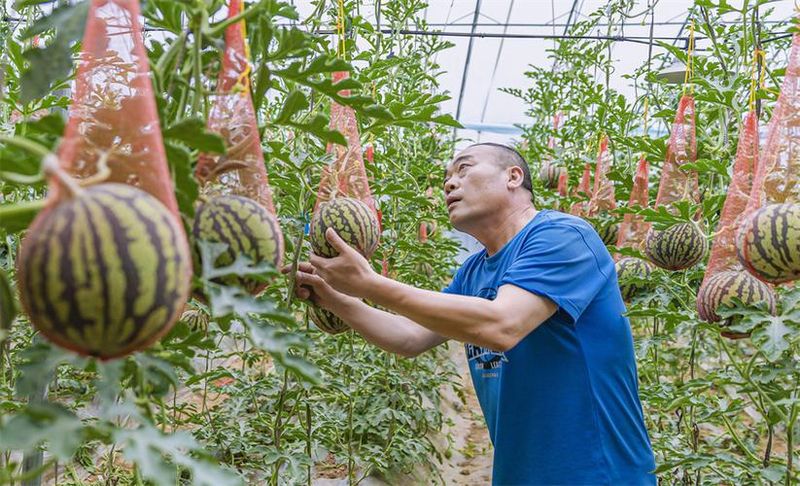
"home, look at this little watermelon. It's gonna be four or five days before it's too late. I'll let you know who the watermelon is when it's ready." guo chang hao, a member of the lidd gardening cooperative in rich town, is making a presentation to customers with a video recording of his mobile phone。
In the pick-up shed, a small, delicate, “2k” watermelon is evenly hung on a fixed melon with a rope, and is stymied with a moustache. Each watermelon has an “identity card” marked with the date of its growth and the name of the intended person, and its members are informed of the “growth record” every day through the twitter cluster。
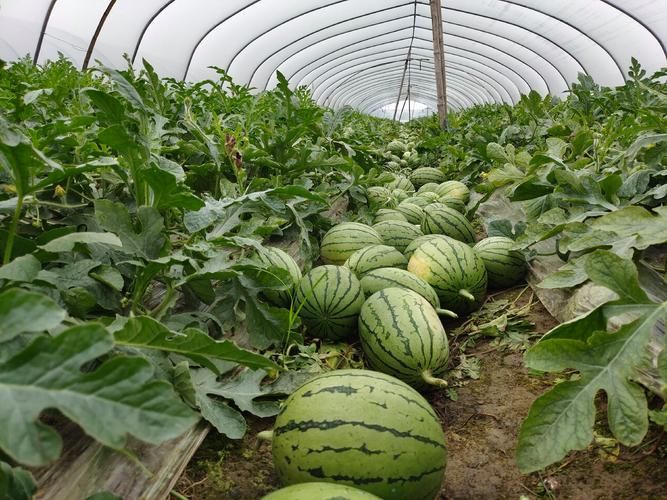
The “2k” watermelon is a good small melon species originating in japan and “2k” means 2 kg, usually from 1. 5 to 2. 5 kg at maturity. Previously, the growing variety of vegetables, such as cucumbers, tomatoes and small leaves, in the lidden gardens, was dominated by a small number of fruits and a single variety of products, which was one of the factors constraining their growth. Last year, guo was first exposed to this small watermelon during an out-of-country trip, and at the beginning of this year 100 seedlings were introduced for testing。
“if this year's trials are successful, then next year we will expand the area and introduce new varieties.” guo changhua said。
In recent years, rich counties have seized up the opportunities for rural renewal and development, making rational use of resources, and vigorously developing efficient agriculture, dominated by greenhouse sheds. The wealthiest towns, however, have focused on special farming, increasing the use of new technologies and varieties, and have now grown on a scale such as strawberries, watermelons, flamingo nuts and tomatoes. Many people have already tasted the benefits of the “sweet economy”. (shen sharp)