The acceleration of the development of an automated archival information system and the computerization of all aspects of the archives work are essential tools for the modernization of the archives and the improvement of the material technology base for the overall functionality of the archives system. The use of computers in our archives dates back to the 1970s, but it was in 1985 that our own systems were actually built systematically. Following a difficult start-up process, a clerical archive processing system has been initially established, which is constantly advancing towards the goal of information management and gradually increasing its level of equipment and application. The “gin-shin project” of the ninth five-year plan provides for the full modernization of the processing and management of archival information。
The computer archive management system generally has the functions of input, output, modification, insertion, printing, statistics, retrieval, search and deletion, while the computer also has the functions of classification, diagnosis and screening, which allow for the identification of archives. Modernizing the management of archives using computers, characterized by small space occupancy, large amount of information stored, high capacity of applications and speed of transmission, provides timely and substantial access to archival information, increases efficiency and represents a major leap forward in the history of archives management. Electronic documents appear in the archives as a new type of information vehicle, and electronic archives, with magnetic and optical materials as carriers, will gradually replace traditional paper-based archives, dominate the archives field and breathe life and vitality into the archives。
I. Issues facing archives management in the age of the knowledge economy
First, in the age of the knowledge economy, the content and outreach of archives will be expanded. The belief that archives are the corollary of the existence and development of economic patterns and that the original record-keeping is the essence of archives will never change. In the age of the knowledge economy, the information that can exist in the form of archives will be the essence of a highly condensed human knowledge and information and the intrinsic vitality of the archives that can exist. As a result, information properties have become an important feature of the age of the knowledge economy that reflects the essence of the archives, the information content of the archives has become the main parameter for assessing the driving of the archives, and the past form of vectors has not been limited to current technologies such as microcosms, machine reading, cd-roms, and networks. New carriers will emerge, and only in the case of archives. Therefore, the use of internal attributes of archival information to delineate the outreach of the archives will not lead to a multiplicity of types of archives and unclear relationships of classification, so that the system of classification of archives that has been established will become more complete, scientific and rational。
Secondly, the knowledge economy, based on advanced technological equipment, will facilitate the development of archives. The knowledge economy is the result of modern science and technology intellectualization, informatization and upgrading. Advanced and technological equipment is the material basis and technical means of the knowledge economy. Without advanced technological equipment, no intellectual or technological approach can be realized. In today's society, state-of-the-art technological equipment has been used in all areas of social production and life. The same applies to archives. Computers are already widely used for archives management, statistics and retrieval; micro-technology is of great importance in the preservation of archives... In short, the universal application of computers, cd-roms, multimedia, modern communication technologies and micro-copying technologies will greatly accelerate the development of the archives cause and place it in the advanced ranks of modern management。
Thirdly, the knowledge economy will provide modern management ideas and methods for the archives industry. The knowledge economy not only means the continuous innovation of knowledge and the extensive application of information technology, but also represents more advanced, scientific management thinking and methods of management. There is a greater need for a knowledge-based economy in its management approach to increase awareness of open archives, foster a sense of the rule of law, instil a spirit of critical succession, explore innovation and academic freedom. There is a greater need to introduce library science, intelligence-related theory, strengthen basic work, adjust supply-demand relationships, strengthen quantitative management, improve efficiency in utilization and integrate the functions of the archives department with the improvement of archives management。
Fourthly, in the age of the knowledge economy, the quality of archives workers will be more demanding. The selection of talented people is at the heart of the knowledge economy. Archivists of the substantive economic age must have high levels of expertise, natural scientific knowledge and relevant applied knowledge. In this way, advanced science and technology, management methods and excellence can be combined to maximize effectiveness in the development of a muddy archive。
Ii. Accelerating the modernization of archives management
The preparation of computer data at various stages of the basic archives management process is a major undertaking, especially for the long-standing and comprehensive archives, because of the large volume and complexity of the collections, which, in the absence of a standardized and scientific set of working procedures and methods, would render computers unusable owing to insufficient data preparation and even directly affect the pace of progress in the modernization of archives management. The combined effect of “more”, “quick” and “good” writings is largely achieved by having the following points in mind。
1. Prioritization and gradualization。
An important purpose of archives management is to make them socially useful. The purpose of computer-based archives management is to increase their utilization. In advancing computer management, a comprehensive archive should first be queued for all volumes according to their importance, value, utilization and openness, and priority should be given to those core archives that are open and socially more efficient. This will expedite the computerization of archives management and increase the efficiency of social use。
2. Sub-authorization of grades, saving time and effort。
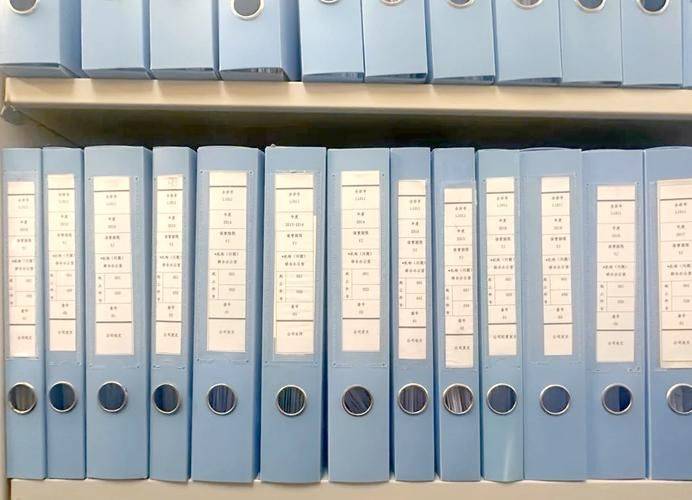
In the course of writing, the case files can be recorded at three levels: those that reflect a single problem or the low value of the examination, those that contain several files with the same content and are grouped together in one volume, and those that are important or that reflect a large number of problems. This approach not only reveals the subject matter and characteristics of the archives, but also reduces the number of entries and entries, saving time, human and financial resources and efficiency。
3. Disaggregated, making full use of the original foundation of the archives。
For those files with a better base and full catalogue, they can be classified directly on the full catalogue at the time of writing. For special forms of archives, such as “room slots” and “cases”, computer programs can be used to directly enter names, addresses, time-use catalogues and then to give a uniform classification number. This type of utilization of the original foundation of the catalogue of archives can significantly increase the speed of writing by reducing the number of entries。
4. Education on the quality of archival information should be strengthened。
Expedite the establishment of an archival information network. Attention needs to be paid to strengthening the awareness of archives subjects and access to awareness education, using the awareness of compliance of archival information, enhancing the confidentiality of archival information among archivists, disseminating awareness and updating the awareness of conversion. Improved use of modern technology and equipment, access to archival information technology and an armed archival information network of facilities, and continuous enhancement of the effectiveness of archival information。
5. Standards are to be developed, implemented and revised scientifically to progressively standardize archives。

The application of computer technology is central to the modernization of archival technology, while the efficiency of computers is based on the standardization of archives management operations. Computers could not be managed in the absence of unstructured and systematically organized files, and even if they could be managed, they would be significantly less efficient because of the complexity of running procedures. Therefore, in order to adapt to the requirements of the knowledge economy, the modernization of archives management must be accelerated through the standardization of archives。
Service awareness needs to be strengthened and service areas broadened。
The traditional model of heavy management and light use needs to be removed from the “closed” to the “open” and proactive orientation to the main battlefield of the knowledge economy, shifting the focus of archival work to the trajectory of providing quality services for the knowledge economy and the development of causes. Archiving extends wherever the knowledge economy is developed. While raising the overall profile of the party bodies, it is important to favour enterprises and scientific and technological establishments and to include the non-public sector of the economy in its services, while focusing on the public sector。
7. Development of a high-level pool of archives and information professionals and innovative high-level management。
It is important to prepare, as soon as possible, information professionals with knowledge of expertise, information technology, integrated working skills and new, high-level managerial skills for adequate preparation for the advent of the knowledge economy。
In short, the rise of the knowledge economy offers an opportunity for the archives community to meet the challenges and opportunities; by catching up with this wave, we will close the gap with the advanced countries and make a difference in the development of the knowledge economy. It is our belief that, thanks to the joint efforts of all our colleagues in the archives, we will write the latest and most beautiful articles on this white paper of the new century, drawing the latest and most beautiful drawings。