I saw the future of agriculture in china at the succubus
Vegetables on chinese cores and steel farmers working on the ground
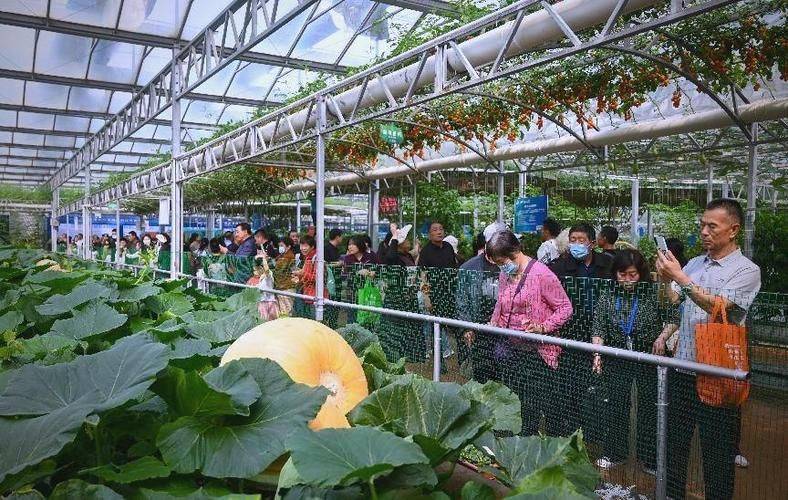
On 20 april, the twenty-seventh international vegetable science and technology fair in china (hereinafter referred to as the "citizen") was held under the theme "green technology for the future" and was inaugurated at the high technology demonstration garden for vegetables in the life light city. Research elites, industry pioneers and growers from around the world have gathered here for a 40-day modern agricultural event。
Here, one will see the future of chinese agriculture: seeds have the chinese core, robots take control of the fields, and the “suspensive light model” is spreading all over the world
New species:
More than 2,600 new species are visible
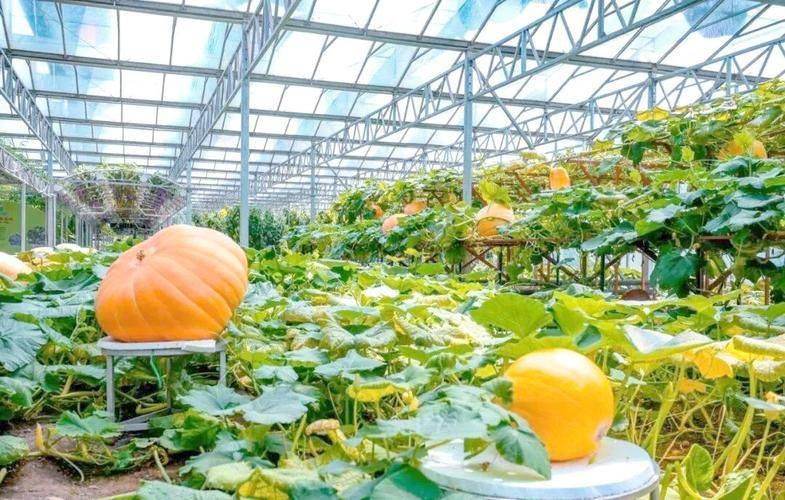
More than 2,600 new good varieties competed in the core exhibition area of the fair, ranging from the perfectly sweet cherry tomatoes to the high-yielding and violet eggplants。
The director of the centre for research and development of life-ocean vegetables of the chinese academy of agricultural sciences, feng sikang, said: “we cultivate new varieties in order to get consumers back `the taste of childhood' and to make the bellows of the vegetable farmers more greasy.” at expo no. 5, the mid-life series of tomatoes condensed the breeding cycle by 30 per cent through a full genome selection technique, while collating multiple anti-disease genes, achieving the ideal of a “lower drug, more stable production”. The next “25ep-326” eggplants, assisted by molecular markers, find a balance between strong resistance to disease, good quality and high yields, and are expected to reduce pesticide use by half。
The business’s market sense of smell is confluenced with the depth of research in higher education. “it has a much higher vitamin c content than ordinary peppers, with a head price of $8 per pound, and has now spread 70,000 acres in the south.” in front of the agricultural development fair, staff member guo peng flying made a presentation of a sugary, sugary, fruity pepper, and ordered agriculture in a way that guaranteed farmers' incomes, allowing the good species to move quickly from the stand to the field。
At expo no. 9, liu jie, director of the jasmin college of agriculture of the technological institute of yusaka, spoke about how genetic editing techniques could be precise in “sculpting” crops. “traditional breeding can take more than a decade to improve a fissure form, while genetic editing can significantly shorten the cycle and actually achieve `whatever'.” her team developed the "screen-lixed" tomato, which is 16 years old and tastes amazing, and has significantly increased its resistance to the disease through technical adaptation. Currently, the college has a number of autonomous intellectual property varieties, such as the “zanjiang” series of peppers。
Behind the back of a grain of seed is the crop chassis of growing lifelight. Today, lifelights have autonomously chosen 305 new varieties of vegetables, with a growing capacity of more than 2 billion plants in their years, as a source of radiation throughout the country。
New technologies:
The robot is growing the food. No one's on the farm. Form
If seeds are the “chips” of agriculture, then smart equipment is a strong “tips”. At the fair, smart equipment such as vegetable-growing robots and human-service robots became “stars”, depicting “unmanned” farms for the audience。
In the exhibition space of hwang lake express mantis smart devices ltd., a pharmacological robot is operating with flexibility. The company's sales manager for the north china region, hu xinqing, told reporters that “it uses ultra-micro-mog technology, has a high utilization rate of liquids and has a capacity of up to 100 acres a day, and can also be effective in reducing the fluid transport and the environmental burden”
On the other side of the show, the vice-president of sioux county polar robotics technology ltd., xianhui, is displaying a smart double-sided pharmacist machine, “the fog drops up to 40 micrometres, saves half of the water, saves one third of the medicine and, more importantly, separates the human medicine and secures the operator”
The autoplant robot, developed by the institute of technology, is impressive on the basis of millimetre-level positioning precision and non-destructive transfer capacity. The tomato-picking robot is equally visible, carrying a high-resolution visual system and a soft biomimic arm, able to navigate autonomously between vines and vines, with precision in identifying ripe fruit, and completing the capture and cutting with soft action. “these `stretch farmers' are gradually liberating farmers from heavy and repetitive labour.” ma jia xin, dean of the institute of artificial intelligence at the institute of technology and technology。
And these are the day-to-day scenes of life-smart agriculture. The vice-president of the chinese academy of agricultural sciences, ye yujiang, described the development by the chinese institute of agriculture of an ai planting model, intelligent surveying robots, etc., as having a prevalence rate of over 85 per cent for the construction of new sheds in lifelight。
New mode:
Green expeditions from grassland to desert
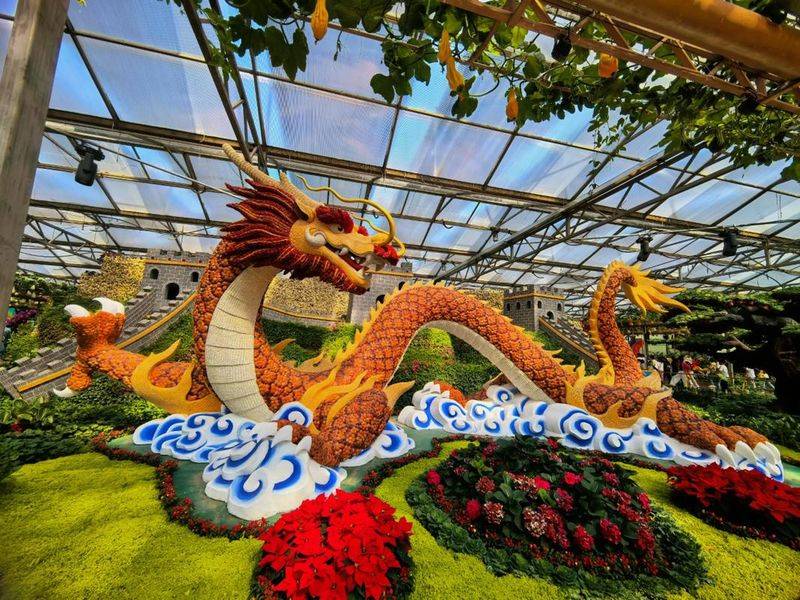
The sight of life is not more than the eyes of the family. With vegetables as a medium and technology as a bridge, a mature “lifelight model” is accelerating towards the wider world。
On the grasslands of inner mongolia, a project entitled “high-tech exhibition park for inland mongolian starlight agriculture”, with a total investment of 380 million yuan, has absorbed the industrialization and standardization of lifelight. The project manager, mong lian, presented the deep integration of intelligent agriculture, soilless cultivation and immersion, aimed at creating new poles for integration between agriculture and the cultural brigade. “when the project is completed, 500,000 visitors are expected to be received each year, providing more than 300 jobs.”
In the depths of the desert in abu dhabi, the “green silicon valley” greenhouse, built by the sun-ray vegetable industries group, is vibrant. General tang jiu said, “in the heat of the heat, only our base can stabilize the production of tomatoes.” in the face of local extremes, lifelight teams have adapted indigenous technologies to integrate ai cultivation, water-saving irrigation and photovoltaic agriculture, increasing water utilization and production to more than three times the traditional pattern. The five-hectare park produces a large quantity of high-quality vegetables and vegetables on a daily basis, with short supply of the products. Mimid, head of partner silal, evaluated: “china's technology has not only adapted to extreme conditions, but has increased efficiency and added value.”
“from the precision of smart greenhouses to the groundbreaking progress of molecular breeding, lifelight presents not only the abundance of vegetables, but also a future-oriented agricultural philosophy.” pakistan was the guest country of the fair, and at the opening ceremony its ambassador to china, khalil hashmi, stated that the technology here is the much needed key to the modernization of pakistan's agriculture, and that “i hope that the seeds of the `suspended light model' will also take root in pakistan's fields”
At present, more than 30 businesses have taken root abroad, and more than 300 modern plantations have been built in more than 40 countries and territories, with annual turnover approaching $3 billion. (reporter wang jia's voice)