


Form characteristics
Yun jindu is a regular green bush or a little chorus, 3-12 metres high; the main dry bends, the bark of the tree is brown, the form is split; the young branch is green, the first gland is brown; and the old one is gray. The last winter bulges a wide egg, about 1 cm long, without hair. Leaf thick, long circle to long circle ellipse, 8 - 14. 5 cm long, 3 - 9. 2 cm wide, front-end blunt to near circle, rare sharp, base circle or amputee, thin close to shallow heart, deep green above, luminous, light green below, small hair visible under magnifying glass, small dents in the middle veins, dents in the lower part of the veins, 14 - 16 pegs in the lower part, flat in the lower part of the cavity; leaf-spread column, 1. 8 - 4 cm long, yellow green and thin glands of the glands 3。
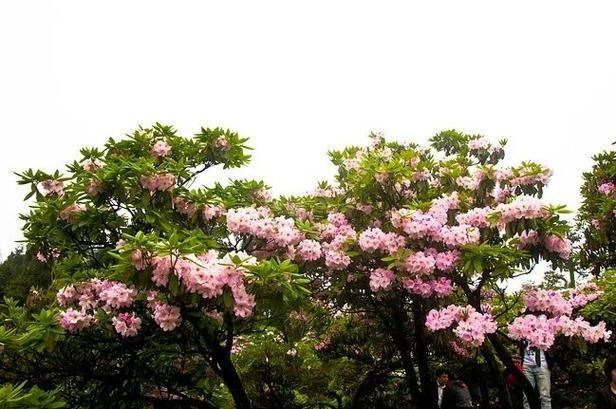
The main umbrella is loose, with 6 to 12 fragrances; the total axle is 3 to 5 cm long, light green and how many glands are gland; the total is 2 to 3 cm long, light green, short-handed glands are glanded; the flowers are small, approximately 1 mm long, slightly thick, with shallow fissures of 7 on the edge, with glands of gland; the crown cavity bells of 4. 5 to 5. 2 cm long, with a diameter of 5 to 5. 5 cm diameter, pink, with a thin glanding gland, with a fisssure of 7, broad eggs, 1. 5 to 1. 8 cm long, top circle or wavelength; the males 14, with varying length, 18 to 30 mm long, flower white, hairless, with flowers long elliptical shape, yellow, 3 to 4 mm long; the house cone, with a length of 5 mm long, a diameter of 4. 5 mm, light green, with a cyanoid, with a cyanoid, 2. 5 mm wide。
A long rounded egg, with a long rounded elliptical shape, a straight or slightly bent, 2. 5 to 3. 5 cm long, 6 to 10 mm diameter, brown, ribs and glands. 4-may, 8-october。
Habitat of origin
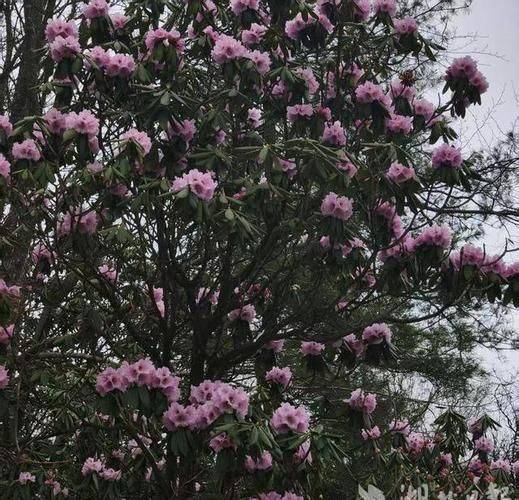
Born 620-2000 metres above sea level in the ridge or under the forest. China's capital is xuanxi, hubei, hunan, henan, anhui, zhejiang, jiangxi, fujian, guangdong, guangxi, sichuan, guizhou and north-east yunnan. Model samples were taken from near zhejiang ningbo (plant growing plant)。
Growing habits
The flowers are produced in high altitudes, cool, wet and dry. The acid soil is required to be rich in decomposed, estranged, wet and ph between 5. 5 and 6. 5. Some species and horticultural varieties are more adaptable, drought-resistant, poor and soil ph can grow between 7-8. However, there is poor growth in the adhesive or permeable soils. There is a certain demand for light, but it does not tolerate exposure, and in the summer and autumn leaves shall be set up to cover the sun and the ground shall be sprayed with water. The stinging of the guacamole is usually in the spring and autumn seasons, and is dominated by it. The most appropriate growth temperature is 15-20°c, flowering in march-may and guacamole resistant to trim. In general, shears are performed before may, when new hairs are produced, when buds are formed, and when later, when flowers bloom。
Reproduction
Plumbing is the most widely used method of reproduction in lumber cultivation, typically cutting new, robust, half-wooded branches in may-june, approximately 5-8 cm in length, cutting down the lower leaves, retaining 2-3 pieces of the top leaf for intubation, preferably in the stem, leaching with a solution such as luminous butric acid or abt root powder, and then in acid soil with a perfluent and congested content, with temperature maintained at 20-25°c, shaded and often sprayed to protect fresh roots。
The breeding of young branches is done by cutting off valuable varieties, such as seagulls, which are difficult to live, by cutting them up to about 3-4 cm, cutting the base into wedges, using machete as wedges, and using twigs, then binding them with plastic membranes under the cavity and covering them with plastic bags。
Plantation techniques
Fertilizer water management
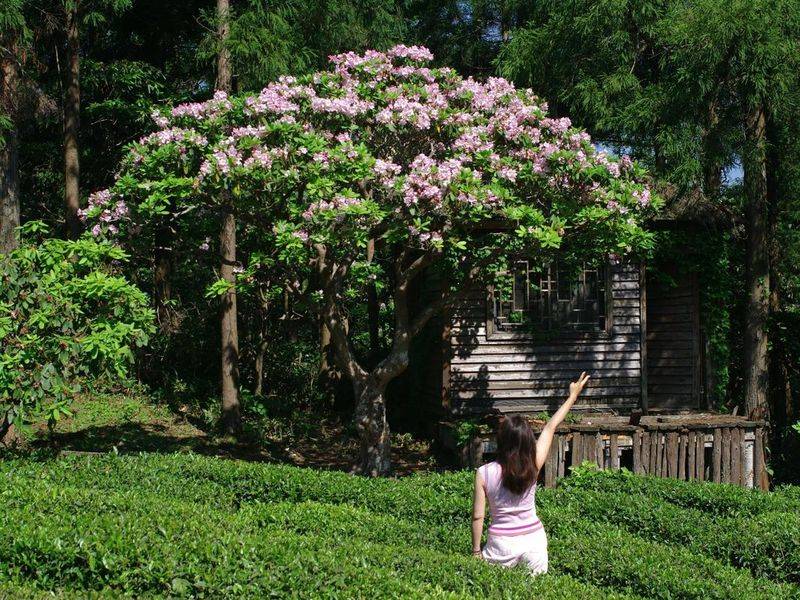
Doughnut growth and development requires acid soil. Because of the alkalineity of the soil in the north, the soil in the basin is corroded with corroded corroded soil such as pines. The roots of the swarms are stale, with strict requirements for fertilizer concentrations and water quality, and the principles of proper and low-quality fertilizer are followed. Phosphorus fertilizer can be applied once a month before the spring flowering to stimulate the growth of branches and buds. A mixture of 1 to 2 doses of nitrogen phosphorus is applied after the flower. One and two phosphorus fertilisers were applied during the pregnancy buds in september-october. The demand for fertilized water is higher in the long-lived and flowering seasons, and it is controlled during winter hibernation and slow summer growth in order to prevent decaying roots. In a wet and cool environment with dry weather in the north, the sprouts should be watered and sprayed in time to maintain high air humidity. Flower water is better served by fattening and rain water, such as small amounts of iron sulphate and vinegar used for regular water. Watermelons or tomatoes can also be cut into small blocks, which also has good effects on the quality of soil and flowers。
Integrative trim
In order to accelerate the growth of plants, doo-chuls often promote new branches by heart, and early accumulators of flowers and their influence on their shapes, so that they may not only be colorful in the current year, but also grow in the coming years. The strong growth and growth of the plant and the reduction of its visibility and commerciality have been severely affected by the growth of the branches, which need to be adapted through their repair. The branches are usually fixed after the spring and in the autumn, cutting out the dead branches, the tilt branches, the long branches and part of the cross branches, avoiding nutrient consumption and enriching the whole plant。
Time control



