Did you find that in recent years there has actually been a price earthquake in the fruit industry。
Housemen, when you recently went to a fruit shop, did you notice that there were some “nobility fruits” that were once too high to climb, and that the prices became so popular that people were surprised
Sunshine rose grapes are no longer a luxury for sale, nor are car twigs for purses, which used to be a hundred pounds short, but are now priced at “floor price”。
This is no doubt a “fruit feast” for our consumers, who, after half a day of buying these fruits, can finally do it with pain and speed。
However, behind the price raging was a profound change in the fruit industry。
Today, let's talk about why these once nobility fruits fell down the altar and what has changed in china's fruit industry。
The price of aristocratic fruit jumps: consumer carnivals and merchants' sorrows
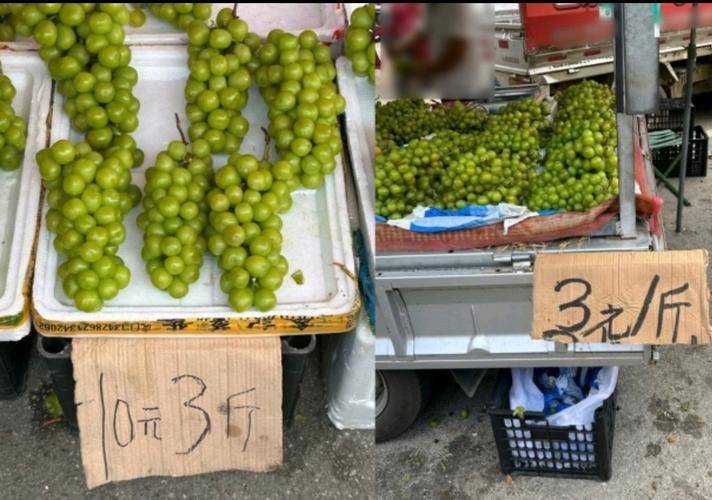
Walking into the fruit shop, the sun roses pile became a small mountain, at a price of $3 a pound, the cart was only $15 a pound, and blueberries, and the roadside stall even sold $10. 3 a box。
This price, compared to the previous one, is quite different。
Once, it might cost a day to buy a pound of sun rose grapes, and now it is easy to “freeze the sun roses”。
It is no longer a “luxurious item” that you can buy for the holidays, but buy a few pounds whenever you like。
It's certainly a good thing for our consumers to finally be able to eat these once-high fruits。
However, a different view was expressed by netizens. In their view, this was not a price collapse, but a return to normal price levels。
It is also assumed that these fruit prices were previously prohibitively high, largely due to market speculation and scarcity。
Now, with increased cultivation techniques and production, the return to normal prices is also a necessary trend。
It's like a superb star, who loses the halo and returns to its true level。
For some fruit traders, however, the price storm was a disaster。
For example, in january last year, it also shouted the golden decade strategy, which plans to raise hundreds of billions of yuan over the next decade and to open more than 10,000 shops。
But who would have thought that after just one year, the situation had changed dramatically。
In 2023, the number of establishments fell from 6081 to 5116, resulting in a net decrease of 965 and an average of close to three a day。
This speed is more exciting than a roller coaster, and another high-end fruit brand of wine and fruit is not spared。
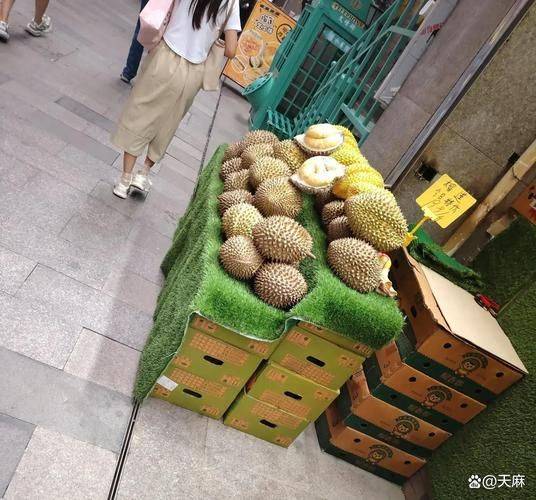
Its core business is durian, which sells 25 million durians a year, and the rate of imported durians from thailand and viet nam is probably theirs。
However, in march of last year, the wine fruit was stopped by the hong kong authorities for failing to publish the 2023 annual newspaper on time。
Why not publish it? The rate is probably too bad。
It's like a student who's had a bad exam and is naturally afraid to show it to his parents。
Once a noble fruit: how much is the price
Let's start with sunshine rose grapes。
This is a hybrid grape variety grown in japan, originating from okayama county, japan, which has been introduced into china since 2007 with its main focus on soft skin。
When we first entered the chinese market, the price of the sun rose grapes was quite impressive。
At the highest cost, the high-quality fruit sold 500 pounds, and the average price at the major supermarkets exceeded 300 pounds。
At that time, only middle-income families occasionally bought or gave gifts, most ordinary people who could not afford a pound of money a day and ate more of another kind of giant grape。
The pompous grapes, though they are no better than sunshine roses, have a large amount of juice and a very good price of $5,600 a pound, so they have long occupied the market for grapes。
In recent years, however, the supermarkets have seen less and less and more sun roses. Why? Because of the price of the sun roses。
Sunshine roses sold up to $500 a pound in 2015, fell to $25 a pound in the first quarter of 2021 and to $10 a pound in the fourth quarter of 2023。
Now, according to data, the price of the main source of sunshine rose had fallen by $5 per pound as at 23 may。
Moreover, the central listing of sunshine roses takes place in june and july of each year, meaning that there is room for decline in this price。
Say blueberries again。
China's early blueberries were imported mainly from peru and chile. In 2018, the price of a box was $30, with only 125 grams。
Most families are not expected to take a look if they do not rely on the name of the eye protector。
After all, it's too expensive for ordinary households。
However, the time has come for border crossings, and now in beijing's new market, domestic blueberry wholesale prices have fallen to between $8 and $15 per pound, and roadside stalls have pushed prices to 10. 3 dollars per box, with prices contracting by about 90 per cent over peak periods。
Now blueberries are no longer the exclusive preserve of nobility, but have entered thousands of homes and become popular foods。
It is in the fruit of the nobles, a decent one。
In the early years, china had imported cars mainly from countries such as the united states and chile, whose prices depended on specific varieties, origin and size。
The larger the head, the larger the same origin, the smaller the same coin, and the largest more than 3. 2 cm in diameter。
According to data from beijing's new site, the minimum price for a car was $130 a pound in october 2021, and about $5 for a car。
But this year, prices have jumped to $18 a pound. However, compared to $4 per pound of sunshine rose, there's still some "decent" in the car。
The price of aristocratic fruit jumped: scarcity broken down as a central cause
The price of these aristocratic fruits jumped in just a few years, the core reason being that scarcity was broken。
Much of the aristocratic fruit is indigenousized and produced。
The reason for the high price of many fruits is simple, because imports from abroad are inherently scarce, combined with transport and channel costs, and this price naturally goes up。
Well, if we grow it, then we can cut the price
In the case of sun roses, farmers started growing before 2010, but the technology was not up to date and the quality was more general。
By 2016, only 101,000 acres had been cultivated throughout the country, but the outbreak began。
As management and breeding techniques have improved, the taste of the national sun roses has become better and market acceptance has gradually increased。
By 2023, the area under sun rose grape cultivation had reached 1. 2 million acres throughout the country, which had increased 12 times in seven years, with almost all 34 provincial districts in the country。
Most importantly, china has a vast territory with a large geographical latitude, and sunlight roses can be supplied almost year-round。
Sunshine roses in yunnan are on the market from march to june each year, from june to july in guangdong and guangxi, from 8 to october in hunan, sichuan and chongqing, and from november in henan and from december to february in yunnan and guangxi。
Moreover, the weather conditions in guangxi and yunnan are better, and sunlight roses can be cooked twice a year。
Look, there's a growing area, and the maturity cycle breaks the seasonal limit
Blueberries are similar。
By the end of 2023, the number of provinces growing blueberries in the country had expanded from 10 to 27, with an area of approximately 1. 1 million acres, three times greater than five years ago。
Yunnan is also able to provide uninterrupted supply throughout the year for 12 months, with acre capacity running to 2 tons and a province contributing nearly half of the country's production。
The chinese agricultural institute has also produced new varieties, such as blueberry i, which is on-line and can cut down 40 per cent of the planting costs。
As a result, the price of these nobility fruits inevitably declined。
There is also the durian, and although china is not yet fully self-sufficient, it is also working in this direction。
In 2023, the rate of cultivation of durians had risen from 60 per cent to 95 per cent, and the area under cultivation was close to 40,000 acres, of which 4,000 were already at the end of the period, and we were getting closer to their freedom。
In 2023, china imported nearly $18 billion in cars, of which chile imported 96 per cent。
Seeing how good it is to sell, chile has been planting car twig trees in recent years。
In 2000, chile had only 3240 hectares of ricket plantations, and by 2022 it had expanded to more than 61,000 hectares, almost 19 times。
On the other hand, chile has replaced air transport by sea, which, although said to take more than 20 days, has reduced the cost per shipment by approximately $200。
Once production is up, transport costs are down and prices are down。
Price and reputational double-edged sword: the fear of a drop in quality
However, with the price, there is a reputation。
A lot of people on the internet are spitting about how sun roses don't smell like grapes, they're either odorless or not sweet。
This year's yunnan blueberries are not as good as they used to be. It's not the sweetness of our mouths, it's the real change of fruit。
The problem lies in eight words: the degradation of varieties, and management。
In the case of sun roses, it was a high-end variety in japan, but in 2002 japan blocked the export of seedlings, which it had to cultivate by cutting。
However, after several generations of incubation, the varieties are degraded and the taste changes naturally, which is the reason why they were not good before。
On the other hand, the management was also responsible for the collapse of monuments。
According to industry sources, the best acre production of sun roses should be in the range of 2,000 pounds, with about 40 fruit grains on a single ear, so that both head and mouth can be balanced。

However, some farmers are blindly pursuing high yields, with an acre production of 56,000 or even 78 thousand。
In order to sell a good price early in the morning, some of the farmers will pick the fruit before it matures。
Production is on the roll, but quality is hard to say, and when quality is not sought, the taste collapses。
In fact, in addition to these aristocratic fruits, there are many fruits which, although not noble, are slowly becoming difficult to eat。
Like tomatoes, when i was a kid, i remember they were soft and sour, and they were really good in the summer。
But now the tomatoes in the market are hard and bad and they don't smell at all。
A number of science studies have also revealed the truth, with tomatoes now having a sugar ratio and soluble sugar content that are lower than old varieties, doubling their hardness。
Why? Because the old tomatoes are delicious, but they can't afford to be stored, they don't fall, they turn into ketchup on the way to transport。
The improved version of the hard-on, which is more transport- and storage-resistant, has become the dominant market force, and it is a bad currency to drive away the good currency。
The future of the fruit industry: inclusive balance with quality
The price reduction is certainly good for consumers. After all, who doesn't want to spend less on more fruit
The price drop is only the first step in making fruits delicious for more people, which is the real meaning of inclusion。
It's like milk, if it's just watering in, and all you drink is diluted milk, it's not really inclusive。
The real inclusion is that everyone can afford unwatered milk。
However, prices have fallen and quality has to keep up in order to be able to stand on its feet。
If only acre production, with no regard for taste, was cost-neutral, it was not just price, but confidence in the species。
Once the word "favourable" had been missed too many times, it would have been easy to remember。
For the fruit industry, future development needs to find a balance between inclusion and quality。
On the one hand, it is necessary to make fruit prices more pro-people-friendly by reducing costs through technological innovation and scale-up
On the other hand, quality management should be strengthened to ensure the taste and nutritional value of fruits and to make consumers comfortable and happy。
Last words
Fruit is an indispensable part of our daily lives, and it not only brings us good food, but also contains a variety of nutrients。
We are, of course, pleased to see the price of the aristocratic fruit jump, because that means that we can enjoy these tastes at a more affordable price。
But we cannot ignore the decline in fruit quality, hoping that the fruit industry will be able to focus more on quality and consumer needs while pursuing economic benefits。
It is also possible to keep high quality while making fruits cheaper, which is the most desirable end point for the civilianization of noble fruit。
Let's look forward together to a better future for the fruit industry so everyone can eat cheap and delicious fruits