



Science and technology workers create reference works
Type of technical application interpretation
Type of work: general articles
This paper, written by xu suk-yung of the six sons forest fields of the state hoangyang county, liaoning province, is part of the forestry technology promotion programme and is particularly suitable for farmers, forest scientists and extension workers。
The work focuses on the rosary fruit of the country's unique woody oil tree species, known as the “oriental tree”, which is linked to technological processes, with modules detailing key techniques of plant management, such as seeding, management of transplantation and management of care. The work steps are clearly described, the data are accurate, the language is clear, the expertise is translated into operational guidelines, scientific, popular and practical. Its creative thinking on the subjects of the sun-yang industry, on the criticals of the problem, and on key technologies could serve as a source of inspiration for generic creators in areas such as agriculture and forestry。
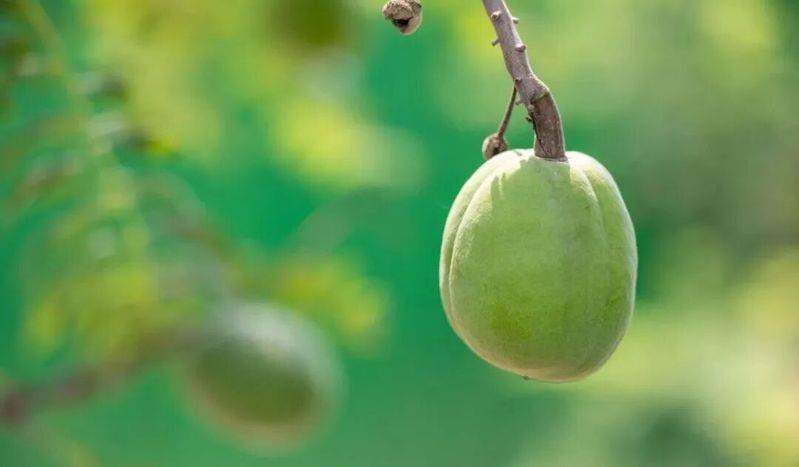
The coronal fruit, which is a disease-free child, is a unique tree species of woody oil, which has high economic and ecological value and is mainly located in the northern and north-eastern regions of the country. The roots are well developed and resilient, capable of growing steadily in arid and cold areas, and are important for improving the ecological environment of the region, maintaining soil and water, and protecting against wind and sand。
Images of copyright in the library, reproduction of use that may trigger copyright disputes
Plantation
Crop
From mid-august to early september, good monolithic species of trees of 10 to 20 years old, strong, productive and disease-free age were selected. The harvested fruit is placed in the cooler ventilated area, with a thickness of 10-15 centimetres, which is rotated one or two times a day, and the seeds are removed artificially after the skin has been cut and placed in a dry ventilated warehouse。
Selection of nursery grounds
The nursery grounds need to avoid low-lying water accumulation, heavy saline (more than 0. 3 per cent salt) and soil adhesive areas, choosing whether to be flat, irrigation-friendly, well-drained, sandy or light-coated soil above 50 cm thick。
Planting seedlings
In mid-april, seeding usually takes place five to seven days before planting, so that the seedlings are fed with bottom water. Before seeding, 30 kg of iron sulphate per acre (667 square metres) was sprayed to prevent desolation. The seed is spread evenly into the ditch with a distance of 5 to 7 cm and an acreage of 15 to 20 kg. The sowing covers 2-3 centimetres of fine soil, which is slightly suppressed and allows the seeds to be in close contact with the soil。
Infant seed management
1 fertilizer management. When the seedlings are released, the amount of water will be controlled and the principle of “a small number of times” will be followed, each time the water is poured in order to avoid the soil being wet, which results in rotting the neck and falling the seedlings. During the booming period, young seedlings need to increase the supply of fatty water by watering it once every 15 to 20 days, with 15 kg of urea per acre followed each time they are watered with water, and by reducing the use of nitrogen fertilizer by 10 to 15 kg of potassium phosphate per acre to promote woody saturation. Water and fertilization were stopped after early september, allowing trees to fall naturally and increase their resilience to the cold. In early november, before the soil was frozen, one freezer of water was used to ensure a safe winter break for the roots。
2 growing grass. In a timely manner, weeding should take place at a minimum depth of 3 to 5 cm (to avoid root damage) and 5 to 8 cm (to avoid root damage) during the boom period. Weeding is based on the principles of “early, small, except” and, to the extent possible, manual extraction is used to reduce the competition of weeds for the nutrients of seedlings。
Plantation management techniques
The selection and the ground
1 selection. The following conditions are to be met for a forested land: layer thickness of 50 cm or more (the thin layer needs to be improved), dry terrain (upgrade is less than 1,500 m, slope is less than or equal to 30°), backwind to the sun (to avoid wind vents and to prevent springing in the winter); preference is given to a slope or semi-moderate slope (15° ~ 25°) and to plots with slopes greater than 25°; the ph value of the soil should be 7. 0 to 8. 5, with salinity of no more than 0. 3%; and the blocks with low-lying water, heavy clay and severe pests should be avoided。
2 whole. One is the strip. For hilly and sandy areas, strips along the contours, with a width of 1. 5 to 2. 5 metres and a range of 3 to 5 metres (depending on the planting distance), with a depth of 25 cm, with organic fertilizer of 1,500 to 2,000 kg per acre, and with a slope greater than 15° to build small earth in order to prevent soil erosion. Two is a piece of land. They are applied to mountainous areas, where they can be dug from 80 to 100 centimetres and 60 to 80 centimetres deep, where the excavated topsoil is stored separately from the heart soil, where 10 to 15 centimetres of corroded or weeds are laid at the bottom, where they are filled with a mixture of topsoil and fertilizers (10 to 15 kg of organic fertilizer per den, 0. 5 kg of calcium per phosphate) and eventually filled in the core soil, watered and planted in the following spring year. Three are fish pits. For quartile mountain areas (spread greater than 25°), semi-circle pits are dug at line distance, with pits 100 cm long, 60 cm wide, 50 cm deep, pits 20 to 30 cm high, with a small amount of organic fertilizer applied inside the pit to improve local soil conditions。
Plantation density
Mountain or sand parcels are planted 111 units per acre at a distance of 2 m x 3 m; hill or plain parcels are planted 56 units per acre at a distance of 3 m x 4 m; and well-rich plots are planted 33 units per acre at a distance of 4 m x 5 m。
Plantation methods
The time of planting is mainly spring. Before planting, chooses to grow a healthy tree of 1-2 years, with as much earth ball as possible, and, if it is a naked seedling, immediately wraps the roots with wet straw curtains, covering the canvas during transport and preventing the loss of water. When planted, the cave is dug at a fixed distance on a well-established plot (if a piece of the ground is ready to be used directly) with a depth of 50 to 60 centimetres, a diameter of 60 centimetres and a bottom of a cave of 5 centimetres of wet sand. The tree is vertically placed in the den, with the roots stretching, with the ground being filled, with the ground being filled, with the ground being filled, with the ground being filled and the ground being laid. Once planted, the root water is fixed to ensure that it is ploughed and then filled with 2 to 3 centimetres of thick soil or covered with 5 to 10 centimetres of thick straw。
Care management
Soil management
Soil management, mainly tillage and den expansion, will be required as of the second year of planting. In the autumn, tree-crystaling wheeled soil was used to expand the area over the years and to increase soil aerobics. It's usually 20-30 centimetres in depth to avoid damage. When cropping, organic matter such as falling leaves and weeds can be buried deep in the soil, increasing soil fertility. Before the soil freezes, the rims of the tree canopy are dug up, 30 to 40 centimetres wide and 40 to 50 centimetres deep, and the topsoil is mixed with organic fertilizer into the ditch and then refilled with the heart soil。
Fertilizer management
The pursuit of nitrogen fertilizer prior to the flower promotes the gravitation of the flower, usually with urea of between 0. 5 and 1 kg, either by cycling or by radiation. Potassium phosphate fertilizer applied during the period of fruit expansion to improve the quality and production of the fruit, 0. 3 to 0. 5 kg of potassium dihydrophosphate per plant, also applied in ditches. The application of fertilizers requires timely watering, which is appropriate for wet root-spreading layers of soil. Water needs to be properly watered during new growth, flowering and fruit expansion periods; in other periods, water levels are adjusted to soil conditions and weather conditions to avoid root decay caused by soil overwetting or water shortages affecting plant growth。
Shear management
The larvae drys at an altitude of about 40 cm. In the year of the dry season, a summer cut was scheduled for june and july, with three to four branches and one central backbone, shorting the remaining branches and removing the twigs. The main branch should be evenly distributed, with a moderate angle, and usually 45° ~ 60° with the backbone angle. When the remaining branches are short, the branches are kept 1/3-1/2 long. The winter cut is not re-cut, the short-cut branches of summer are dumped, the branches of excessive growth are retrenched with a strength of one quarter to one third of the length of the branches. In the following year, emphasis was placed on the cultivation of branches, which were designed to promote the growth of branches, and on the growth of branches up to 30 to 40 centimetres。
Planning production



