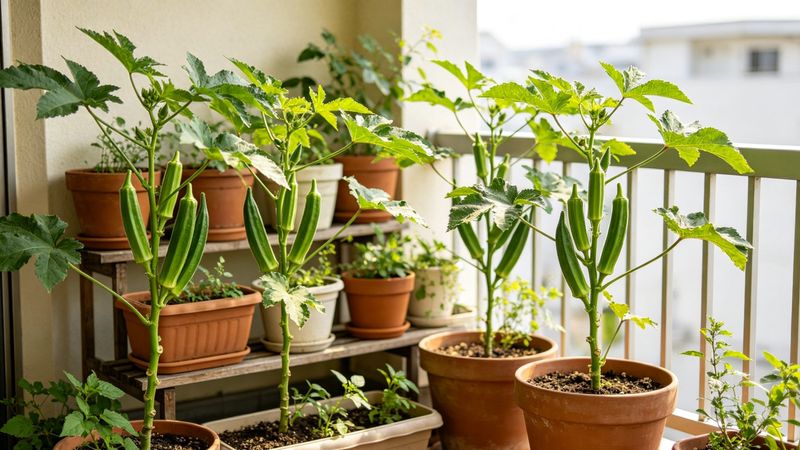
Sesame, an important oil crop in the country, is known not only for the high application value of its products, but also for its short reproductive period, which places itself in the crop cultivation system. Moreover, it is a high-quality honey crop, combined with beekeeping, which undoubtedly adds additional economic income to farmers。
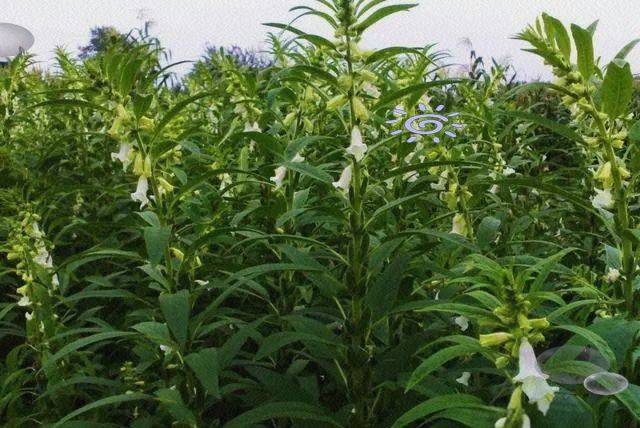
Election and rotation
In view of the unique growth needs of sesame, preference should be given to dry, well-drained and well-traffic sandy or light-coated soil in the selection of fields. Because sesame roots are shallow, mainly absorbing nutrients in upper soils, long-term succession leads to soil surface nutrient depletion while increasing the risk of disease. In order to ensure healthy growth of sesame, a reasonable rotation system is essential and is usually recommended at least every two years。
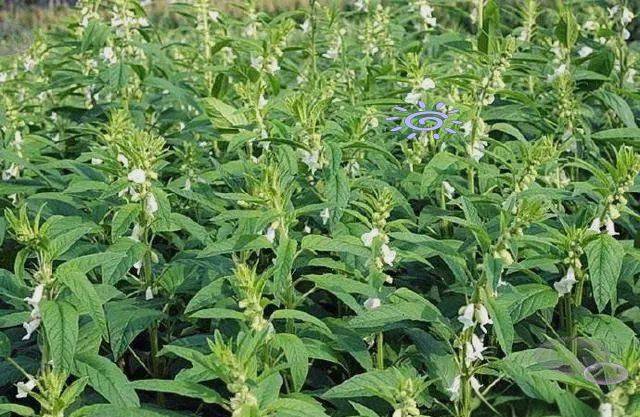
Ii. Precision and flood control measures
Soil farming is essential during sesame cultivation. Due to the small size of sesame seeds, there is a need to create the right conditions for growth and soiling. This requires us to perform precision farming to ensure that the soil floor is sufficient and permeable, that it is impenetrable, and that it is flat, fine and impurity-free. Especially in the summer sesame cultivation, the seasonal features of high temperatures and rain demand that we seize the time, quench the land in a timely manner and plough it well. Waterproofing and timely drainage are also required in the fall-prone areas to ensure steady sesame production. Specific flood-control measures may be flexible, depending on local conditions, such as the use of crochet or high-precipitation techniques。
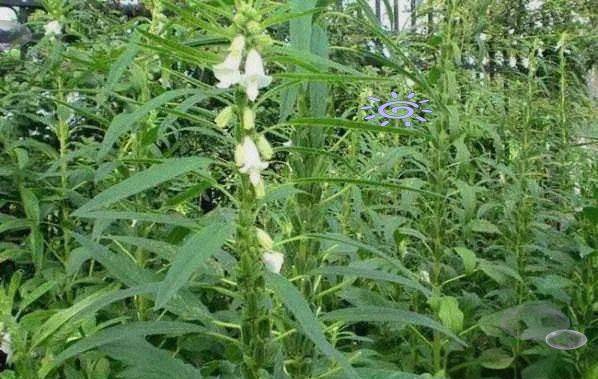
Iii. Rational fertilization
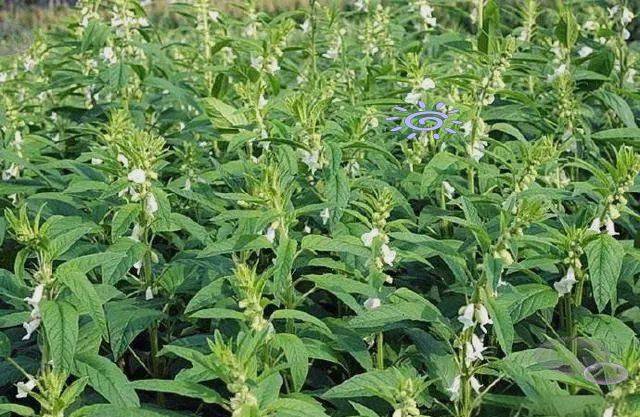
The fertility of sesame determines its fertilization strategy. Sesame growth is slow during the sapling season but will accelerate rapidly once the flowering period has entered. The growth rates of sesame organs vary significantly between reproductive stages, as do the accumulation of dry matter and nutrient absorption. Due to the relatively short reproductive period of sesame and the concentration of fertilizer absorption, especially after primary flowers, the rate of absorption and absorption increases sharply. In addition, different varieties, production levels and cultivation conditions can affect nutrient absorption in unit production。
Based on these characteristics, we have developed corresponding principles of fertilization. First, the base weight should be predominantly organic, with a small amount of nitrogen and phosphorus. The application of organic manure is better after compression and the base manure should be applied shallowly and centrally. Second, the initial flowering period is a critical period for sesame fertilisation, when nitrogen fertilisation should be the dominant factor, i. E. Phosphorous and potassium fertilizer can be applied in the case of phosphates, potassium fertilizers or sesame herbicides. Finally, after the flowering period, we also need to pay attention to phosphorus and potassium fertilizer to supplement nutrients。
In specific fertilisation operations, we usually apply organic fertilizers of more than 2,000 kg, potassium sulphate of 5-10 kg, calcium perphosphate of about 30 kg and urea of about 5 kg throughout the field to ensure adequate nutrient supplies for sesame throughout the reproductive period。
Iv. Sowning techniques
To achieve high and stable yields of sesame, it is important to ensure that every detail of the seeding chain is in place. This includes sufficient soil moisture (i. E., good morbidity), sufficient fertilizers and adequate seeds. Only by planting a full seedling will it be possible to lay a solid foundation for healthy sesame growth。
1. Good seed choices
It is important to select suitable sesame varieties according to different production conditions. At the same time, it should be ensured that the selected seeds are of high purity, are full of particles, have excellent gestation rates and are free of pests and impurities. Prior to seeding, it is essential that rigorous seed selection and seedling tests be carried out to ensure a growth rate of at least 90 per cent, thus ensuring safe seeding。
2. Mastering the timing of seeding
The minimum temperature required for sesame bulges is 15°c, while the most suitable bulge temperature ranges from 18°c to 24°c. For spring sesame, local temperatures of 3 to 4 centimetres are stable at 18 to 20°c, which is the appropriate planting time, usually from late april to early may, in the hwangye sea. In the case of sesame, seeding should be done as soon as possible, so that the sooner it is possible to grow more flowers and produce more ointments, thereby increasing production。
3. Optimizing seeding techniques
Sesame seeding takes place in a variety of ways, including broadcast, stripping and on-demand. In general, between 0. 4 and 0. 5 kg of seed is required for each 667 m2 area and the sowing depth should be controlled between 2 and 3 cm. In order to ensure the quality of seeding, soil moisture is essential, and bottom seeding is critical. Appropriate repressive measures are also essential when planting is completed. In recent years, water-preservative fluid seeding techniques have been widely promoted in dry areas, which have significantly increased the rate of whole seedlings of sesame, thus contributing to increased efficiency in sesame production。
V. Scientific secretariat
At present, sesame cultivation density is generally low, which to some extent limits productivity growth. By increasing cultivation density as appropriate, we can make more efficient use of space and ground power, thus realizing greater productive potential. Of course, rational planting does not mean simply increasing the number of plants, but, more importantly, matching the appropriate planting patterns。
For single-stretch sesame varieties, it is recommended to sow at an equal line range of 34 centimetres and a distance of 20-16 centimetres, so that approximately 10,000 to 12,000 sesame species can be planted on each 667 m2. For branch varieties, the range of rows should be around 40 centimetres, 20-18 centimetres, and the corresponding planting density per 667 metres is between 8,000 and 9,000. In the case of dots (cements), the range should be between 34 and 40 centimetres, and the distance of the den should be about 50 centimetres, with two to three sesames per cave。
Vi. Technological aspects of field management
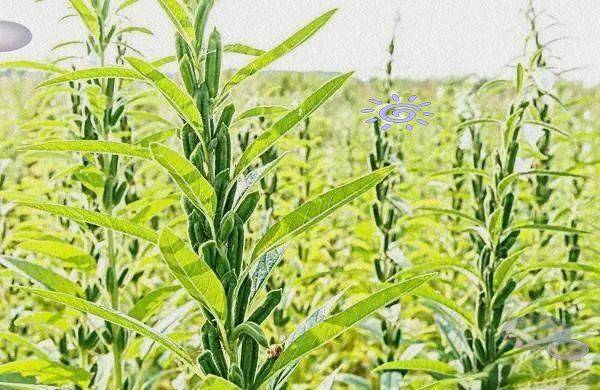
In sesame cultivation, field management is indispensable. It covers many aspects, including weeding, fertilization, irrigation and pest control, all of which have a critical impact on sesame growth and final production. Through rational field management, we can ensure healthy growth of sesame and thus achieve higher yields and quality。
1. Maintain soil wetness after broadcast
Following live sesame production, medium-cropping increases the temperature of the soil and keeps it wet, contributing to the smooth soiling of sesame seedlings. In the case of sesame ploughing, immediately after the harvest of the front crop, the crop should be ploughed in order to remove the debris and break the soil sheeting to ensure sufficient moisture。
2. Implementation of seedlings and seedlings in due course
When the sesame grows the first pair of the leaf, the seedling is carried out, and when the second to third pair of the leaf appears, the seedling is established with the aim of removing the young, weak or ill seedlings and retaining a strong plant. Sapling should also be done to maintain homogeneity of seedlings, and fields that are broadcast on a strip should avoid double seedlings。
3. Cultivation and cultivation
In sesame sapling periods, the relatively slow rate of growth makes this phase of chinese-farming particularly important. Usually, when the sesame grows the first pair of real leaves, we combine the saplings for a shallow farming. Subsequently, there will be a need for one-time farming each before the sesame grows to two to three pairs and branches. In addition, weeds should be removed in a timely manner after each rain. At the end of the medium term, we can combine chinese farming with proper cultivation, but care is taken to avoid damage to the root of sesame。
4. Retrieving fat and foliage
After the first flower, the amount of fertilizer required will increase significantly. So, during the curvature stage, we have to do the fat hunt. Usually, about 10 kg of urea per 667 square metres can be applied. At the same time, approximately 20 kg of calcium phosphate and 10 kg of potassium sulphate have been applied to plots that have not applied phosphorus fertilizer in the bottom. At the flowering stage, we can spray 0. 3 per cent of the potassium phosphate solution one to two times to supplement the nutritional needs of sesame。
5. Irrigation and drainage
In sesame cultivation, sound irrigation and drainage measures are essential. The planting period does not normally require additional water. However, when sesame enters the current period, in the event of drought, water should be poured in conjunction with fertilization. Especially in the critical phase of flowering to the climax, sesame needs adequate moisture, but also during the rainy season, and therefore close attention needs to be paid to weather changes and to the rational allocation of water and drainage。
6. Top-to-top technical points
A timely capping is a key technique in sesame cultivation, which helps to save nutrients and increase the particle weight. In the case of spring sesame, the top is usually applied when the bouquet ceases to grow (i. E. The cap), while in the case of summer sesame, it takes about 20 days after the first flower, at which point the top part of the top is cut from 1 to 2 cm。
Vii. Resting and responsibility
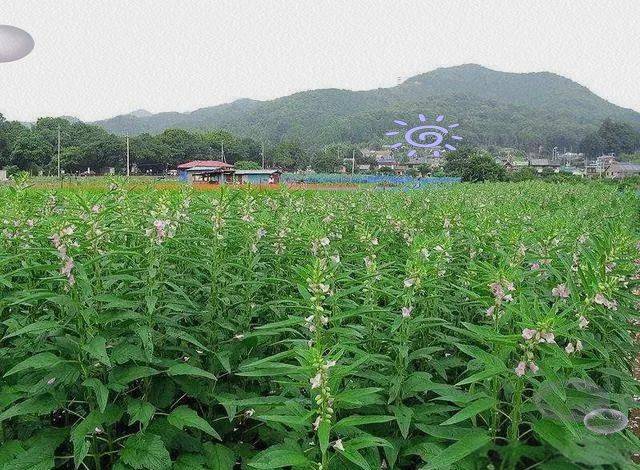
As sesame strains gradually become yellow or yellow green, the lower leaves begin to fall, the seeds of the upper central ointment gradually appear and the lower ostrich signs crack, marking the best time for sesame harvest. Usually, spring sesame matures in late august, summer sesames in early september and autumn sesames in late september。
After the sesame has matured, harvests should be selected at early and late hours to avoid high temperatures and strong sunlight at noon, thereby reducing fallout losses from lower cracks. At the time of the harvest, a small bundle of about every 30 plants is formed, and every three to five bundles are laid in open areas, and after two to three strippings, they are added to the warehouse。