Reproduced in the daily newspaper jaaan
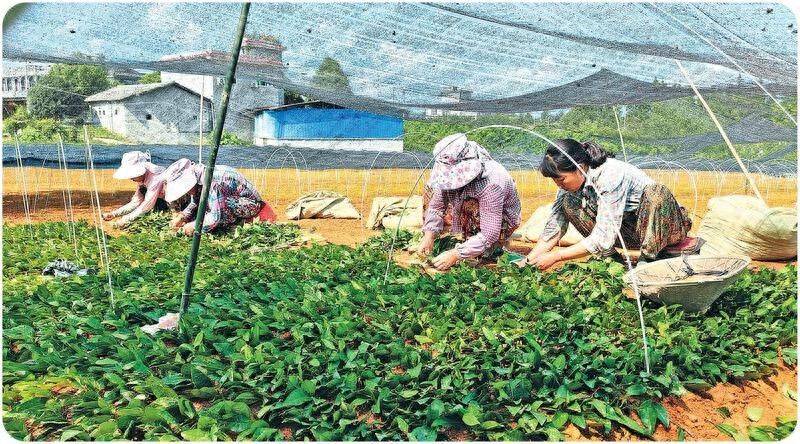
The workers put tea in the nurseries
In september, the town of mau river, known as the "first township of chinese tea seedlings", was green. At this point, it is the golden season of tea sprouts, where family members are working hard in nurseries to raise hope for the next year's harvest when they seize farmers on the ground in wanshan village in mau river town。
In recent years, local tea farmers have kept pace with market demand and have been accelerating the upgrading of their varieties. Today, this small green tea seedling not only serves as the “primary engine” for the rich in the village, but also absorbs the many elderly people left behind in the village to work in the near future。
Keep up with the market
Villagers grow new varieties of tea seedlings
In the early morning of september 25th, journalists came to the nursery of seven tea farmers in mansan village. In the morning light, a number of workers were buried in the middle of the day, immersed in a green tea seedling with a vibrant image in the nursery。
This year, mansword’s nursery presents a very different face from the previous year – a particularly rich variety of tea seedlings. “we started in early september and planned to plant five or six acres. There is a large variety of tea seedlings, such as #9 and mount9 and #angelbean and #breed tea, all of which are marketed `sauna'.” according to mansung, the industry must keep a close eye on changes and trends in the market, and the market needs anything to adjust cultivation varieties in a flexible manner, which not only reduces risk but also ensures better sales and prices for tea seedlings。
In the nursery, the sword-wreathing begins to be calculated: “a year down, it is expected that more than 1 million tea seedlings will be out. These little ones are "green gold," and i'm looking forward to a good price for new varieties this year, and we'll all make money!"
As with the sword, there are not a few local tea farmers who are keen to capture market winds. New varieties of higher value added are becoming a popular choice for villagers to compete for development。
In the 4th group in mansan village, the tea farmer deng fei-zheng organized the land levelling of workers to prepare new varieties. Seven or eight workers, led by deng fei, “combination” of land, organic fertilizer, etc., with the aim of improving soil structure and nutrition, providing a good growth environment for tea seedlings and preparing for the breeding of hand-held goods in the markets of anghi white tea, milk white tea, gold sprouts and gold leaves。
“despite high pre-investment, these varieties are of high value and have high returns.” dumbledore gave us an economic bill: for example, this year, when it's best to sell a cup of tea, it's worth more than $0. 4 and an acre is worth around $80,000. People are more aggressive when they hear it。
We've got to get together
I'll paint a new picture of the country
Today, the “single-playing” of individual farmers in mansan village is rallying into a “group-strike” for industrial development. In order to consolidate resources and scale up, a number of local tea farmers have established professional cooperatives to make industrial development more modest and larger。
In the nursery base of the professional cooperative of farmers who grow good rain-fed trees in the mountains, the director, luhua wing, is directing the orderly operation of more than 30 workers. According to lu, this year the cooperative is planning to raise more than 50 acres and is now absorbing more than 30 villagers each day. “we also play the white tea series, taking into account other market hot tea varieties.”
From single-handedness to organized development, through the cooperative model, mansan village has effectively integrated land, technology and labour resources, giving strong impetus to industrial growth。
With the development of the tea seed industry, the “circular code” for the well-being industry was touched by the elders of mansan village at home. The work of cutting the saplings of tea is precisely a “sweet job” designed for the elderly — without the need for sophisticated technology and heavy labour, with light fingertips and a slight swing of scissors, to enrich their lives and raise their incomes in the fliers。
The retired teacher, wang sung fu, is the “silver organizer” of the village. "it's a light job, not like picking tea in the sun." wang shingfu said that the local families were making money from the tea-plant industry, that he had organized the elderly around them, that any family that needed workers would work part-time, and that people would earn money while cutting and pulling。
Wang sung-fook points to a busy old man not far, saying, "look at the lady, she's 93 years old, she's got good hands and legs and can make $50 a day!"
At present, mau river has an annual production value of 300 million yuan for tea seedlings, with an area of approximately 22,000 acres grown throughout the town, the construction of a model breeding base for tea seedlings with perfume villages as the core area, and the development of more than 3,000 acres of tea seedlings by more than 350 farmers in the surrounding areas。
As the morning shines through the slopes of the town of the rivers, a green tea seedling is spreading its new leaves with a boom, as green as a fire, strewn in fertile land and gathered into a wave of never-ending industries. This strong green dynamic, deeply rooted in the countryside, not only fabricates green eco-portraits, but also paves the way for a prosperous and prosperous industry。