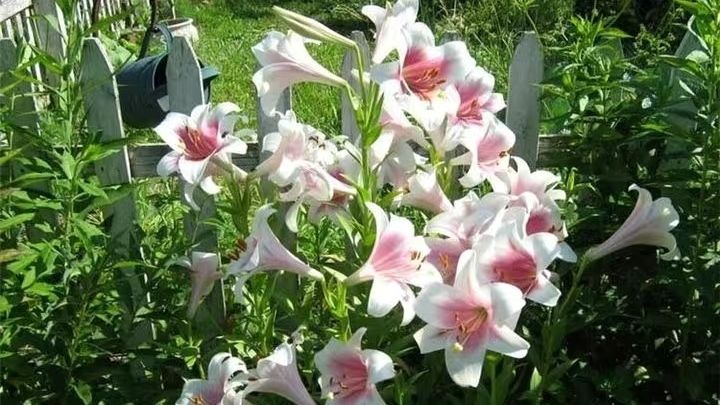
A brief description of the flowers: lily, with the alias flowers, garlic potatoes, lily, for the lily, for many years。
Lilies: purity。
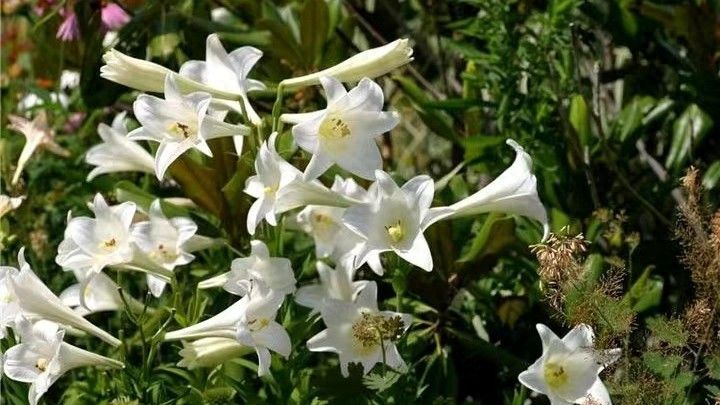
Growing land: mainly in the temperate regions of the northern hemisphere in eastern asia, europe and north america. China is its primary source。
Flowers are useful: lilies have many uses, in addition to being valuable and valuable cut flowers. Lily's root contains rich starch and some varieties can be eaten as vegetables, such as lanzhou lily, which has a very high edible value; flowers and plume are available for medicine and have the effect of defusing the fire, embroidery and abdomen。
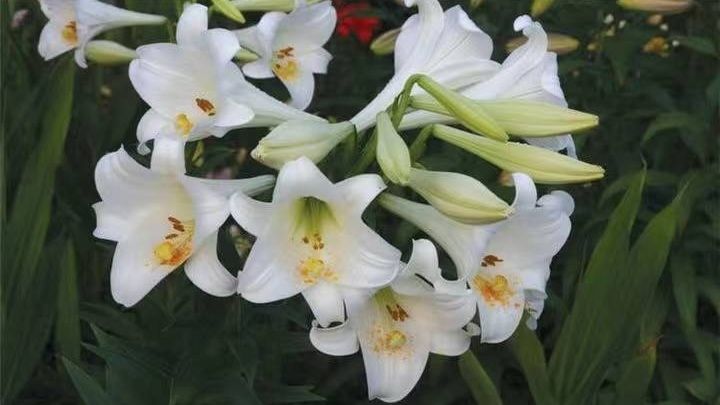
Flowers: 50 to 100 centimetres tall; phosphorus plumes with skinless, spherical shape, straight-on-done; needles with needles, scattered; peanuts, horns, roll-backs, downsides, flowers with red, white, yellow, white, milk, orange red, etc。
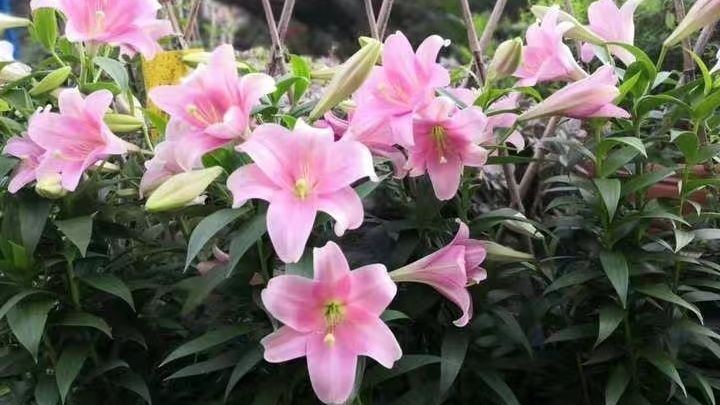
Varieties are selected: zen's lily, zhang's lily, zhang's lily, zhang's lily, quan's lily, taiwan's lily, hubei's lily, voltan, musk lily, wang's lily, deer lily, qing's lily, qing's lily, etc。
The first musk lily and the easter lily。
Plantation options: healthy poles that are full, full, disease-free should be chosen。
The choice of a flower basin: the flower basin should choose a mud basin with a strong aerobic and perforated bottom. To enhance appreciation, plastic or ceramic basins can be placed outside the mud basin。
(b) formulation of the cultured soil: pellets are suitable for growing in a soil rich in decomposed, estranged, permeable neutral or micro-acid sand. Most of all, it's heavy and it's not drained。
Method 1: fertilized border soil, foliage soil, clay-free surface sand, decomposed manure is formulated in accordance with 3. 3. 3. 3. 3. 3. 1 and then mixed in a small amount of bone dust or small pieces of broken hoof。
Mixing method 2: foliage, sand, and earth are formulated at a ratio of 1:1:1。
Mixing method 3: manure, garden, river sand, coconut or pearl rock is mixed at 2:1:1:1。
Method 4: fertilized soil, fine sand and peat soil are formulated at a ratio of 2 :2 :1 and then added to the fraction of phosphorus fertilizer mix。
Flower cultivation: lily usually pitched its roots in september-october in the autumn, and after the autumn, its roots and new sprouts rose, but it did not soar until winter, it rose in june-september, it matured in september-october, it dried its leaves in early november and became dormant。
Pre-plant planting is preceded by the preparation of the earth under the sun, sterilisation of the masts into the 2% ff solution for 15 minutes or immersion for an hour with 70% methyl tobutine 800 times more so as to disinfect, remove drying and then plant。
Before planting, the flower basin is also disinfected and its alkalinity eliminated, which can be impregnated for 30 minutes with a 75 per cent bacterial wettable powder of 800 times。
When planted, the pellets of bricks and tiles are to be drained from the bottom of the basin, so that the drain is smooth, then a large pellets of particles are to be attached, then a base of about 4 to 6 centimetres thick is to be laid, and then a plume of phosphorus is to be placed up into the pelvis, 5 to 8 centimetres of the ground is to be covered with a little pressure. Here, be careful not to be too shallow, otherwise the plant that the lily grows will be ready to fall, and when it is planted, water will be poured out once to keep the pelvis wet. Place it in the shade。
Place them in rooms around 0°c after winter, with attention to environmental cleanness and ventilation。
In the second year, the spring warm seed ball will be released and moved to outdoor maintenance。
Fertilizer: lilies are fine, but with less diligence. Do not use alkaline or fluorinated fertilizers in fertilization, otherwise it is prone to burning leaves. Acidic fertilizers such as urea, ammonium sulphate, ammonium nitrate, etc. Are commonly used, and fertilizers such as compound fertilizers and diamino phosphate are not applied。
Since there are enough nutrients in the pelvis, no fertilisation can be applied after planting until the rise of the phosphates in spring, until the beginning of the spring and the beginning of the flowering。
There is a high demand for nitrogen and potassium fertilizer, which can be applied every 10 to 15 days in their lifetime, with less application of phosphate, which can cause yellow leaves。
Root form, no fertilizer。
Potassium phosphorus fertilizers of 1 to 2 days can be applied during the flowering period to ensure that the flowers are fresh and, for example, potassium dihydrohydrophosphate can be applied to the leaves at concentrations ranging from 0. 3 to 0. 5 per cent after 3 p. M。
The lily requires a relatively high level of iron, and if lily leaves become yellow enough to cause iron shortages, it is necessary to apply iron fattening。
Watering: usually, after planting the tubing, water must be poured out and then properly on the fourth day. Water is being poured on the tenth day so as to prevent soil fragmentation, deterioration and to promote a strong bond between root and soil. Thereafter, water will be watered, wet, and the humidity will be kept in the grip of a basin of soil, holding tight, and there will be no spills of water between fingers。
The soil should not be wet enough, as lily's roots are developed on the surface of the soil, and if the soil is damp, the roots cannot absorb sufficient oxygen and the rods can easily rot。
Due diligence is required during the growing season and in times of drought, and water is often spilled around the flower basin to increase air moisture. The general plant lily requires a relative humidity of 80-85 per cent of the air, a relative high humidity leading to a wide range of diseases, and a low level affects the normal growth of the plant。
Water should be poured in the morning。
Shearing: the pelvis shall be followed by a timely cut of the dead leaves and, when the plant reaches its hibernation, by a cut of the dead leaves on the ground。
Light and temperature management: lily requirements are more stringent, and if the light is insufficient, the lily is weak, stunted and lumbers occur, and leaves become light。
There is a greater need for adequate light, especially in times of budding。
In summer, appropriate shades of the sun, 50% - 70%。
The lily roots are covered with light to reduce the soil temperature, and the sunnet is removed in time to ensure sufficient light。
Mask treatment is required during the current period。
In order to ensure that the plant grows properly, the flower basin will be rotated a few days later to ensure that the plant is luminous。
The best temperature to grow lilies is 15°c ~ 18°c at night and 20°c ~ 25°c during the day。
In the early stages of post-plant growth, the soil is required to have a lower temperature, usually at 0°c-13°c, which can extend its growth duration, with a higher temperature than 15°c affecting the quality of the plant, by moving the flower pots to cold, ventilated areas, or by cooling water, spray, etc。
However, attention is drawn to the fact that the spray can easily lead to ashilosis in asian lilies. When the root grows, the temperature increases gradually。
Vegetable season management: the lilies are mostly in the summer and autumn, and some can be from august to october. The lilies are open at different times and can be achieved by changing their planting time and then ensuring normal growth temperature, humidity, light and nutrients。
The family plant lily will bloom in may-june the following year, if the ball is kept in the original basin after the leaf has died. If you want to see flowers before or after the spring season, you can pour out the plumes in the basin in june-july, separate the plumes from the plumes, then put the plumes in a plastic bag, put them in the conservatory layer of the domestic refrigerator, and treat them at low temperatures until september-october, when they are planted and carefully conserved
It'll be a flower before and after new year's。
Switching basins: the lilies are changed once a year with new breeding soil and base fat. The switch is the same as the top one。
Reproduction: lily's methods of reproduction include seeding, saplings, mags and sprouts。
Sowing reproduction, this method of reproduction is mainly applied to breeding。
Seeds were collected in the autumn and stored until the next spring. It's about 20 to 30 days after the show. The lily seedling period should be properly shaded. By autumn, the lily seedlings had formed a small part of the ground, at which point they would be able to dig out the split. The seedlings are seeded because of different varieties, which take three years to bloom, and the need to grow longer, which is not suitable for domestic flowering。
It's a small penis that usually grows on the outside of the old tuber. When the lilies are harvested in september-october, these little saps can be separated and stored in indoor sands for winter. Wait till the next spring to plant。
Up to september-october of the third year of conservation, the small phosphorus tubers will grow into large saps, which will then be carefully nurtured, and will bloom。
This method is small and can be used when one or two plants are needed. So it's good for family plant breeding。
In mid-fall or the end of spring, pick a big, grown-up tuber with a little dryness, and break it up with a big, fat piece of cake. The base of each plate is to be brought down with a small part of the tube, with a slight drying, and then inserted into the bed of the river sand or cylindrical。
When the bed is inserted, two thirds of the scales are inserted into the matrix, water is poured once, the base is kept wet, temperature is maintained at around 20°c, and the bed is placed in the fresh, wet and permafrost light of the air, which takes about one and a half months and gives root to the blade wound。
The winter temperature should be around 18°c and the bed base should not be too wet. By the second spring, the scales will grow small and then plant them in separate basins。
Carefully managed, it would take about three years to grow and bloom。
The sprouts of beads are only suitable for a few types. Voltans, yellow cannons, etc. Are suitable for use。
In the summer, a mature “bubble bud” formed on the top of the leaves is taken down and cultivated。
It usually takes two to four years for them to grow up to bloom。
When lilies bloom, many people throw away their roots. In fact, it has the capacity to regenerate if the leaves are cut off, the root of the ball in the basin is dug out and buried in sand piles, which are often kept wet and can be planted again the following year。
Over the winter: the lilies planted in the basin before the fall of the frost are moved indoors, with sufficient light, air flow and temperature of 8°c-10°c。
Insects and diseases control: lilies are mainly vulnerable to lilies, spot diseases, rotting of stalks, leaves and aphids。
The lilies disease, also known as the lilies' hidden leaf disease, is associated with deep and uneven foliage of leaves and leaves, with small growth, condensed foliage and smaller foliage, sometimes with light brown spots on the petals, unopening flowers, and deformed flowers。
In order to prevent the disease, a virus-free penis is chosen when seeding。
The strains were found to be removed and destroyed in a timely manner。
Speculative diseases, which show a tatter on the platters of the strains, then spread, and the leaves are tanned. The late leaves gradually blackened to death。
It was found that the leaves were to be removed in a timely manner and that 65 per cent of the zinc humid powder was sprayed with 500 times the diluted fluid。
The rotting of the rods and the brown spots of the phosphorus and the last brown rotting of the rods。
In the early stages of their onset, 50 per cent of the ammonium dyson can be administered 300 times more。
Leaf scrambling, most of which occurs on leaves, begins at the tip of the lower leaf, with irregular shapes such as round or ellipse, yellow or brown。
The prevention and treatment of this disease requires daily attention to ventilation。
It was found that the leaves were removed in a timely manner and that 1 per cent equivalent bordeaux was sprayed, or 50 per cent of the degenerative humid powder 800 to 1,000 times more, and three to four times more。
Aphids the lilies have fewer other insects, most of them aphids, which can be sprayed with 100 microbes and 1:1。
Optimal placement: a window table that can be placed in the living room, in the study room or without sunlight。