


Wheat, corn, vegetable 3d
One of the important features of the reform of the manner in which vegetables have been grown since the implementation of the food basket project in the tobacco city is the large amount of vegetables entering the food field and the combination of wheat and maize, which are characterized by a wide variety of field configuration and management techniques, as described below。
The three main types of vegetables are of the following three types: vegetables grown in combination with wheat and maize components according to their planting and harvest time。
1. 1 winter foods cover vegetable varieties such as spinach, pickles, oil, onions, garlic and dutch beans. These vegetables are sowed or planted at the same time or later in the wheat crop, harvesting before the harvest, planting maize or other vegetables after the harvest, and the timing of maize cultivation varies significantly according to the type of vegetable。
1. 2 premature and spring vegetables such as cabbage, cabbage, radish, premature kale, broccoli, ground beans and potatoes. Most of these vegetables entered the grain fields late in march or earlier, before the harvest。
1. 3 autumn cuisine enters the food field in a wide variety of types, such as watermelon, melon, melon, pumpkin, cucumber, bean bean bean, bean bean, cucumber, ginger, onions, chili, celery and tomato. These vegetables are pre-harvested or planted after the harvest, or at the later stages of maize growth, and harvests in the autumn or late autumn, such as late harvests and late wheat grinding。
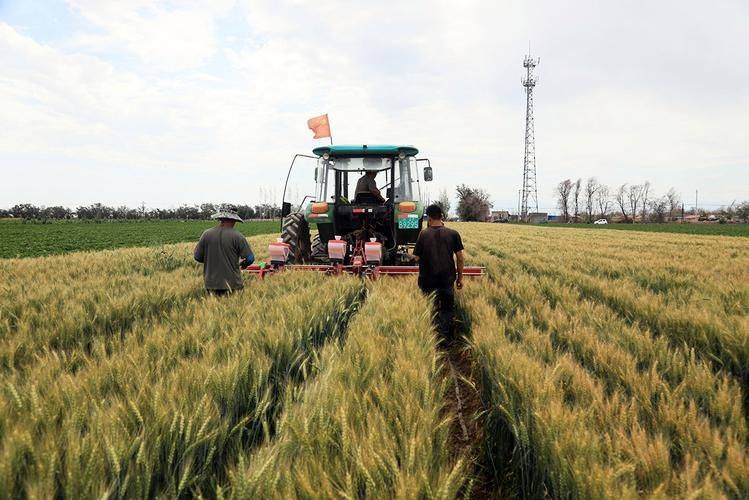
The three main patterns of cultivation, depending on the number of vegetables grown in the field, can be divided into two main categories: one food, two food and three food。
2. 1 two foods and one dish. The pattern can be divided into wheat/winter/corn, wheat/early spring/colour, wheat/tale or autumn. The first two categories are double-blended three times a year, with a double index of 200 per cent, and the latter three times a year, or 300 per cent. The two foods are the simple, adaptive, translucent and most acceptable models for the growing of foods。
2. 2 two foods, which are divided into wheat/winter — early spring / maize, wheat / winter / maize or autumn, wheat / early spring / maize or autumn, wheat / corn / autumn / autumn . The first category consists of two or four years of experience, while the last three categories consist of four years of experience. In order to ensure the timing, density and efficiency of crop cultivation as a whole, vegetable production is based on protected land cultivation, small or large-scale farming, which is a commonly used technical measure in production。
2. 3 two foods and three foods. This pattern consists of approximately three categories, namely, wheat/winter early spring/colour or autumn, wheat/winter/colour or autumn/autumn, wheat/morning, maize or autumn/autumn. Such models are mostly trimmed every year and, in order to ensure their use over the years, often rotate over the years with wheat and maize, which form two years of cooked food fields。
Three or three patterns of wheat cultivation determine the pattern of land use throughout the year, with three types of wheat, maize and vegetable cultivation, according to crop specifications。
3. 1 a narrow back evening condom, i. E. A normal wheat sowing, a smaller larvae and a smaller maize crop, on the larvae and abette, with a season of vegetables before or during the later stages of maize growth. This pattern of cultivation is the main field configuration for both foods, and the choice of vegetables is relatively small, mostly in winter spinach, pickle or part of the autumn, with less efficient vegetables, wheat production being the same as conventional wheat fields alone, and maize production tends to be lower than single or monogamous。
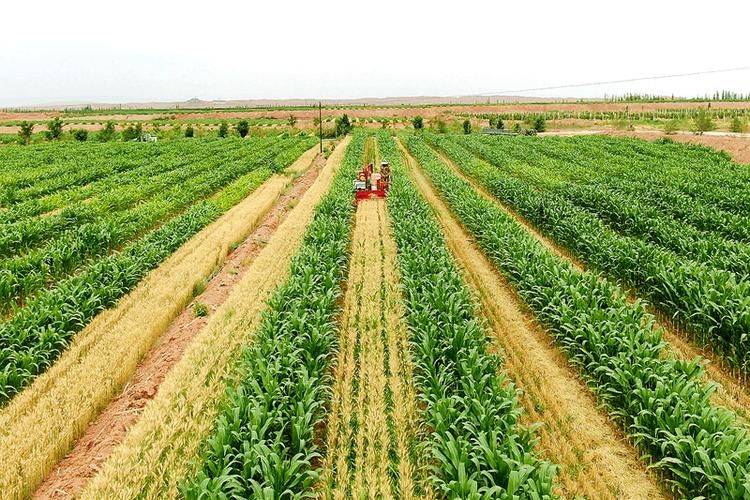
3. 2 the guacamole type is also used mainly for two foods. The length of the ravine is more than 60 cm, of which it is 20 cm wide and consists of two rows of wheat and 40 cm wide, on which winter, early spring or late autumn vegetables are grown, and vegetables are collected with pre-circumbents to grow corn at the same distance。
3. 3 the wide-back early condom is the main field allocation for wheat, maize and vegetable cultivation patterns, both food and food. This type of wheat is grown at a height of 50-80 centimetres high or large, with an oscillation or argon wide of 110-270 centimetres wide, with vegetables, maize and wheat, vegetables or other crops. This type of wheat, maize and vegetables are grown separately and in a separate area, making it easier to manage separately, and the higher cost-effectiveness of vegetables is the optimal field configuration of the food-letting suite。
4. Three cultivation techniques
4. 1 high production techniques for wheat, maize. Wheat and maize production is often lower in the way food and vegetables are grown than alone. In order to ensure that wheat and maize production is not reduced or reduced, attention should be paid to the following aspects。
4. 1. 1 select a reasonable field configuration. Fielding is key to influencing food production. There have been studies at home and abroad that suggest that the maximum average distance for maize is 100 centimetres, so it can be assumed that wide-backed bandwidth is appropriate in terms of guaranteed wheat and maize grain production, around 200 centimetres。
4. 1. 2 selection of suitable varieties. Wheat has chosen to be broadcast early, have a strong edge, have large ears and are resistant to falling wheat varieties. The choice of varieties with high potential for single production, such as a compact farm, a high school, etc., would help both to secure maize production and to reduce its impact on acreage。
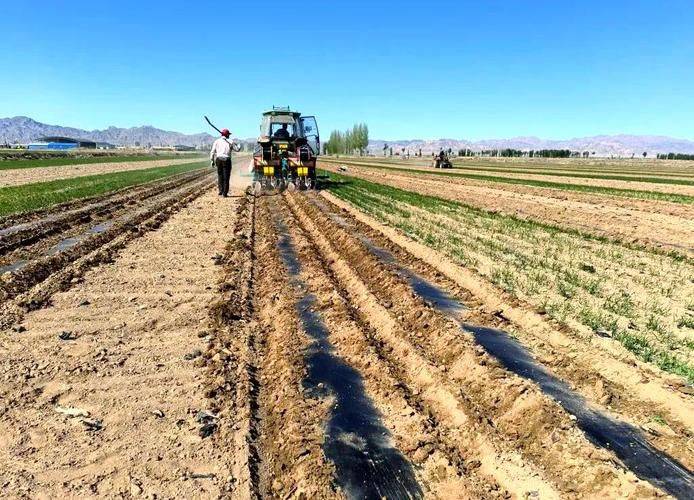
4. 1. 3 use reasonable cultivation techniques. The wheat cropping model is late wheat and should be based on “one by one” cultivation. Corn should be grown in narrow-banded and secret plantations. Small lines should not be less than 40 centimetres, and the length of the strain should not be less than one half of the normal length, generally around 15 centimetres, ensuring a planting density of more than 4,000 plants per 667 square metres. The planting of maize should take place sooner rather than later。
4. 2 high production techniques for vegetable cultivation generally do not require a distance of less than 10 cm between wheat and vegetables and less than 50 cm between maize and cooking。
4. 2. 1 select the type and type of vegetables to be given. Premature and productive production are common requirements for vegetables in food and vegetable farming patterns. Vegetable cultivation that is heavy or infected with the same strain should be avoided in the case of two-food multi-crops。
4. 2. 2 application of advanced planting techniques. Vegetables use protected land farming techniques and seedling migration techniques. For the food-planting model, which consists of winter and early spring and autumn vegetables grown at the beginning of the spring and summer, the variety of vegetables and their different characteristics, as well as the varying levels of technology and resources at the local level, make it necessary to adapt。
4. 3 increased inputs. Increased human, material and, in particular, scientific and technological inputs are key to the success of food and vegetable production. Vegetables can be increased by about 100 kg of food production per year compared to tons of grain fields, or about 10%. The basic scenario is an average increase of more than $500 per additional season for vegetables, an increase of about $50 for 667 square metres of material costs, an increase of 15-20 for 667 square metres of labour, and no decline in remuneration per unit of production and per labour force. As a result, food and vegetable cultivation patterns are high-input, high-productivity and efficient forms of cultivation, with increased inputs as the basis for high productivity and efficiency。



