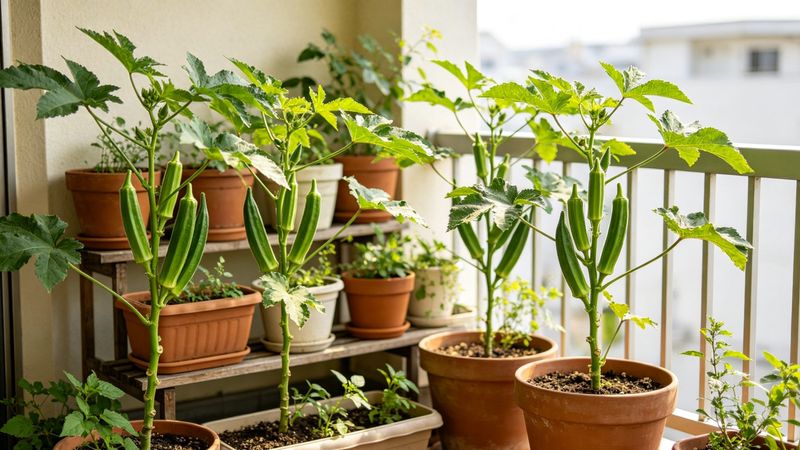
Have you ever admired any of the homemakers on the internet? A few square metres of balcony full of raw vegetables, tomatoes, peppers, vanilla, a plate of salad, fresh and reassuring. And look at the balcony of his own house, either piled with junk or empty, with up to a couple of half-dead flowers。
Actually, it's not as hard as it looks. There is no need for a compound, no need for specialized equipment, or even a “green finger”. With a few core points, a pair of pairs, a pair of pairs, you can grow enough leaves and sauce on a few square metres of little balcony。
Today we will talk from scratch about the whole process of gardening — from the selection of basins of soil, the selection of seedlings, to the fertilization of water, pest control, to the harvesting of seeds. You don't know how to do it. It's all about practical experience。
I. Assessment: is your balcony suitable for growing food
Before buying seeds, look at the conditions on your balcony. Three core factors: light, ventilation, space。
1. 1 light: determine what you can grow
Vegetables are “eat-free”, with insufficient light, thinness and weakness。
If you do not have enough light on your balcony, you can consider using plant re-lights (led full spectrum) for 8-10 hours per day, which can significantly expand the range of cultivation。
1. 2 ventilation: the key to disease prevention
Closed balcony is poorly ventilated and prone to chronic diseases and pests. The best way to grow is to choose an open or semi-open balcony. If the balcony is closed, the windows are often opened or blown with a small fan to increase air flow。
1. 3 space: vertical use
When the balcony is small, it goes up. Change the plane into a stereo using flower racks, basins, wall basins, multilayer plantations. For example: a three-storey bouquet with different types of vegetables on each floor; a long line of pots on the railing; and a few hanging plants on the ceiling。
Ii. Introductory recommendations: these eight vegetables are the easiest to succeed
Don't challenge the tomatoes and cucumbers at once. Let's start with quick birth, solidness and a sense of achievement。
Onions (simply)
Buys the onions, leaves the roots 3-4 cm, inserts them directly into the soil, or hydroponics. New leaves grow in a few days, and they grow long and can eat for six months. There is little need for technology。
2. Preparatory vegetables (baby, 20-30 days)
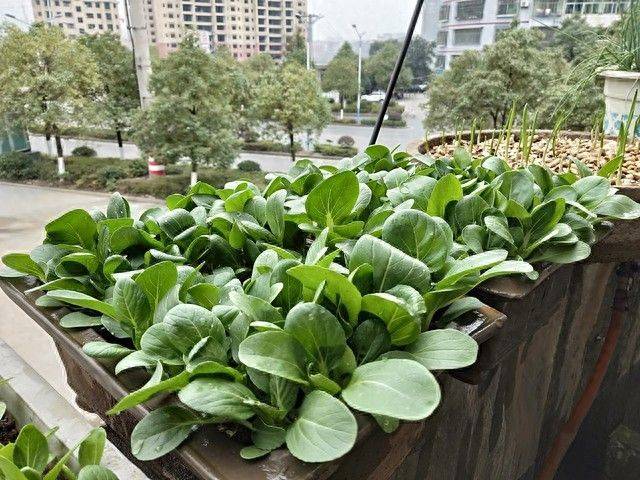
Spread seeds, cover thin soil, and keep wet. It's too dense. It can grow to the east and west without light. Eating leaves, not rooting, lasts more than a month。
Quillards (necessary)
Seeds are circular and need to be plattered (in half) and soaked overnight. Slow (7-14 days) and patient. Like cool, easy to smoke in summer, suitable for spring and autumn。
Cherry carrots (30 days harvest)
Seeds are big, they're good to sow. They're so fast, they're so successful watching radish come out of the earth. Deep basins (more than 15 cm) are required, and the light is sufficient, otherwise the leaves are not radish。
Spinach (cool, spring and autumn)
Seeds go out overnight, and they come out fast. Like cool, hot and easy to smoke. Multiple harvests can be made, the outer leaves can be strangled, and the middle leaves continue to grow。
6. Selenium (sown for several years)
It's much faster than planting. Growing water and pouring new leaves in a week. They eat, then they cut and spread a layer of grass, ash, or thin soil, and grow. Five to six cuts a year。
7. Paprika (available for food, high production)
Buy a seedling or plant it. Large basins (above 20 cm in diameter) need to be filled with light. A chili can make dozens. It's a nice red, green branch. Years of life, winter moves into the house and continues for the second year。
8. Mints (crazy long, suitable for beginner)
Buy a pot of mints or find a friend for a couple of sticks. It's very long. Be careful to grow alone, not to mix with others, or it will be “aggressive”. Water, cooking, wine。
Iii. Four sets of vegetables: basin, earth, fat, 3. 1
If the balcony is of limited weight, it is too heavy to use light soil and plastic basins to the extent possible and not to add large pottery to the ground。
3. 2 soiled: do not dig by road land
Thrusts, stubbles and insect eggs dug downstairs are not suitable for planting. Go buy horticultural land。
Basic formulation: general trophic soil + pearl rock (scale 3:1). Nutrient soil provides fertility and pearl rock increases the flow of air。
Progressive formulations (baskets of “vegetable soil” directly purchased by lazy people): peat/coconut (4) + pearl rock (1) + leechite (1) + fermented sheep dung (defare)。
3. 3 fertilization: bounty and hard work
Vegetables grow fast and require nutrients. Without fertilizer, use organic fertilizer。
A little trick: water wash is good nitrogen fertilizer. Put the water in a plastic bottle, wrinkle the lids, put it in the sun for a week, and pour water for 1:5. Careful with the odours, the balconies are not suitable, and it is preferable to use commercial organic fluids。
3. 4 speculation: 50% success in the purchase of seeds and the whole process of planting: from sowing to harvest 4. 1 sowing soil: loading the well-equipped soil into the basin, 2-3 cm from the mouth, light pressure and water. Seeding: seeds (beans, radish) are distributed at a range of 3-5 cm, with soil thickness 2-3 times the diameter of the seed. Small seeds (precipitine, fragrance) are soaked with thin or no soil (just a little pressure). Wetting: post-plant spraying, covering of film or wet newspapers, in the shade. Every day, the gas sprays. Feeding: most seeds are seeded 3-7 days. When seedlings are released, the cover is removed and moved to the light. 4. 2 shiba (important!)
Seeds have spread too much, and the seed has grown. It must be “smoke” — the weak, the dense, the strong. Otherwise, we'll all grow up。
Do not throw the little seedlings that are pulled out. They can eat (e. G. Radish seedlings, raw seedlings, very young salads)。
4. 3 watering: wet and dry
Like flowers, vegetables are also “dry-drinking”. Plot 2-3 centimetres with your finger and then water it. Don't pour a little every day。
The different vegetables require different water: the leaves require more water, and the fruits (treasants, peppers) require more water than they should have。
4. 4 photomanagement
When the seedlings rise, they move to the best light. If it is found that the seed is “long” (substantial, high and unstable), it is indicative of insufficient light. Solutions: move to a brighter location, or use a light patch, while steadying the soil next to the seedlings。
4. 5 collection
V. Common problems and solutions (not involving pesticide health, only physical methods)
To the extent possible, there are no chemical pesticides used to plant vegetables on the balcony. Physical and biological approaches to pest and disease control。
5. 1 leaf yellow 5. 2 pests
Prevention is predominant: ventilation, not overwet, regular inspection of the back of leaves。
5. 3 long leaves don't work
Tomatoes and peppers have long leaves that don't flower, probably because:
5. 4 cracking on the edge of the leaf
It may be fertilizing (too much fertilizing) or water shortage (too small a basin to dry too quickly). First, water is scarce, and if the soil is wet but leaves are thicker. Stop fertilizing and flush the soil with plenty of water。
Vi. Progressive techniques: doubling yields by 6. 1
The same type of food is grown on a continuous basis in the same basin, which tends to breed insects and soil infertiles. Once you're done with the harvest, you'll have to change the course. For example, the following canyons (beans, nitrogen-fixing grounds) are grown after the pasta。
6. 2 cultivation
Some kind of help each other together. For example:
6. 3 cooking composting (simple version)
Find a bucket with a cap, a hole in the bottom. A layer of soil, a layer of cuisine (seed leaves, fruit peels, eggshells, coffee dross, no salt) and a layer of soil. Keep moist, flipped one month later, turning three to six months into black gold. Suits the size of the balcony。
Simple method: buy a “consumer drum” and an em fungus (effective micro-organisms), fermenting fast and smellless。
6. 4 introduction to water production
If you don't want to buy dirt, you can try hydroponics. It's for lettuce, spices, mints, onions. Purchase of hydroponic nutrients, placing seedlings in a basket, rooting in nutrients, and aerobic pumps (optional). There's a lot of hydroponics on the internet, suitable for the balcony。
7. The monthly planting calendar (in the case of the north, where the south is either early or wrong)8 and the “scrambling” list of the balconies that grow on the balcony do not use large basins to grow small seedlings: large basins, abundant soil, weak seedlings and prone to decay. Don't use a deep pot to grow a light root: lettuce and fragrance are wasted soil, 15 cm is enough. Don't pour water every day: the root is the no-go problem. Don't grow too tight: you can't afford to leave and no one will grow. Don't use sterile organic fats: raw fats (fresh milk, soybean slags, leftovers) burn roots, worms, and stink. Don't grow cold in the summer: spinach, fragrance summer, and squirt flowers before growing up. Do not buy too many seeds at a time: seeds will expire, buy three to five, grow experience and grow. Do not lose sight of the load: the balcony weighs 200-300 kg per square metre. A 30cm big flower pot with wet soil, 20, 30 kilos. Too much to watch out. At the end
The balcony grows vegetables and harvests more than vegetables. Every morning, i went to the balcony to see the seedlings grow a few centimetres tall and came home from work to water and choke the yellow leaves. And their own food, without herbs, without long transport, could be less than 10 minutes from removal to the pot, which is fresh and sweet and not available on the market。
From today onwards, a simplest variety — onions or lettuce — will be chosen for a small flower pot, a bag of earth, a pack of seeds. It'll take half an hour to plant, and the rest will be given to time and sunlight. In a month, you'll be able to eat your first meal。